

How Hotel Room Bidding Actually Works — And Whether It’s Worth It
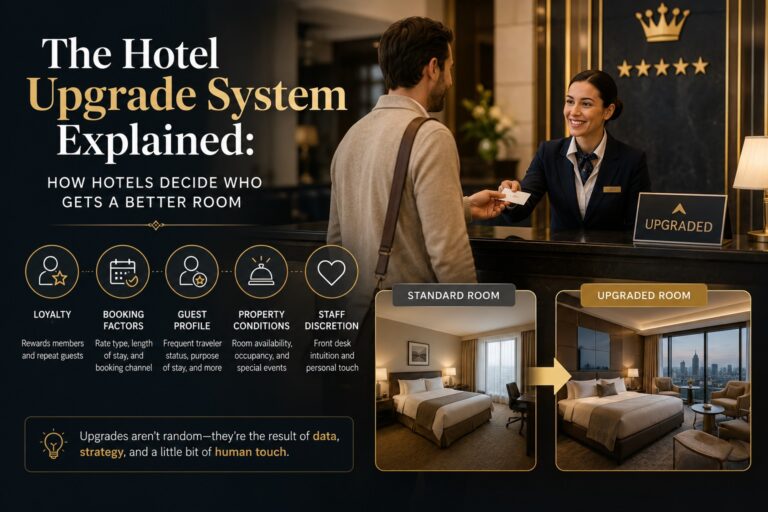
A few years ago I got an email from a hotel two days before check-in. Subject line: “Enhance your stay.” Inside was an invitation to bid on a room upgrade — a junior suite for a price I’d name myself, somewhere between the minimum the hotel listed and whatever I thought it was worth. “If you want to understand how hotels decide who gets upgraded in the first place, start here.” →
I’d never seen this before. I spent about ten minutes trying to figure out whether it was legitimate (it was), whether I’d actually save money compared to just booking the suite outright (I would, significantly), and what the odds were of winning (completely unclear). I submitted a bid slightly above the suggested minimum, didn’t win, and arrived to my standard room slightly annoyed without quite knowing why — I’d paid the rate I’d agreed to, I’d been offered a chance to pay more for something better, and I hadn’t paid enough. Somehow that still felt like losing.
That experience sent me down a research hole into how hotel bidding actually works, who the companies behind it are, what the hotels are trying to achieve, and whether the bid model is actually a good deal for guests. What I found was more interesting than I expected and substantially changes how I approach the pre-arrival upgrade emails I now receive regularly.
The Companies Running the Systems
Hotel room bidding isn’t something hotels built themselves. It’s a service provided by a small number of B2B software companies that hotels contract with to manage and monetize upgrade inventory.
Plusgrade is the dominant player globally. Founded in 2009 and headquartered in Montreal, Plusgrade works with hundreds of hotel brands and chains — including major names across the Marriott, Hilton, IHG, and Hyatt portfolios — as well as airlines and rail companies. If you’ve received a pre-arrival upgrade email from a major chain hotel in the past few years, there’s a reasonable chance it was powered by Plusgrade’s system.
Nor1, now part of Oracle Hospitality after an acquisition, was one of the original hotel upgrade bidding platforms and pioneered much of the model that’s now industry standard. Its eStandby Upgrade product operates on a similar principle to Plusgrade — guests bid for upgrades, hotels accept the bids that meet revenue targets, everyone else gets their original room.
Oaky is a European-headquartered alternative that’s grown significantly, particularly among independent hotels and boutique properties. It takes a broader approach than pure upgrade bidding — it’s more of a guest engagement platform that includes upgrades alongside other upsell opportunities like early check-in, late checkout, and food and beverage packages.
Juicer and several smaller platforms round out the market.
Understanding that a dedicated software company with revenue optimization algorithms sits between you and the hotel’s upgrade inventory changes how you think about the bid. You’re not negotiating with a front desk agent who might take pity on you. You’re participating in an automated system designed to extract the maximum revenue the market will bear from unsold inventory.
The Mechanics Step by Step
Step 1: The hotel identifies available upgrade inventory. A few days before your arrival — usually two to seven days out — the hotel’s revenue management team has a clearer picture of expected occupancy by room type. Standard rooms are typically the first to sell out; suites and premium categories often have remaining availability at this point. The upgrade bidding system surfaces this unsold inventory.
Step 2: You receive the upgrade invitation. The email arrives from the hotel or brand, usually with the platform’s interface embedded or linked. It shows you the available upgrade categories, a description and photos of each room type, and a suggested bid range — typically expressed as a minimum and a suggested amount per night.
Step 3: You submit a bid. You enter your bid amount — a per-night figure added to your existing rate — and provide payment details. The bid is not charged immediately. Your card is only charged if your bid wins.
Step 4: The hotel reviews bids and makes assignments. This happens typically one to three days before arrival, when the hotel has finalized its occupancy picture. The revenue management system (or sometimes a human revenue manager) reviews incoming bids against available inventory and assigns upgrades to the winning bidders. The logic is to accept bids that meet or exceed the hotel’s minimum acceptable price while maximizing total upgrade revenue.
Step 5: You receive notification. Win or lose, you’re notified before arrival. If you win, your card is charged the bid amount per night and your reservation is updated. If you lose, your card is not charged and your original room remains.
The whole process is designed to feel low-stakes for the guest — no money out until you win, clear notification either way — while generating genuine incremental revenue for the hotel from rooms that would otherwise be empty or filled at the last minute for very low rates.
What the Suggested Bid Range Actually Means
The bid range shown in the upgrade email is the piece of information most guests find confusing. It looks like a price range for the upgrade, but it’s more specific than that.
The minimum bid is the floor set by the hotel — the lowest bid they will consider accepting for that room category. It’s not a soft suggestion. Bids below the minimum are not considered regardless of other factors. If the minimum for a junior suite upgrade is $50 per night and you bid $40, you’re not in the pool.
The suggested bid is typically the platform’s estimate of what’s likely to win based on historical data from that property and similar properties. It’s not a guarantee. It’s more of a “this is approximately where winning bids tend to cluster” figure, which means that bidding at or slightly above the suggested amount gives you a reasonable shot, and bidding meaningfully below it makes winning less likely.
The maximum is sometimes shown, sometimes not. When it is, it represents the most you’d pay per night for that upgrade — essentially the ceiling of what the hotel believes the room is worth to a bidder. Bidding at the maximum doesn’t guarantee a win if the hotel’s minimum acceptable price is higher.
What the email never shows you: what other guests have bid. This is intentional. The opacity is part of the model. You’re bidding without knowing the competitive landscape, which means the platform and hotel retain an information advantage throughout the process.
How Hotels Decide Which Bids to Accept
This is the part that isn’t publicly documented by the platforms, because the algorithm is proprietary and the hotels have no interest in revealing their floor prices. But the logic is consistent enough that it can be described with reasonable confidence.
Revenue optimization is the primary criterion. The system is looking for the combination of bids that generates the most incremental revenue from upgrade inventory. A hotel with three junior suites available and six bidders doesn’t necessarily take the three highest bids — it considers which bids to accept alongside which guests might receive complimentary upgrades through the loyalty program, which rooms are needed for VIP arrivals, and which bid prices represent good revenue relative to what the rooms would generate through other channels.
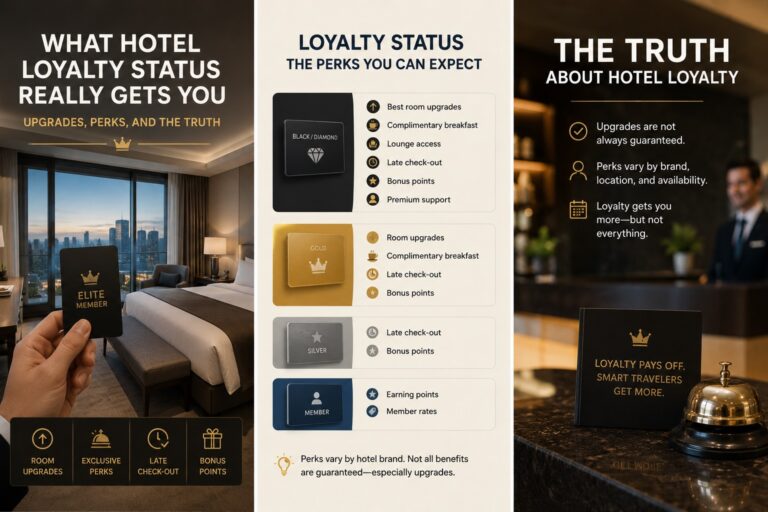
Your loyalty status interacts with the bidding system. At most chain hotels, guests with high loyalty status are considered for complimentary upgrades separately from the bidding pool. This can work in your favor (you might get upgraded without your bid winning or even being considered) or against it (the hotel may upgrade you to a lesser room category than you bid on, because your status entitles you to something and your bid is for something better). The interaction between loyalty upgrades and paid upgrades is one of the genuine complexities of the current system.
Arrival patterns matter. Bids for longer stays are weighted differently than bids for one or two nights. A guest staying five nights in a junior suite at a $60 per night bid represents $300 in incremental revenue. A guest staying two nights at $80 per night represents $160. The hotel’s revenue calculation isn’t just the per-night rate.
Dynamic pricing affects what the hotel accepts. If the hotel’s occupancy forecast changes between when you submitted your bid and when the assignments are made — a last-minute group booking, a competitor selling out and driving walk-in demand — the hotel’s minimum acceptable price for upgrades may shift. Bids that would have won a week ago may not win with updated information.
Is Bidding Actually Worth It? The Honest Calculation
This is the question that matters most, and the honest answer is: sometimes yes, sometimes no, and knowing the difference requires a specific calculation.
The calculation you should make:
Find out what the room you’re bidding on would cost if booked directly. Not the inflated rack rate, but the current flexible rate on the hotel’s website for the same dates.
Subtract what you’re paying for your existing room.
That difference is the “market price” of the upgrade. Compare it to your bid.
If the bid is meaningfully less than the market price difference, the upgrade bid represents good value if you win. If the bid is close to or above the market price difference, you should either book the better room outright or not bother.
An example that makes this concrete:
You’ve booked a standard room for $140 per night. The junior suite you’re bidding on is currently bookable on the hotel’s website for $220 per night. The market price of the upgrade is $80 per night. If the suggested bid for the upgrade is $45 per night and the minimum is $30, bidding in the $45–55 range gives you a reasonable shot at saving $25–50 per night on the suite compared to booking it outright. That’s a genuine deal if you win.
If the suggested bid is $75 per night and the minimum is $60, you’re paying $60–75 for something with an $80 market value. The saving is marginal, the uncertainty is real, and just booking the suite outright for $220 gives you certainty for an extra $5–20 per night.
The cases where bidding is clearly worth it:
When the bid range is substantially below the market price difference and you’d genuinely prefer the upgraded room. The bid represents a real saving on something you actually want.
When the upgrade category represents a qualitative improvement that matters specifically for your trip — a suite with a living room on a family trip, a sea-view room when you specifically want the view, a room with a bath when the standard rooms only have showers.
When you have multiple nights and the per-night saving compounds meaningfully over the stay.
The cases where bidding isn’t worth it:
When the difference between the standard room and the upgrade room is marginal — slightly larger, slightly higher floor — and doesn’t represent a meaningful change in your experience.
When the bid price is close to the direct booking price of the upgraded room, removing the price advantage while adding uncertainty.
When you have high loyalty status at the chain and a reasonable expectation of a complimentary upgrade anyway. Winning a paid bid and then learning you would have received the upgrade for free is a frustrating outcome that happens more than it should.
When your stay is one night and the total upgrade cost in dollar terms is small either way. A single-night saving of $20 isn’t worth the mental overhead of the bidding process.
Practical Tips for Bidding
Check the hotel’s current flexible rate for the upgrade room before submitting a bid. This is the single most useful thing you can do and most guests skip it. Five minutes on the hotel’s website gives you a reference point that transforms the bidding decision from a guess into a calculation.
Bid slightly above the suggested amount rather than at it. The suggested bid is where the platform estimates winning bids cluster. Bidding marginally above — $5–10 per night more — meaningfully improves your chances without significantly affecting the value equation if you win.
Don’t bid at the minimum and expect to win. The minimum is the floor, not the sweet spot. Minimum bids win occasionally but are more often in the pool to set expectations rather than to be accepted.
Check whether your loyalty status makes the bid irrelevant. If you have Platinum or Diamond status at the chain in question, ask the hotel directly (via email or phone, before the bidding window opens) whether your status makes you eligible for a complimentary upgrade to the room category you’re considering bidding on. If the answer is probably yes, don’t bid.
Read the bid terms carefully before submitting. Some platforms make winning bids non-refundable even if you need to cancel the stay. Others tie the upgrade bid to the cancellation terms of your original reservation. Understanding what you’re committing to before you submit matters.
Submit bids for multiple categories if the option exists. Some platforms allow you to bid on more than one upgrade tier simultaneously, with the system assigning you the best available room your bids win. This increases your chances of getting something without necessarily paying for the most expensive option.
The Bigger Picture
Hotel room bidding is now a mainstream feature of the industry rather than a niche offering. The platforms processing these bids handle hundreds of millions of dollars in upgrade transactions annually and the model has expanded from hotels into airlines (where bid upgrades to business class are now standard) and rail (Eurostar, Amtrak, and others have experimented with similar systems).
For guests, the model is genuinely useful when you approach it with the right information. The asymmetry of information — the hotel knowing its floor price, you not knowing it — is real and built into the system. But the calculation is learnable, the market prices are checkable, and the value, when it exists, is real.
The email that shows up a few days before your stay isn’t a hotel doing you a favor. It’s a revenue optimization system offering you a transaction that might or might not be in your interest. Whether it is depends on the specific numbers, which you now know how to find.
Got an upgrade bid email for an upcoming stay and not sure whether the numbers make sense? Drop the details in the comments — room type, bid range, what the direct booking rate looks like — and I’ll help you work out whether it’s worth submitting.




One Comment