Best Areas to Stay in Istanbul for First-Time Visitors
Istanbul is one of those cities where where you stay shapes what version of the city you experience — more so than in most places, because the city is enormous, spread across two continents, and so layered with different neighborhoods and atmospheres that choosing poorly can mean spending a significant portion of your trip in transit rather than actually being somewhere.
I’ve stayed in Istanbul more times than I can count at this point, in different neighborhoods and for different lengths of time, and the question of where to base yourself is one I have strong opinions about. Not because there’s a single right answer — there isn’t — but because the choice genuinely matters and the considerations are specific enough to be useful.
What follows is an honest guide to the neighborhoods that actually make sense for a first visit, what each one offers, what each one costs, and who each one suits.
Understanding Istanbul’s Geography First
Before talking about specific neighborhoods, the geography is worth establishing because it’s fundamental to everything else.
Istanbul straddles the Bosphorus strait, which divides Europe from Asia. The vast majority of the tourist sights are on the European side. The Asian side — Kadıköy, Üsküdar, Moda — is increasingly visited and genuinely worth exploring, but it’s not where most first-time visitors should base themselves unless they have a specific reason.
The European side is itself divided by the Golden Horn, a natural inlet that separates the historic old city in the south from the newer districts to the north. The historic peninsula — sometimes called the old city or Sultanahmet area — is where the Hagia Sophia, the Blue Mosque, Topkapı Palace, the Grand Bazaar, and most of the major Ottoman and Byzantine monuments are concentrated. North of the Golden Horn, across the Galata Bridge, is Beyoğlu — the neighborhood that contains Galata, Karaköy, Taksim Square, and the long strip of İstiklal Avenue.
These two broad areas — the historic peninsula and Beyoğlu — are where first-time visitors overwhelmingly stay, and within each area, specific neighborhoods have very different characters.
Sultanahmet: Close to Everything, But Choose Carefully
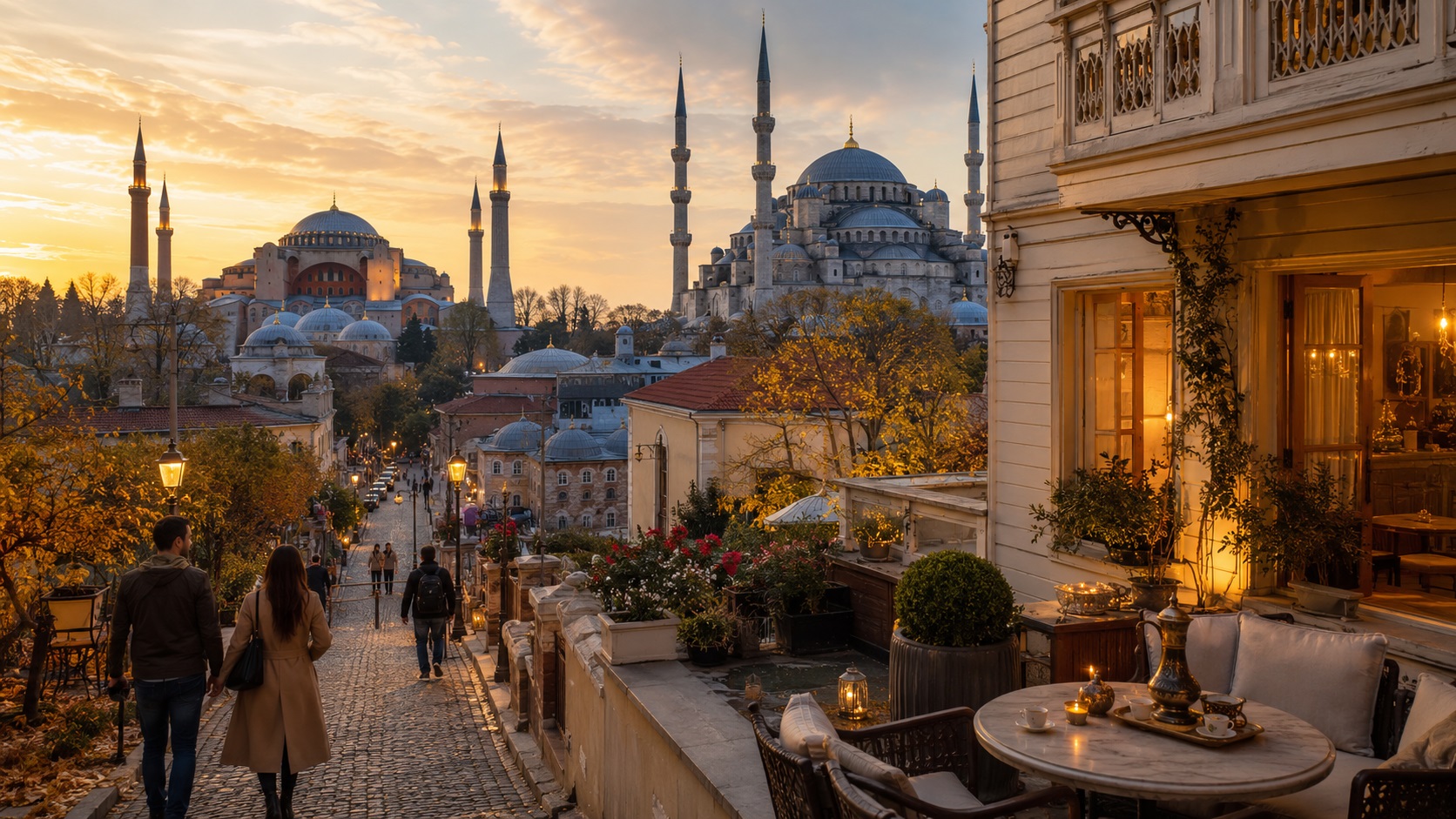
Sultanahmet is the obvious choice for a first Istanbul visit, and for good reason: you’re within walking distance of the city’s most important monuments. Stepping out of your hotel in the morning and being a five-minute walk from the Hagia Sophia is genuinely convenient, and for visitors with limited time who want to maximize what they see, proximity to the historic sites has real value.
The neighborhood has its limitations, and they’re worth knowing about.
The tourist infrastructure is thick. Sultanahmet has been catering to international tourists for decades, and the area around the major monuments — particularly along Divan Yolu and the streets between the Blue Mosque and the Grand Bazaar — is almost entirely oriented toward visitors. The restaurants display photos on the menu and are priced for people who haven’t yet learned the local alternatives. The carpet shops and souvenir stalls are persistent. The general texture of the neighborhood during the day is more tourist town than Istanbul.
It’s quieter at night than you might expect. The tourists who fill Sultanahmet during the day are largely day-trippers from other neighborhoods or cruise ship visitors. By evening, the area thins out and some streets become very quiet. This is either a feature or a drawback depending on whether you want the evening energy of the city on your doorstep or prefer the relative calm.
Accommodation quality varies enormously. Sultanahmet has everything from genuinely excellent boutique hotels in restored Ottoman houses with rooftop terraces overlooking the Hagia Sophia to budget guesthouses that photograph well and deliver less. The price range is wide; reading recent reviews carefully matters more here than in most neighborhoods.
Who Sultanahmet suits: First-time visitors who are primarily there for the monuments and want to maximize sightseeing efficiency. Travelers who find navigation in a new city stressful and value proximity over neighborhood authenticity. Shorter trips of two or three days where maximizing monument time is the priority.
Specific streets to know: Akbıyık Caddesi, running south from the Blue Mosque toward the sea walls, has a good concentration of mid-range accommodation with rooftop bars and is slightly removed from the thickest tourist density. The streets north of the Grand Bazaar, around Nuruosmaniye, are more local-feeling and better for eating.
Karaköy: The Best Base for Most First-Time Visitors
If I’m recommending a single neighborhood for someone visiting Istanbul for the first time, it’s Karaköy — and I’ve been recommending it consistently for the past five or six years because it continues to be the right answer for most people.
Karaköy sits at the base of the Galata Tower on the north side of the Golden Horn, directly across the Galata Bridge from Eminönü on the old city side. It’s a fifteen-minute walk across the bridge to the Grand Bazaar and twenty minutes to Sultanahmet. In the other direction, it’s a five-minute walk up the hill to Galata and another ten minutes to Beyoğlu and İstiklal Avenue.
What makes it work is that it sits at the intersection of old and new Istanbul without being dominated by either. The neighborhood has a genuine local character — a functioning port district that’s been there for centuries, full of hardware shops and fishing supply stores and old Greek and Armenian buildings — overlaid with a recent wave of excellent cafés, restaurants, and small hotels that have moved in without erasing what was there before.
The food scene around Karaköy is consistently excellent at every price point. The famous Karaköy Güllüoğlu baklava shop on the waterfront, open from early morning, produces baklava that resets your understanding of what baklava can be. The neighborhood’s restaurants range from excellent meyhanes (traditional taverns serving meze and raki) to newer places doing creative Turkish cooking, and the prices are significantly more reasonable than Sultanahmet.
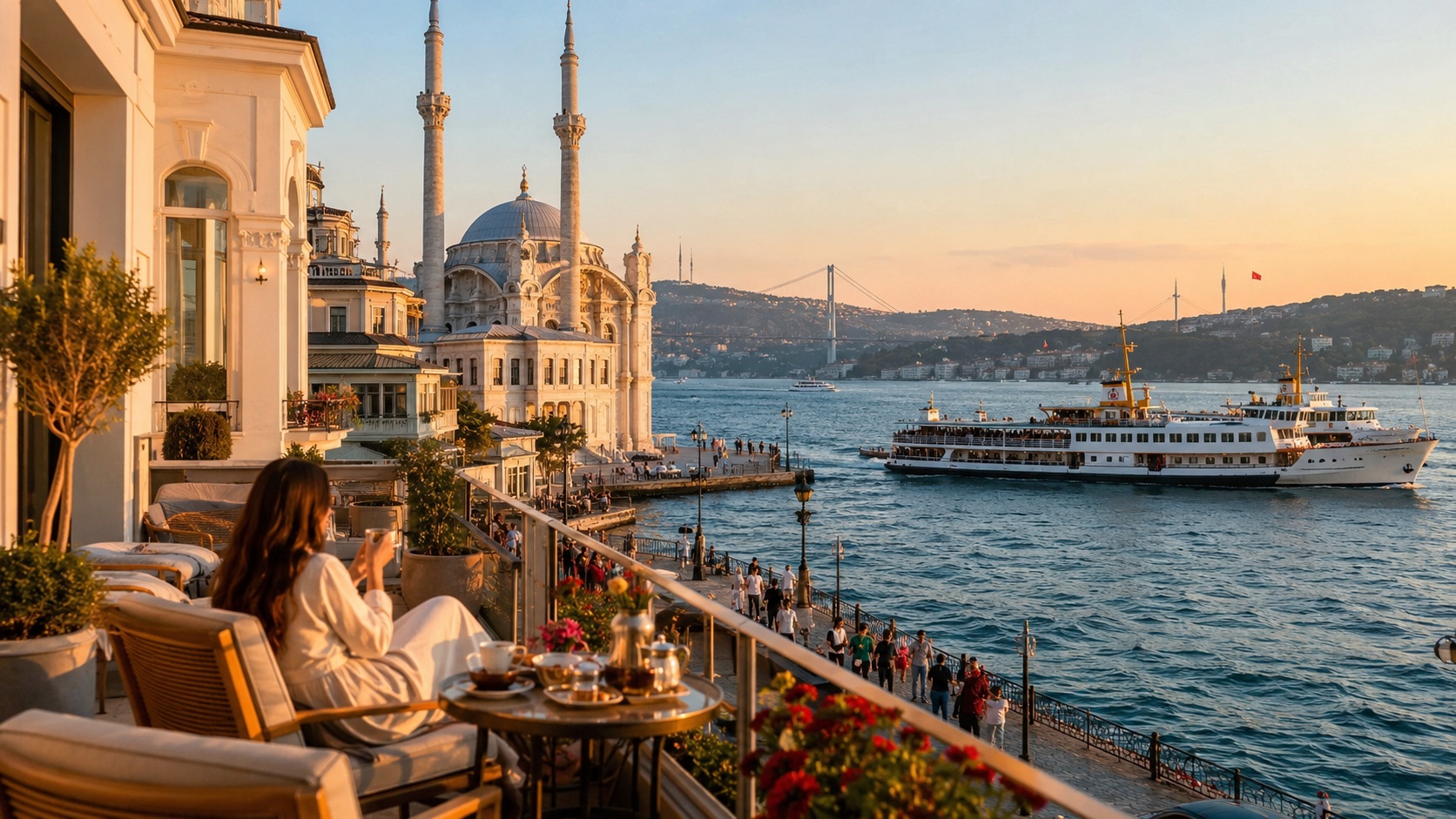
The waterfront along Karaköy gives you the best pedestrian view of the Golden Horn and the old city skyline — the domes and minarets of the mosque silhouettes against the sky — without being in a tourist-facing context. The fish sandwich boats at Eminönü, five minutes’ walk across the bridge, are one of the genuinely unmissable Istanbul street food experiences and are right there.
Transport connections are excellent. The tram runs from Karaköy across the Galata Bridge and along the old city’s main street all the way to the Grand Bazaar and beyond. The funicular up to Taksim takes two minutes. The ferry to the Asian side and the Princes’ Islands leaves from Eminönü, three minutes’ walk.
Accommodation in Karaköy ranges from design hotels in converted historic buildings to smaller boutique properties in the lanes above the waterfront. Prices are moderate compared to Sultanahmet for equivalent quality, and the options have expanded significantly in the past few years.
Who Karaköy suits: Most first-time visitors who want to be close to the main sights without being inside the tourist bubble. Travelers who care about eating well. People who want to explore beyond the monuments and experience Istanbul as a living city rather than a historical theme park.
Galata and Cihangir: Character and Bohemian Energy
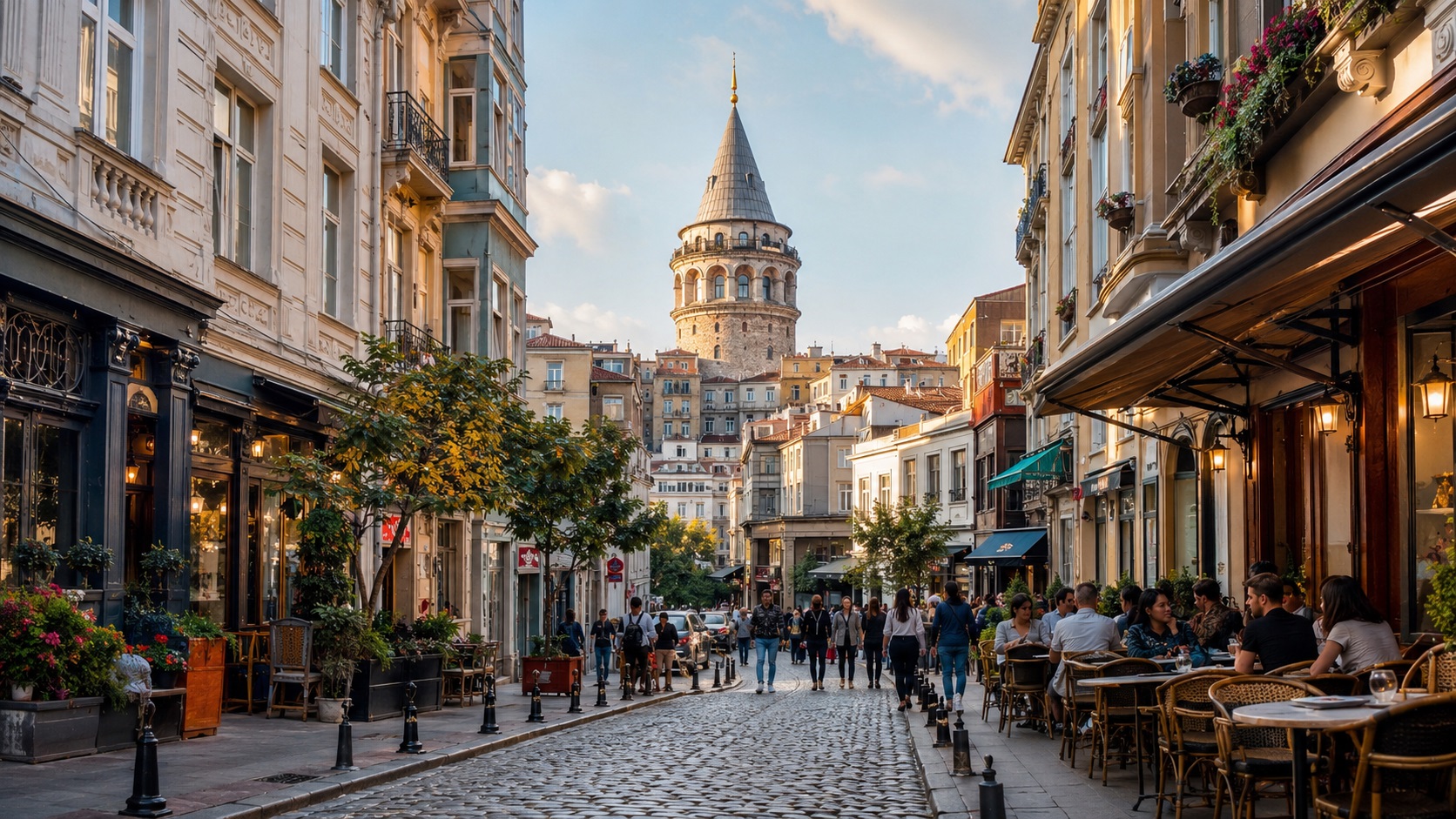
Galata is the neighborhood immediately uphill from Karaköy, centered on the 14th-century Galata Tower that punctuates the Istanbul skyline. It’s a steep ten-minute walk from the waterfront and opens onto the broader Beyoğlu district as you climb toward İstiklal Avenue.
The neighborhood around the tower has a specific character — independent bookshops, antique instrument dealers, narrow streets that climb in multiple directions, the old buildings of what was once a Genoese trading colony. It’s not a neighborhood that performs for visitors; it just exists, and the existence is interesting.
Cihangir, the neighborhood west of Galata running toward the Bosphorus waterfront at Kabataş, is where Istanbul’s creative class has largely settled — writers, artists, academics, the kind of professionals who want neighborhood cafés and morning walks to the newsstand. It’s residential in feel, with very little tourist infrastructure despite being fifteen minutes from all the major sights. The streets are steep and winding, the apartment buildings are old and atmospheric, and the neighborhood cafés are genuinely good.
Staying in Cihangir requires accepting some navigation challenges — the streets don’t make intuitive sense until you’ve walked them a few times — but it rewards visitors who are willing to get slightly lost in exchange for feeling like they’re actually in the city rather than its tourist-facing version.
Who Galata and Cihangir suit: Travelers who prioritize neighborhood authenticity over convenience. People who are comfortable navigating on foot and happy to walk fifteen to twenty minutes to the main sights. Longer stays where getting to know a specific neighborhood adds to the overall experience.
Beyoğlu and Taksim: Central but Noisy
Beyoğlu, centered on İstiklal Avenue and Taksim Square, is Istanbul’s main commercial and entertainment district — the place where the shopping is, where the nightlife concentrates, and where the city’s middle class comes to eat out and walk on weekends.
Staying near Taksim puts you in the center of this energy, with immediate access to restaurants, bars, and the İstiklal Avenue strip. The transport connections are excellent: the metro, the nostalgic tram on İstiklal, and easy access to everywhere else.
The downsides for first-time visitors are real. Taksim Square itself is not a beautiful or particularly pleasant space — it’s a busy traffic intersection that serves primarily as a transport hub. The streets immediately around it are crowded and noisy at most hours. And the neighborhood is 45 minutes by tram from Sultanahmet, which means that if your primary goal is the historic monuments, you’ll spend time and money getting there daily.
İstiklal Avenue is worth a walk regardless of where you’re staying, but it’s more of a day-trip destination from Karaköy or Sultanahmet than a reason to base yourself at the northern end of it.
Who Taksim and Beyoğlu suit: Visitors who are primarily interested in the contemporary city — shopping, nightlife, restaurants — over the historic monuments. People who’ve already seen the main sights on previous visits. Travelers who want to be in the city’s social center rather than its historical center.
The Asian Side: Worth Knowing About
Kadıköy and Moda on the Asian side of the Bosphorus are increasingly worth mentioning for visitors who’ve been to Istanbul before and want a different experience.
Kadıköy is a genuinely local neighborhood — a working-class market town that’s evolved into one of the city’s best food and nightlife districts — with an authenticity that the European tourist neighborhoods can’t fully replicate. The market streets around Kadıköy İskelesi, the fresh produce and fish stalls, the meyhanes and the new wave of coffee shops — this is Istanbul without the tourist overlay.
Getting to the European side from Kadıköy means a 25-minute ferry ride across the Bosphorus, which is itself one of the great Istanbul experiences and costs almost nothing. For a first visit focused on the historic monuments, this commute is a genuine inconvenience. For a longer stay or a return visit, it’s worth considering.
Who the Asian side suits: Repeat visitors to Istanbul. Travelers who’ve done the monuments and want to experience the city’s residential character. Anyone willing to trade convenience for authenticity.
Practical Accommodation Notes
Budget range: Istanbul’s accommodation is excellent value by European standards. A decent boutique hotel in Karaköy or Sultanahmet costs $80–150 per night. Mid-range options with good locations run $120–200. The top end — historic palace hotels, Bosphorus-view properties — goes up significantly, but the ceiling for genuinely comfortable and well-located accommodation is low compared to Western European cities.
Booking timing: Istanbul is popular year-round but especially so in spring (April–June) and autumn (September–October). For these periods, book two to three months ahead to secure good-value options in the neighborhoods described above. Last-minute options exist but are more limited and expensive.
What to check in reviews: Istanbul’s older buildings have wonderful character and occasionally significant practical limitations — no lift in a six-floor building, uneven plumbing, street noise in the narrow lanes. Recent reviews that specifically address these practical aspects are more useful than overall scores.
The rooftop terrace question: Many Istanbul hotels advertise rooftop terraces with views of the Hagia Sophia or the Bosphorus. These vary from genuinely spectacular to disappointing. Checking actual photos from the rooftop — not renderings or wide-angle marketing shots — in recent reviews is worth the five minutes it takes.
The Neighborhood I’d Choose
For a first visit, Karaköy. Every time, without much deliberation.
The position is simply better than anywhere else: close enough to walk to the old city, close enough to walk to Beyoğlu, on the waterfront, with the best food in the central city on your doorstep and transport connections to everywhere else. The neighborhood has enough character that time spent not sightseeing is time spent in Istanbul rather than time spent waiting to be somewhere else.
If you’ve been before and want to go deeper into the contemporary city, Cihangir. If you’re there for four days and the monuments are the entire point, Sultanahmet — but choose your hotel carefully and eat outside the neighborhood as much as possible.
Istanbul rewards visitors who treat it as a city to experience rather than a list of sights to complete. Where you stay is the first decision that either supports or works against that approach.
Planning your first Istanbul trip and have questions about specific hotels, neighborhood positioning, or logistics? Leave them in the comments and I’ll give you the honest version.