
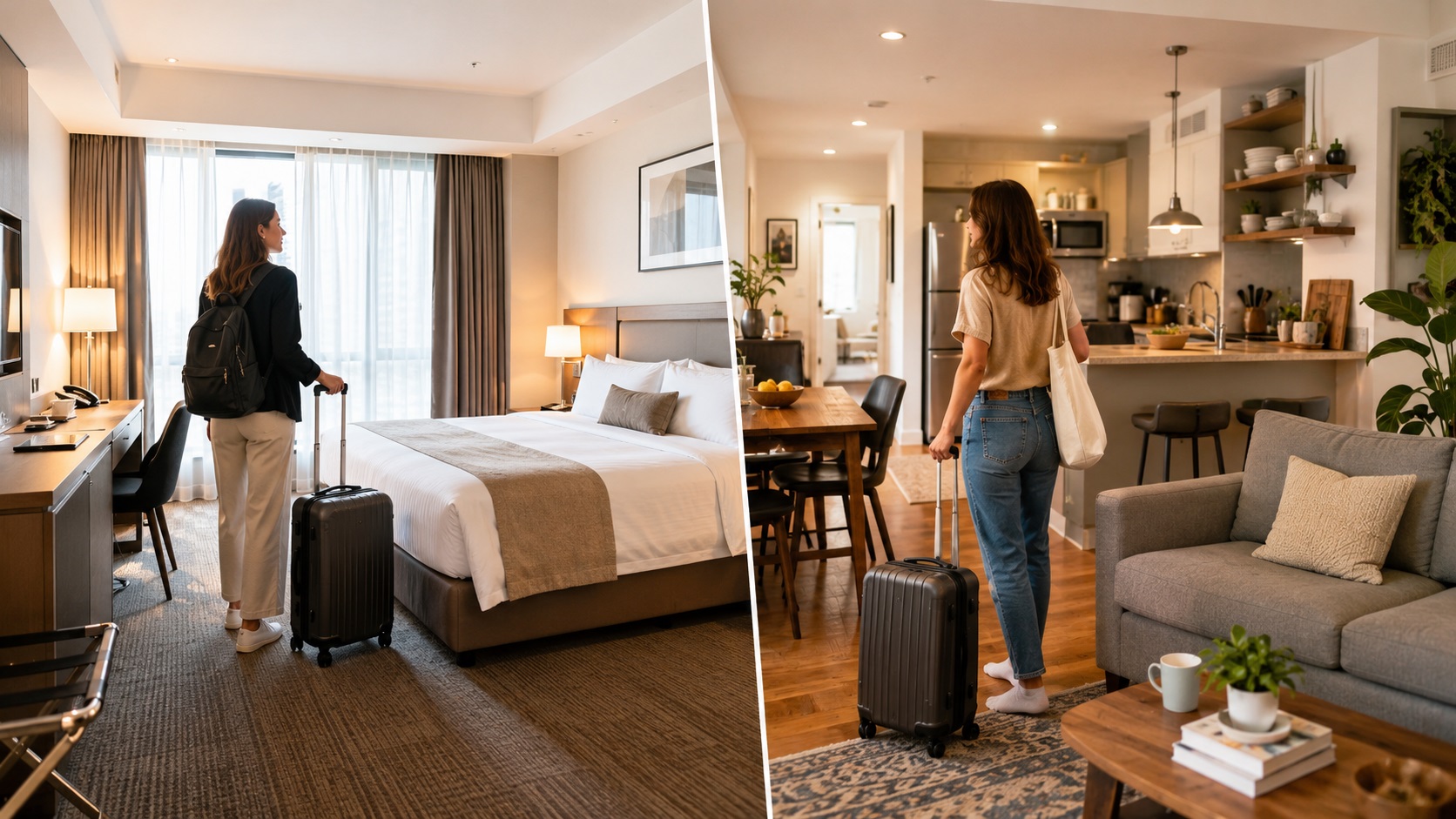
The Core Difference Nobody Talks About Enough
When you book a hotel, you're buying a service. Staff are there, things get cleaned, problems get fixed (usually), and someone is accountable if they don't. When you book an Airbnb, you're renting someone's property from a private individual, mediated by a platform whose incentives don't always align with yours. That distinction matters a lot more on a long trip than a short one. On a weekend away, a minor Airbnb issue — a noisy neighbor, a shower with low pressure, a host who takes four hours to respond — is an inconvenience. Over three weeks, it becomes your life.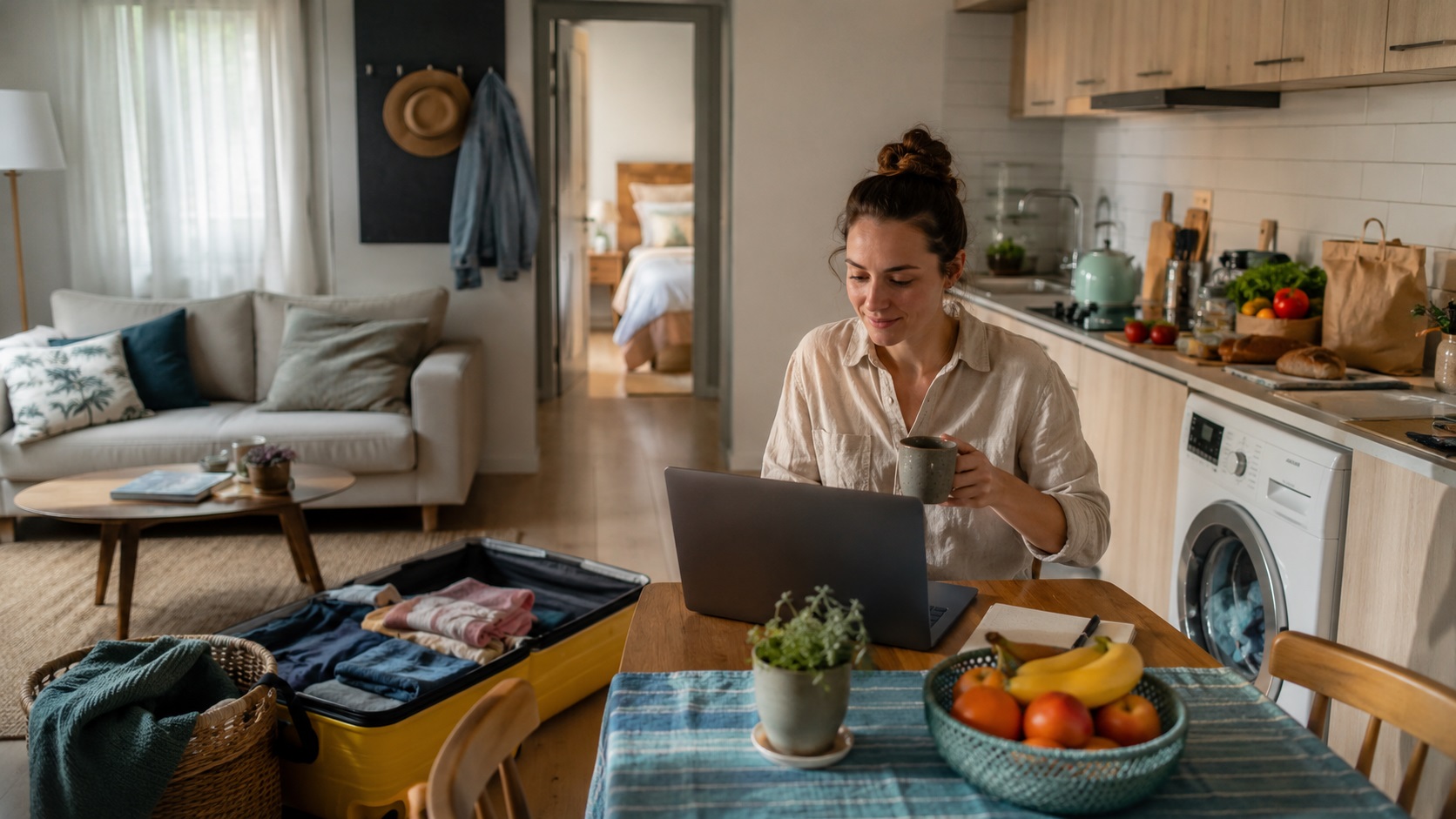
Where Airbnb Genuinely Wins
Space and privacy. This is the obvious one, but it's genuinely significant. A one-bedroom Airbnb gives you a living room to decompress in, a real bed in a room with a door you can close, and usually more square footage than a hotel room at the same price point. After two weeks on the road, being able to sit on a sofa and watch something on a proper TV without it being three feet from where you sleep is not a small thing. The kitchen. For long trips, this might be the most important factor of all. Eating every meal out gets expensive fast — not just financially but physically. You start craving something simple that you cooked yourself. A kitchen lets you buy groceries, control what you're eating, make your own coffee in the morning, and cut your daily food budget significantly. On a two-week trip, access to a kitchen can easily save $150–200 compared to eating out for every meal. Feeling like a local. This is slightly overused as a travel trope, but there's something real to it. Staying in a residential neighborhood, shopping at the same supermarket as the people who actually live there, having a commute to the tourist areas rather than sleeping inside them — it changes the texture of a trip. You see a different version of a city when you're not staying in its most commercialized district. Better value at the higher end. If you're traveling with a group or a family, a multi-bedroom Airbnb almost always beats the equivalent hotel rooms on price. Four people splitting a three-bedroom apartment in Lisbon is a different financial calculation than four hotel rooms. Longer stays get cheaper. Most Airbnb hosts offer weekly and monthly discounts. A place listed at $80/night might drop to $55/night for a month-long stay. This is one of Airbnb's most underrated advantages for anyone doing extended travel or slow travel.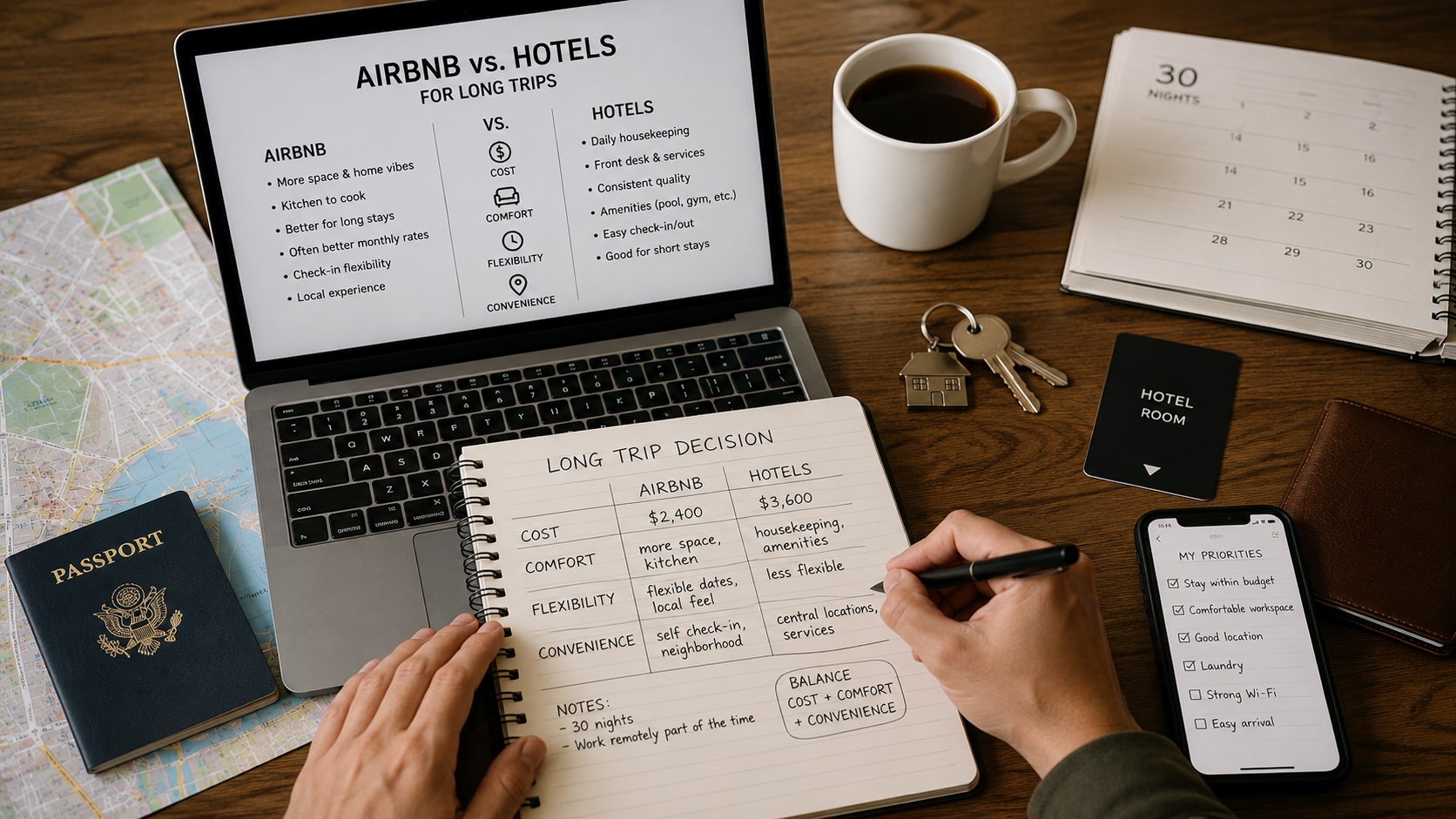
Where Hotels Still Win
Reliability. This is the big one. When you walk into a Marriott or a Novotel or even a mid-range chain hotel you've never stayed at before, you have a reasonable idea of what you're getting. The room will be clean. There will be towels. Someone will be at the front desk if something goes wrong. The Wi-Fi will be functional. These things sound basic until you've arrived at an Airbnb after a long travel day to find the check-in instructions are wrong, the host isn't responding, and you're standing outside a door you can't open. That scenario is not common — but it happens. And it never happens at a hotel. Flexibility on arrival and departure. Hotels almost universally allow early luggage storage and late checkout requests. Airbnbs usually have strict check-in windows because the host or a cleaner needs to turn the place over. If your flight lands at 8am and check-in isn't until 3pm, a hotel concierge will take your bags without a second thought. An Airbnb host may or may not be able to accommodate you. No cleaning fees. This is where Airbnb's value proposition has eroded significantly over the past few years. Cleaning fees of $50, $80, even $150 on top of the nightly rate have become common. On a short stay, this can make an Airbnb that looks cheap on the surface end up costing more than a hotel. On longer stays the fee is spread across more nights, which is why Airbnb works better financially the longer you stay. Amenities that are actually available. Hotel gyms, pools, daily housekeeping, room service, 24-hour front desks — these exist and they're included. An Airbnb listing might mention a "gym" that turns out to be a stationary bike in the basement, or "daily cleaning available" that costs extra to actually use. Consistency across properties. If you're moving between several cities on a longer trip, booking hotels in each location removes a layer of uncertainty. You don't need to spend an hour vetting each Airbnb listing, reading between the lines of reviews, assessing whether "cozy" means charming or small, and whether "a short walk from the center" means ten minutes or thirty. Points and status. If you travel regularly and have status with a hotel loyalty program, the calculus changes further. Free upgrades, late checkouts, free nights — these have real monetary value that doesn't exist on Airbnb's side of the equation.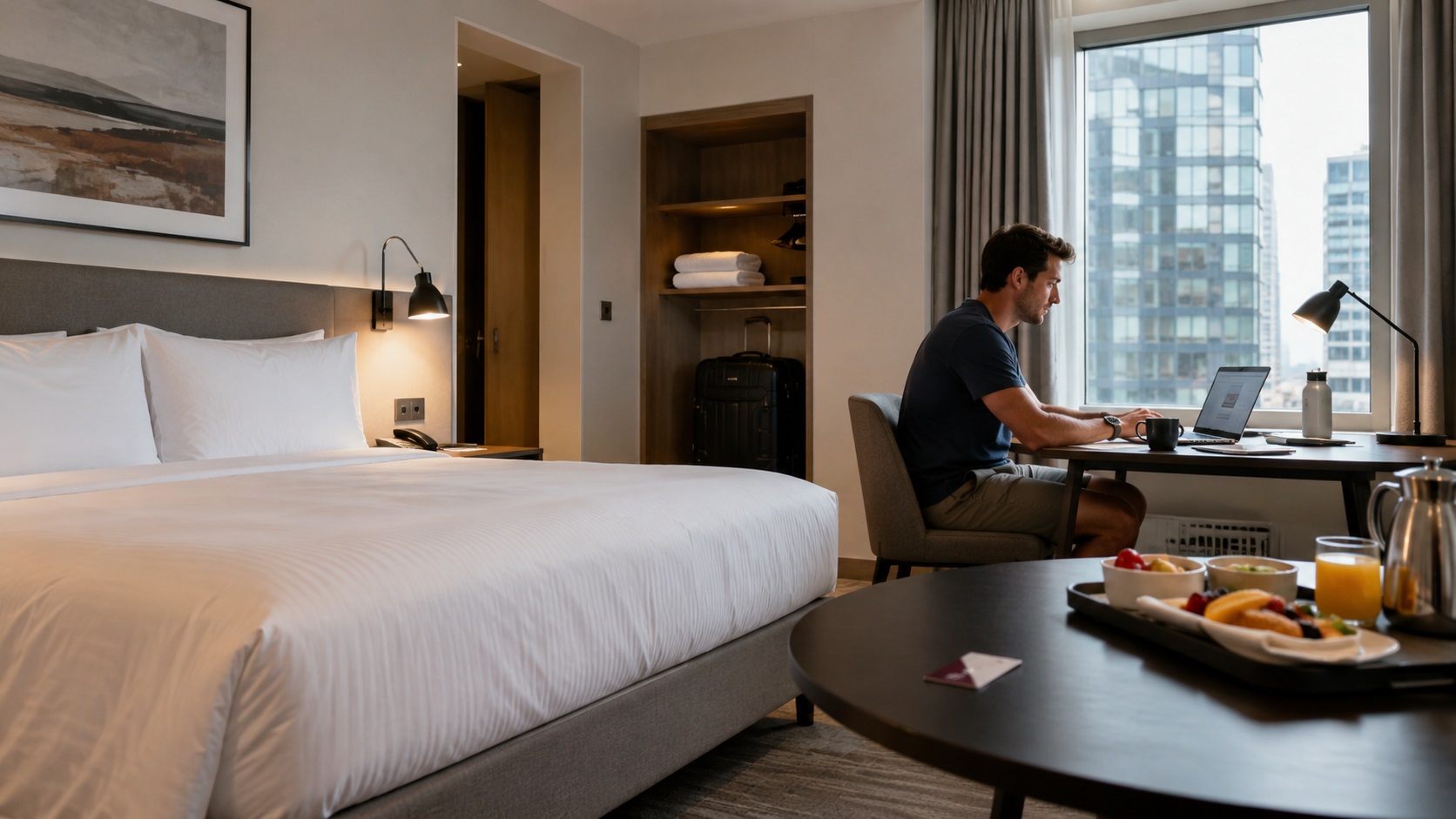
The Hidden Costs of Airbnb
The advertised nightly rate on Airbnb has become less and less meaningful. Here's what you need to add to get the real number: Cleaning fee. Already mentioned, but worth emphasizing. Always click through to the full price breakdown before comparing listings. Service fee. Airbnb charges guests a service fee on top of the host's price. This is typically 14–16% of the subtotal and is non-negotiable. Local taxes. Many cities now collect tourist taxes through Airbnb, adding another percentage on top. Security deposit. Not universal, but some hosts require one. Usually refundable, but occasionally the source of disputes. Add these together and a listing at $60/night can easily become $85–90/night for a short stay once fees are calculated. Always use the total price view in Airbnb's filters — it's the only honest number.The Hidden Risks of Airbnb
Most Airbnb stays go smoothly. But it's worth being clear-eyed about what can go wrong, especially on a long trip where the stakes are higher. Cancellation by the host. Hosts can cancel reservations. It's rare, but it happens — sometimes because they found a longer-booking tenant, sometimes because of a genuine emergency, sometimes for reasons that are never explained. Hotels almost never cancel on guests. If a host cancels your three-week reservation two days before you're supposed to arrive, Airbnb will help you find alternatives, but you're not guaranteed the same property, location, or price. The listing doesn't match reality. Photos are taken with wide-angle lenses. "City views" sometimes means a sliver of skyline between buildings. "Quiet neighborhood" is subjective. The more reviews a listing has and the more recent they are, the better your chances of an accurate picture. Neighbor and building issues. You're not just renting a space — you're temporarily inserted into someone's building. Noise from neighbors, shared laundry that doesn't work, building access issues, packages getting lost — these are problems hotels have eliminated by design. Disputes over deposits or damages. Airbnb has an arbitration process for disputes between hosts and guests. It's better than nothing. It's also slow, occasionally opaque, and sometimes resolves in ways that feel unfair to one party. Document everything when you check in — photos, videos — and communicate with hosts through the platform so there's a record.A Framework for Deciding
Here's how I actually think about it when planning a long trip: Choose Airbnb when:- You're staying in one place for more than a week
- You're traveling with family or a group of three or more
- You cook regularly and need a kitchen
- You're somewhere in Airbnb's sweet spot — not the most tourist-dense neighborhood, where hotels are often better located anyway
- You've found a listing with 50+ recent reviews and a Superhost badge
- You're moving between cities frequently (more than once a week)
- You value reliability over character
- You're arriving on an unpredictable schedule
- You have hotel loyalty status worth using
- The Airbnb's cleaning fees make the total price uncompetitive
- You're in a place where hotel options are genuinely good value (Eastern Europe, Southeast Asia, parts of Latin America)
What About Hostels, Guesthouses, and Alternatives?
Worth mentioning briefly because they complicate the binary. In many parts of Europe, a well-run guesthouse or pension sits in interesting territory — the personal touch of an Airbnb, the reliability of a hotel, often at a lower price than either. Family-run guesthouses in Portugal, Croatia, and Greece are often the best value option of all three. Boutique hotels in secondary cities are increasingly competitive with Airbnb on price while offering more consistency. And for solo travelers, a good hostel with private room options is often the most social and the most efficient. The Airbnb vs. hotels frame is useful, but it's not exhaustive. For trips of a week or more, in a single location, Airbnb is usually the better choice — more space, a kitchen, and lower nightly cost once you've spread the fees across enough nights. For shorter stays, frequent moves, or situations where reliability matters more than character, hotels win. The mistake most people make is deciding based on a single factor — usually price — without accounting for cleaning fees, the value of predictability, or how much the experience of the stay itself matters to the kind of trip they're taking. Figure out what kind of traveler you are on long trips. Then pick accordingly.Traveling somewhere specific and trying to decide between Airbnb and a hotel? Drop the destination in the comments and I'll tell you what I'd do.


