
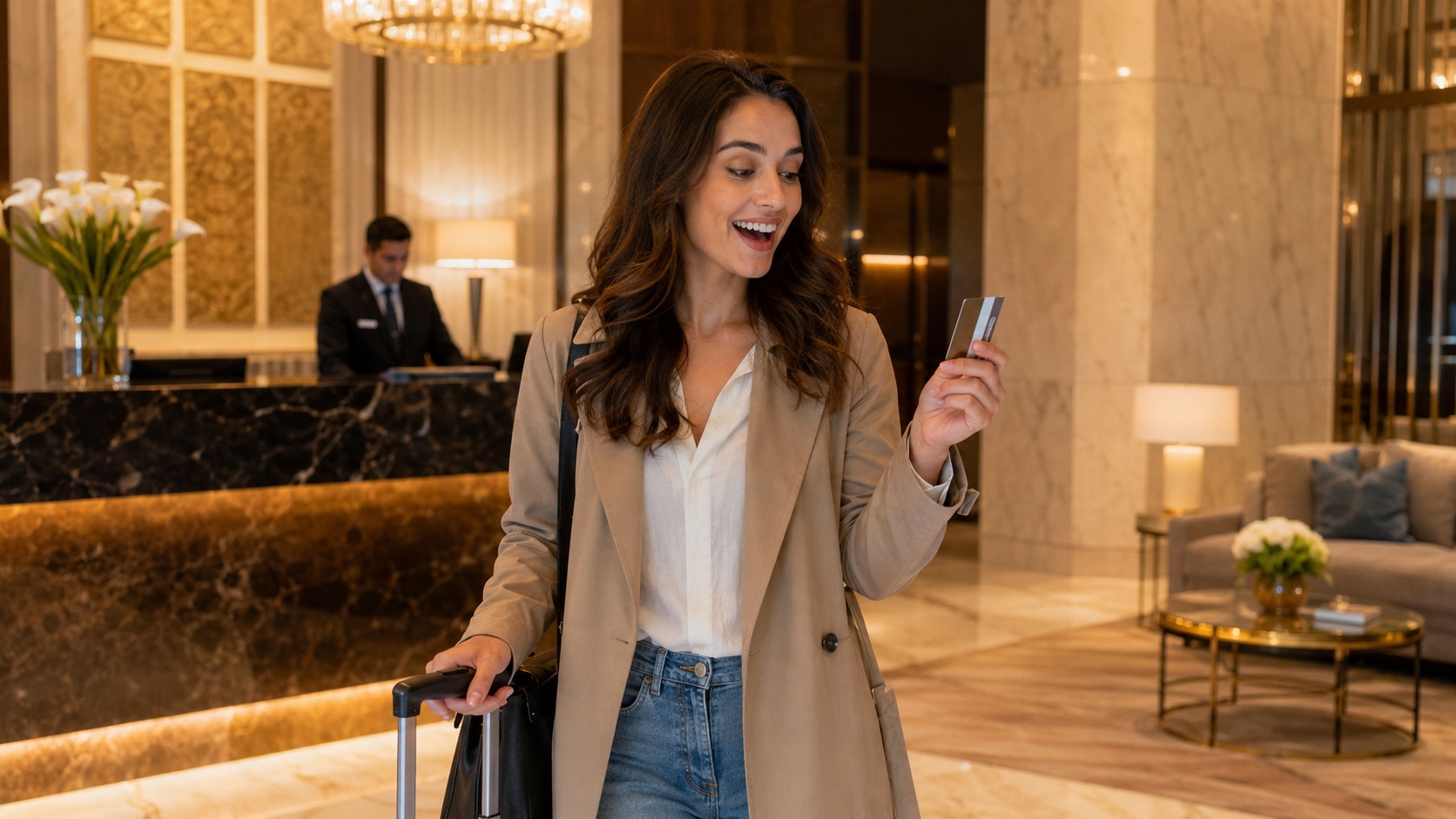
Understand Why Upgrades Happen at All
Before you can ask for something, it helps to know why hotels give it away in the first place. Hotels oversell certain room categories. They block rooms for maintenance, deep cleaning, or renovation. Premium rooms sometimes go unbooked close to the arrival date. Front desk agents often have discretion to move guests around — and they use it. Sometimes it's to fill a room that would otherwise sit empty. Sometimes it's because a guest was genuinely pleasant to deal with. Sometimes both. The point is that upgrades aren't charity. They're a practical tool hotels already use. You're not asking for a favor so much as positioning yourself to be the obvious choice when one becomes available. [caption id="attachment_120" align="alignnone" width="1672"]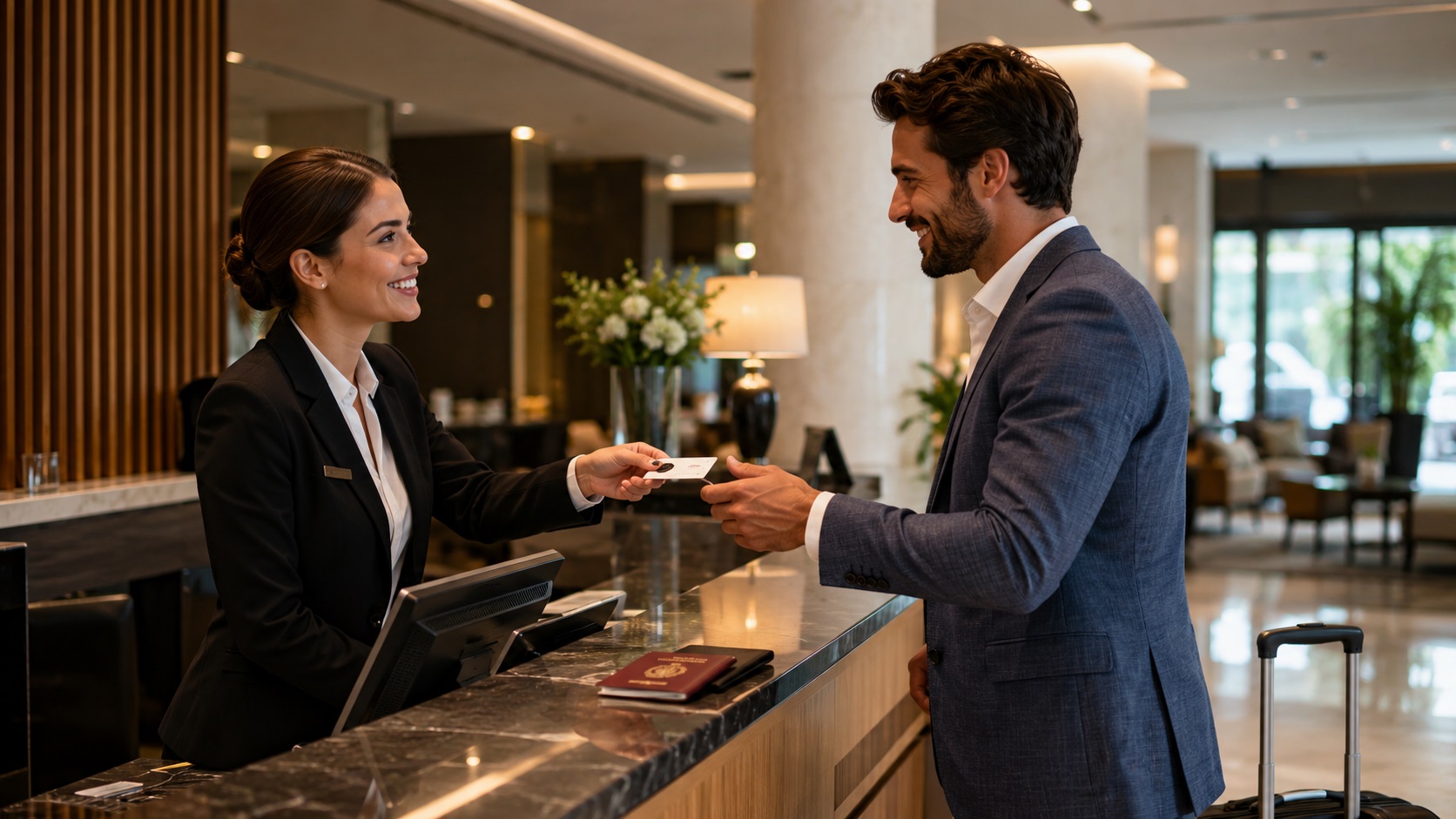 How to Get a Hotel Room Upgrade Without Paying for It[/caption]
Join the Loyalty Program — Even If You're Not a Regular
This is the lowest-effort thing you can do and it costs nothing. Sign up for the hotel's loyalty program before your stay, even if you've never stayed there before and don't plan to regularly. Here's why it matters: loyalty members get upgraded before non-members, full stop. Even a brand new member at the base tier edges out a non-member with the same booking. Hotels track this at check-in automatically. The signup takes five minutes. The email confirmation usually comes before your arrival. You don't need points. You don't need status. You just need to exist in their system. If you're booking a chain — Marriott, Hilton, Hyatt, IHG — and you're not already enrolled, do it now. If it's an independent hotel, check their website for any member program or email list. Smaller properties sometimes have their own version of this.Book Directly With the Hotel
Third-party booking sites like Expedia or Booking.com often get you the cheapest rate, but they also put you at the back of the line for upgrades. Hotels prioritize direct bookers because they keep the full revenue instead of paying a commission to the platform. If the direct rate is the same — or close — always book direct. Even a few dollars more is often worth it for the upgrade priority alone. When you book direct, you also have the option of adding a note or special request to your reservation. More on that in a moment.Time Your Check-In Strategically
Late afternoon check-in — somewhere between 3 and 6 p.m. — is often the sweet spot for upgrades. By that point, the hotel knows exactly which rooms are occupied, which guests didn't show, and what's available for the rest of the evening. The picture is clear. If a nicer room is sitting empty, a front desk agent can offer it to you with confidence. Checking in very early, before noon, means that picture isn't complete yet. They may not know what's available. Checking in at 11 p.m. means whatever was available has already been given away. That said, if you have status or have made a specific request in advance, early check-in arrangements can sometimes work in your favor — particularly at higher-end properties where they track VIP arrivals and prepare rooms ahead of time.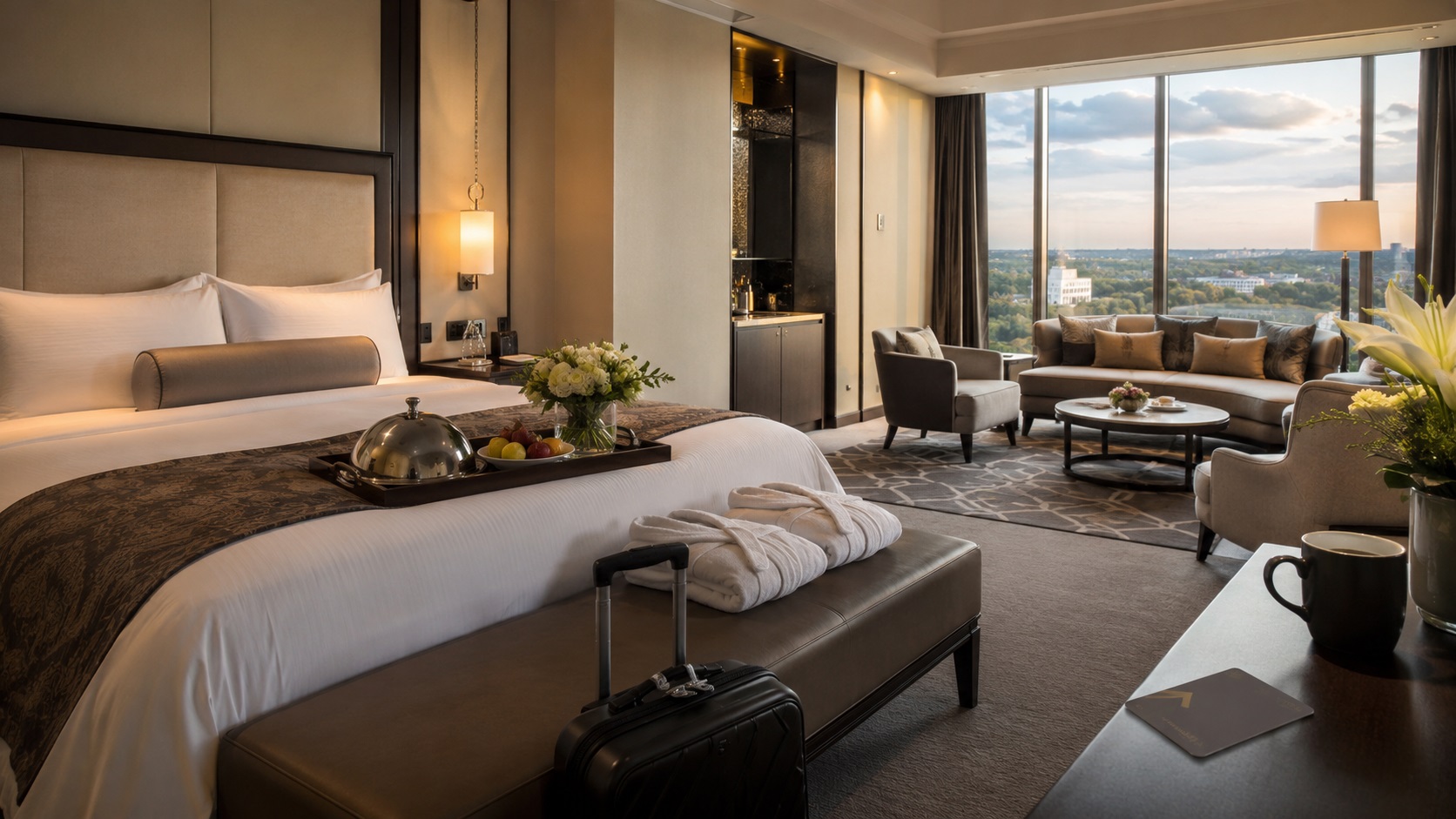
Mention Special Occasions — Genuinely
Honeymoon. Anniversary. Birthday. Major birthday, specifically — the kind that ends in a zero. Hotels pay attention to these. They're in the business of making people feel good, and a special occasion gives the front desk agent a reason to do something memorable without it feeling arbitrary. The key word is genuinely. Don't invent a reason. If it's your actual anniversary, say so. If you're celebrating something real, mention it when you book and again at check-in. A brief note in the reservation comments can trigger a flag that puts you on the manager's radar before you even arrive. Some hotels go out of their way for milestone moments — upgraded rooms, small welcome gifts, a handwritten card. Others just appreciate knowing. Either way, it doesn't hurt to mention it.Ask — But Ask the Right Way
Most people don't ask for upgrades because they feel awkward about it. The ones who do ask often frame it badly — demanding, entitled, or with a long-winded explanation of why they deserve it. There's a better approach. When you arrive at the front desk, check in normally. After the agent has pulled up your reservation, try something like: "Is there any chance there's a better room available tonight? I'm not in a rush if it helps." Casual, friendly, low-pressure. That last part matters. Letting them know you're flexible — on room type, on floor, on timing — makes it easier for them to say yes. You're not creating work for them. You're making their job slightly easier. A smile and a relaxed tone go further than most people think. Front desk staff deal with frustrated travelers all day. Being genuinely pleasant to interact with is rarer than it should be and it gets noticed.Use a Credit Card With Travel Benefits
Several travel credit cards include complimentary hotel status as a perk — Amex Platinum, Chase Sapphire Reserve, and others. These cards can give you Gold or Platinum status with major hotel chains without a single qualifying night, and that status comes with upgrade eligibility. If you travel a few times a year and you're not using a card with travel perks, you're leaving real value on the table. It's worth checking what status benefits your existing cards carry, or researching whether a card with these perks makes sense for your spending habits.Stay Longer or Visit During Off-Peak Periods
Hotels are more likely to upgrade guests who are staying multiple nights. The math works in your favor — a nicer room generates goodwill that pays off across several days of the stay, not just one. Off-peak timing also helps. A beach resort in February, a city hotel on a Tuesday, a ski lodge in late spring — these properties have availability to spare. When occupancy is low, upgrades cost the hotel almost nothing and improve the guest experience at almost no expense. If your travel dates are flexible, even slightly, shifting by a day or two can move you from a sold-out weekend to a quieter weekday where staff have more room to work with.Don't Overlook Smaller, Independent Hotels
The upgrade conversation is different at a boutique property or an independent hotel than at a large chain. There's no corporate algorithm deciding who gets moved. There's an owner, or a manager, or a front desk person who actually cares about your experience and has the authority to act on it. At smaller properties, relationships matter more. A warm interaction, a genuine comment about the hotel, or simply being an easy guest can translate into a nicer room, a late checkout, or a breakfast added to your stay. These things happen constantly at independent hotels and they rarely make it into travel guides.What Not to Do
A few things that don't work and that can actually work against you: Complaining about your room before you've seen it. Showing up with a long list of demands before check-in is complete. Dropping a loyalty tier or point total into conversation like a credential. Trying to guilt staff into upgrading you. Front desk agents are people. They respond the same way anyone does — better to a reasonable, friendly request than to pressure or entitlement. The travelers who get upgrades most often aren't the ones making the most noise. They're the ones who make the interaction pleasant enough that helping them feels like the natural thing to do.A Last-Minute Upgrade Bid
Some hotel chains — Marriott, Hilton, and others — now offer upgrade bidding systems where you can submit a below-retail offer for a premium room in the days before your arrival. If the room is going to go empty anyway, the hotel may accept a bid far below the listed upgrade price. Check your booking confirmation or the hotel's app in the 48 to 72 hours before check-in. Not every property uses this system, but when it's available, it's one of the most underused ways to get a genuinely better room at a fraction of the cost. Is Booking.com or Expedia Better? A Real ComparisonGetting a hotel upgrade without paying for it isn't a game of chance. It's a quiet skill — part timing, part awareness, part basic human decency. Most of the steps here take almost no effort. The ones that do take a little more pay off far beyond a single stay. The nicest room in the hotel is just a pleasant conversation away, more often than you'd think.


