A First-Timer’s Guide to Exploring Kyoto in 4 Days
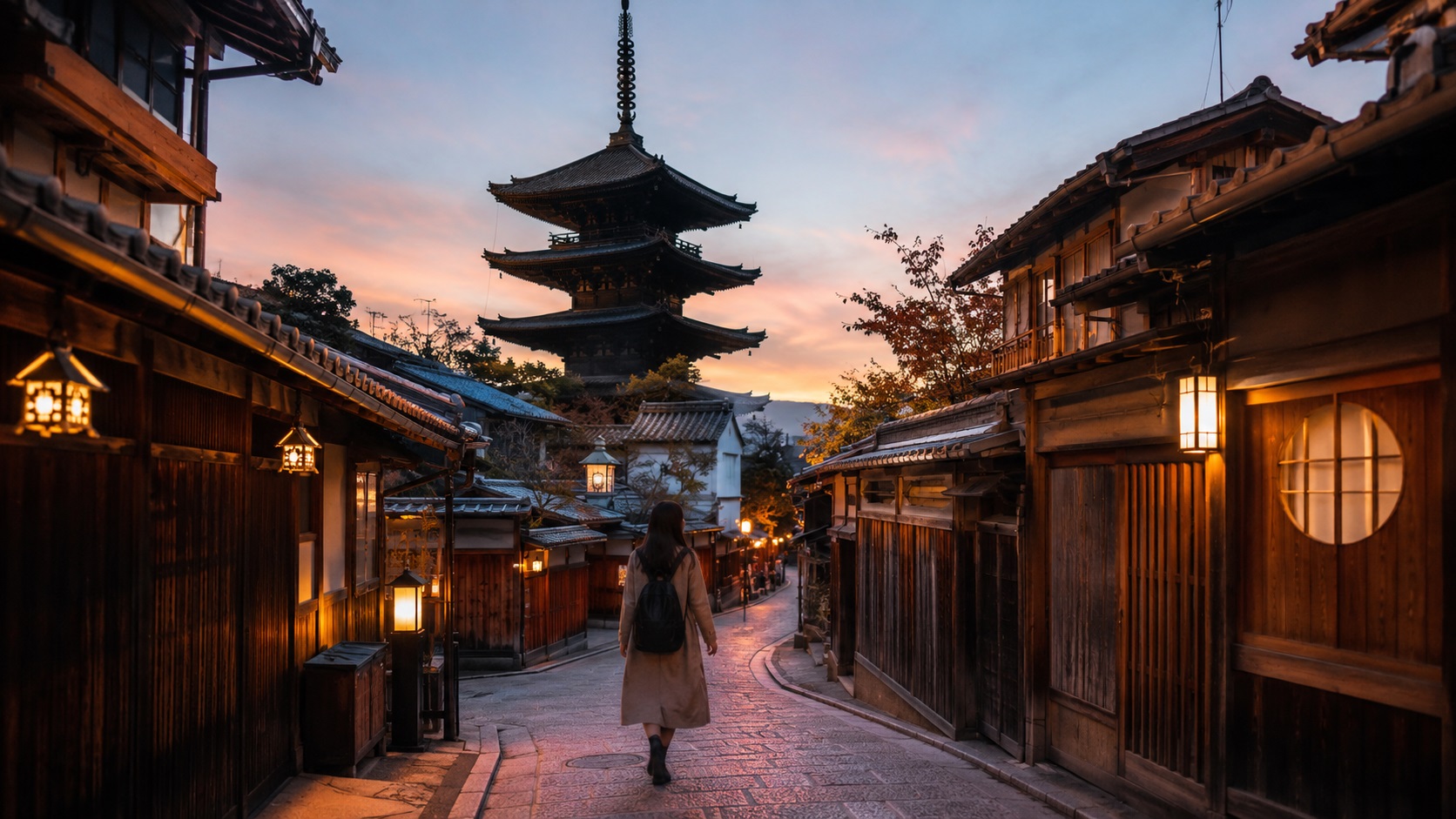
Kyoto is one of the few cities in the world that genuinely lives up to what people imagine before they arrive. The temples, the narrow lanes of preserved machiya townhouses, the moss gardens, the geisha districts, the mountains pressing in from three sides — it’s all there, and it’s all as quietly extraordinary as the photographs suggest.
It’s also a city of about 1.4 million people, home to 1,600 Buddhist temples and 400 Shinto shrines, and visited by millions of tourists every year. Figuring out which parts of it to actually spend time in, and which to walk past on the way to somewhere better, takes either experience or a decent guide.
Four days is a solid amount of time for a first visit. Not enough to see everything — that would take months — but enough to move through the city at a pace that lets things settle rather than just accumulate. This guide is built around that timeframe, with a real itinerary and the kind of specific detail that makes the difference between a good trip and a great one.
Before You Arrive: A Few Things Worth Knowing
Getting there from the airport. Most international flights land at Osaka’s Kansai International Airport (KIX), not Kyoto’s own (very small) airport. From KIX to Kyoto, the Haruka Express train is the most convenient option — it runs directly to Kyoto Station in about 75 minutes and costs around ¥3,600. The ICOCA & Haruka combination ticket offers a discount if you’re also planning to use local transit. Avoid taxis from the airport; they’re extremely expensive.
If you fly into Tokyo and are continuing to Kyoto, the Shinkansen from Tokyo Station to Kyoto Station takes about 2 hours 15 minutes on the Nozomi or Hikari services. This is fast, reliable, and worth the price of a Japan Rail Pass if you’re doing more travel around the country.
Getting around Kyoto. The city’s bus network covers almost everywhere you’ll want to go and is straightforward once you understand that most lines pass through Kyoto Station. A single bus ride costs ¥230; a one-day bus pass costs ¥700 and pays for itself quickly if you’re making three or more journeys. IC cards (ICOCA, Suica) work on buses and the subway and save you the hassle of exact change.
Cycling is an excellent option in the flatter central and northern parts of the city. Rental shops cluster around the station and main tourist areas, and bikes cost ¥1,000–1,500 per day. Many of Kyoto’s best lanes and neighborhoods are genuinely better explored by bike than by transit.
Taxis are available but expensive. The subway is fast but doesn’t serve the main tourist areas as well as the bus network does.
When to visit. Cherry blossom season (late March to mid-April) and autumn foliage season (mid-November to early December) are Kyoto at its most beautiful and Kyoto at its most crowded. Hotel prices surge, popular sites are overwhelmed, and moving through the city takes significantly longer than usual. If you can choose your timing, May, June (outside rainy season), September, and early October offer pleasant weather and manageable crowds. January and February are cold but very quiet, and the temples take on a different quality in winter light.
Day 1: Arashiyama and the Western Hills
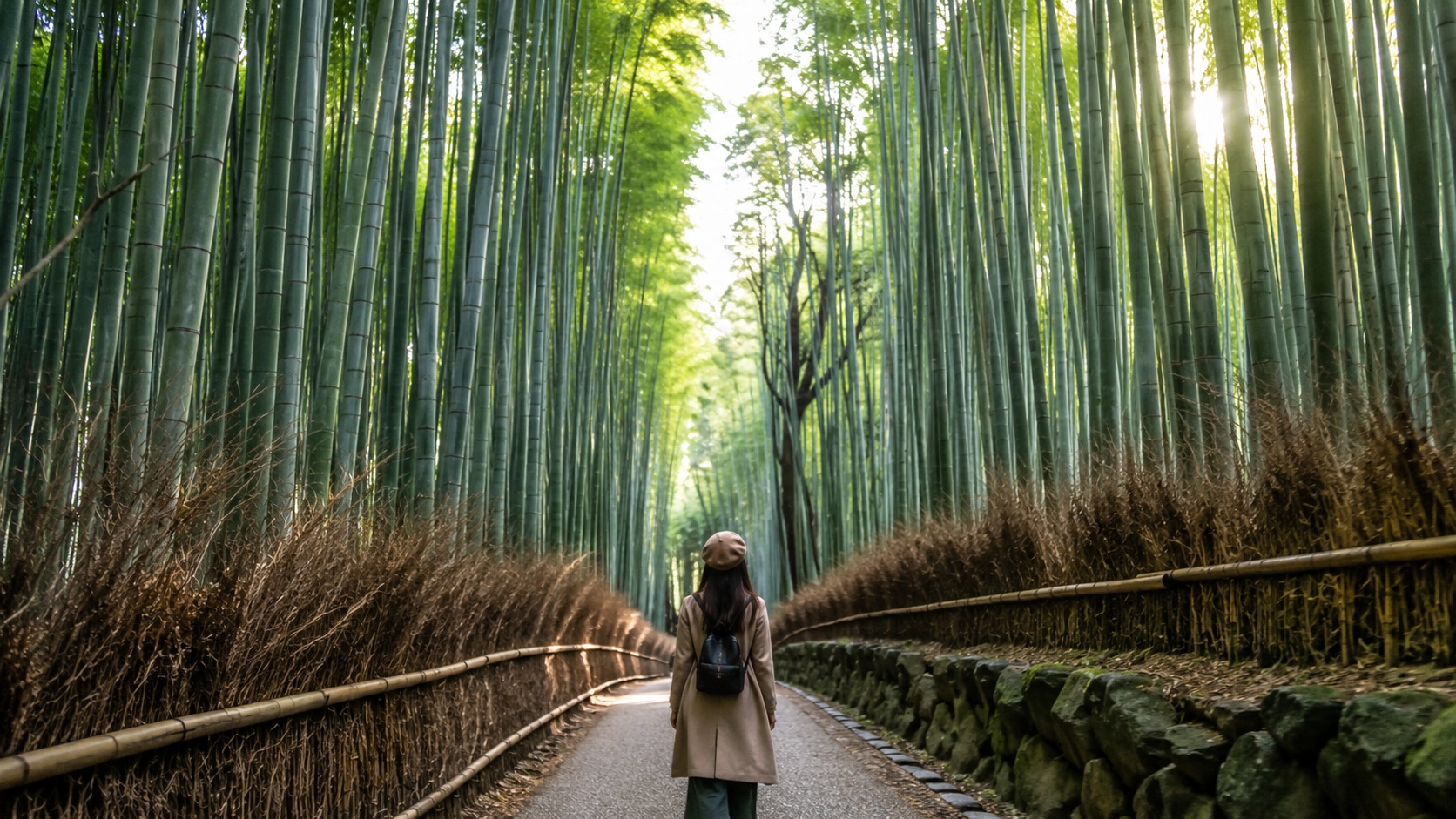
Start your first day in Arashiyama, the bamboo-forested district in the western part of the city. Getting there early is not optional — it’s one of the most visited places in Japan, and by 10am the main bamboo grove path is packed. Arrive by 8am and you’ll have a fundamentally different experience.
The Bamboo Grove is smaller than most people expect — the main path takes about ten minutes to walk — but genuinely striking in the early morning quiet. The scale of the bamboo, the filtered light, the sound of the stalks moving in the wind: these things are real and worth being there for. Come prepared for it to feel slightly anticlimactic later in the day when you’ve passed crowds of hundreds.
Tenryu-ji is a Zen temple immediately adjacent to the bamboo grove whose garden is one of the finest in Kyoto. The pond garden, designed in the 14th century, uses the mountains of Arashiyama as borrowed scenery — an ancient Japanese landscape technique where the background becomes part of the composition. The garden is worth the ¥500 entry; the interior of the main hall costs extra and is optional.
After Tenryu-ji, walk north along the quieter lanes of Sagano. This neighborhood — narrow streets, traditional houses, small vegetable plots, occasional temples glimpsed through gates — is what many people come to Kyoto hoping to find and often don’t. Spend an hour wandering without a specific destination.
Jojakko-ji and Nison-in are two smaller temples in the Sagano hills that reward visitors who make the slight effort to reach them. Neither is famous enough to be crowded. Both have gardens that are beautiful in spring and autumn, mossy and quiet the rest of the year.
In the afternoon, cross the Togetsukyo Bridge back toward the main Arashiyama area and walk along the river. The monkey park on the hillside above the bridge (¥550 entry) is worth visiting if you’re traveling with children and skippable otherwise.
Return to central Kyoto by bus or train for the evening. Dinner in the Gion or Pontocho area — more on those below.
Day 2: Eastern Kyoto — Gion, Higashiyama, and the Temple Trail
Eastern Kyoto is the historic heart of the city and the area that contains the greatest concentration of temples, shrines, and preserved streets. It’s also where the bulk of the tourist traffic concentrates, which means timing matters.
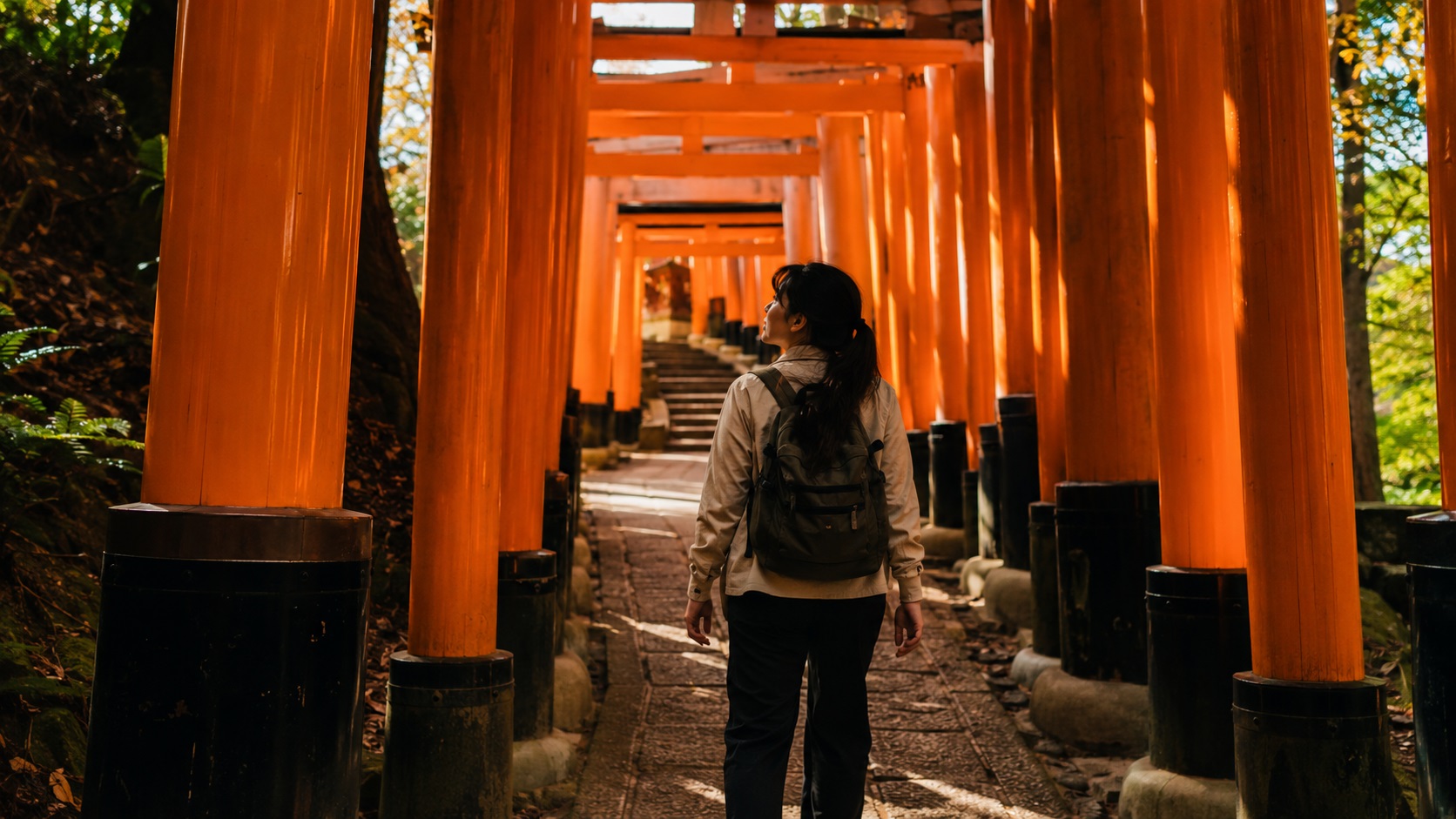
Start at Fushimi Inari Taisha, not because it belongs geographically with eastern Kyoto (it’s further south) but because the combination of an early start and the hike up the mountain means you can be done by mid-morning and then move north. The thousands of vermilion torii gates winding up Mount Inari are a genuine spectacle that no photograph fully captures — standing inside the tunnel of gates as they recede up into the mountain forest is something else. The full hike to the summit and back takes about 2–3 hours. Most tourists turn back at the first major summit (Yotsutsuji intersection), which takes about 30–40 minutes. Going further rewards you with far fewer people and a panoramic view of the city.
From Fushimi Inari, take the Keihan Line north to the Kiyomizudera area.
Kiyomizudera is one of Japan’s most famous temples, and it earns the attention. The main hall is built on a wooden stage extending over the hillside — constructed without a single nail using a complex joinery technique — and the view from the stage over the city is exceptional. The approach to the temple along Ninenzaka and Sannenzaka — two lanes of old stone-paved streets lined with wooden buildings selling ceramics, matcha sweets, and lacquerware — is one of the most atmospheric walks in the city. Go mid-morning on a weekday if possible.
Higashiyama walking route. From Kiyomizudera, walk north through the Higashiyama district toward Gion. This route passes through Maruyama Park (Kyoto’s most popular cherry blossom spot), the elegant Chion-in temple gate, the Shoren-in temple with its ancient camphor trees, and eventually arrives at the edge of Gion. The whole walk takes 45–60 minutes at a relaxed pace and doesn’t require entering any of the paid sites if you’re managing time or budget.
Gion in the late afternoon is when the neighborhood is most itself. The Hanamikoji Street — the main preserved street of Gion with its ochaya (teahouse) facades and wooden lattice windows — is genuinely beautiful. If you’re patient and in the right place (near the southern end of Hanamikoji) around 5–6pm, you may see a maiko (apprentice geisha) or geiko (Kyoto term for geisha) making her way to an evening appointment. Don’t follow, photograph closely, or attempt to stop them — this is their working neighborhood and they deserve to move through it without harassment.
Dinner in Pontocho, the narrow lane running parallel to the Kamo River one neighborhood west of Gion. The lane is lined with restaurants of every price point; in summer, many extend their seating over the river on wooden platforms called yuka, which is a specific pleasure. Reservations are advisable at the better restaurants.
Day 3: Northern Kyoto — Zen Temples and Silver Pavilions
The northern and northeastern parts of Kyoto contain some of its most contemplative and least crowded sites. This is the day to slow down.
Ryoan-ji is home to Japan’s most famous rock garden — fifteen stones arranged in raked white gravel in a walled rectangle that has been studied, interpreted, and debated for five hundred years. Nobody knows what it represents, if anything. Coming to it with no particular expectation and sitting with it for twenty or thirty minutes is more rewarding than reading any interpretation. Come early; the temple opens at 8am and the garden fills steadily through the morning.
Kinkaku-ji (the Golden Pavilion) is fifteen minutes’ walk from Ryoan-ji and is one of Kyoto’s most iconic sights — the original pavilion, built in the late 14th century and covered in gold leaf, reflected in a still pond surrounded by a garden. It is also one of Kyoto’s most crowded sites at almost any hour. The viewing path moves visitors through in a one-way circuit that doesn’t allow for lingering. Go expecting a photograph and a strong impression rather than a meditative experience, and you won’t be disappointed.
After Kinkaku-ji, take the bus northeast to the Daitoku-ji temple complex. This is one of Kyoto’s great under-visited sites — a collection of Zen sub-temples spread across a large compound, most of which are only open to the public on certain days or during specific seasons. Daisen-in and Zuiho-in are among the most consistently accessible and both have outstanding dry gardens. The lanes between the sub-temples are quiet and feel genuinely removed from the tourist circuit.
In the afternoon, walk or bus to Ginkaku-ji (the Silver Pavilion) in the northeast of the city. Despite the name, it was never actually covered in silver — the original plan was abandoned. What remains is a beautifully proportioned pavilion, a cone of raked sand representing Mount Fuji, and a moss and pond garden that is among the finest in the city. The approach along the Philosopher’s Path — a canal-side walkway lined with cherry trees — is worth doing in either direction, particularly at dusk.
Nanzen-ji is fifteen minutes south along the Philosopher’s Path and deserves at least an hour. The enormous sanmon gate is one of the most impressive temple gates in Japan. Inside the compound, the aqueduct — a brick viaduct carrying water from Lake Biwa, built during the Meiji period — creates a surreal European-in-Japan visual that catches first-time visitors off guard. The sub-temple Tenju-an has a garden that’s underrated even by Kyoto standards.
Day 4: Nishiki Market, Imperial Palace, and What You Haven’t Seen Yet
The fourth day is for the parts of Kyoto that don’t fit a neat itinerary but matter.
Nishiki Market opens early and is best visited in the morning before the afternoon crowds. The covered arcade — five blocks long, barely wide enough for two people to pass comfortably — is Kyoto’s working food market: tofu shops, pickle vendors, fresh fish stalls, knife makers, tea merchants. Eating your way through it on small purchases is one of the better ways to spend a morning in the city. Try the tamagoyaki (rolled omelette), the skewered tofu, and whatever looks freshest.
Nijo Castle is often skipped by visitors focused on temples but is worth an hour. Built in 1603 as the Kyoto residence of the Tokugawa shogunate, it combines defensive architecture, ornate reception halls, and one of Kyoto’s better surviving landscape gardens. The nightingale floors — wooden corridors engineered to chirp like birds when walked upon, as a security measure against silent intruders — are a specific pleasure.
The Kyoto Imperial Palace and its surrounding park (free entry, no reservation required) offer a peaceful counterpoint to the busier temple districts. The palace itself requires advance booking for guided tours; the park is open to anyone and is a good place to decompress on a final afternoon.
Use any remaining time to revisit a place that stayed with you, or wander without a plan. Kyoto rewards aimlessness in a way few cities do. The lane that leads nowhere in particular, the small shrine tucked between two buildings, the coffee shop in a converted machiya that you walk past on the way to something else — these often become the memories that last longest.
Practical Details Worth Having
Where to stay. Staying near Kyoto Station is convenient but slightly removed from the areas you’ll spend most of your time. The Gion and Higashiyama neighborhoods put you closest to the eastern sights; the area around Nijo Castle is central and quieter at night. For a genuine Kyoto experience, a machiya guesthouse or small ryokan is worth the premium — breakfast at a ryokan, with multiple small courses of regional food, is a specific pleasure.
Food and drink. Kyoto cuisine (Kyo-ryori) tends toward subtle, seasonal flavors rather than the bold profiles of Tokyo or Osaka food. Tofu dishes, kaiseki (multi-course formal cuisine), yudofu (hot pot tofu), and obanzai (small Kyoto-style side dishes) are all worth seeking out. For a cheaper meal, a bowl of ramen or a set lunch (teishoku) at a local restaurant runs ¥800–1,200. Convenience stores (7-Eleven, Lawson, Family Mart) are genuinely good in Japan and a reliable option for breakfast or a quick lunch.
What to budget. Kyoto is not cheap by Southeast Asian standards but is very manageable by European or American city standards. Budget roughly ¥10,000–15,000 per day (around $65–100) for accommodation, food, transport, and entry fees, depending on how you’re traveling.
Language. English signage is excellent at major tourist sites and in Kyoto Station. Away from tourist areas, less so — but maps, Google Translate’s camera function, and the general helpfulness of people when approached respectfully make navigation straightforward.
One Last Thing
Kyoto has been preserved in a way that very few ancient cities have. The decision after World War II not to bomb the city — made in part because of its cultural significance — means that what you’re walking through is genuinely continuous with what has been there for centuries. The temple garden you sit in was designed in the fourteenth century. The stone path you’re on has been worn smooth by hundreds of years of feet.
That continuity is worth pausing on at some point during the four days. Not every beautiful place has it.
First time in Kyoto and have specific questions about the itinerary? Leave a comment below and I’ll do my best to help.