

Getting There and Getting Oriented
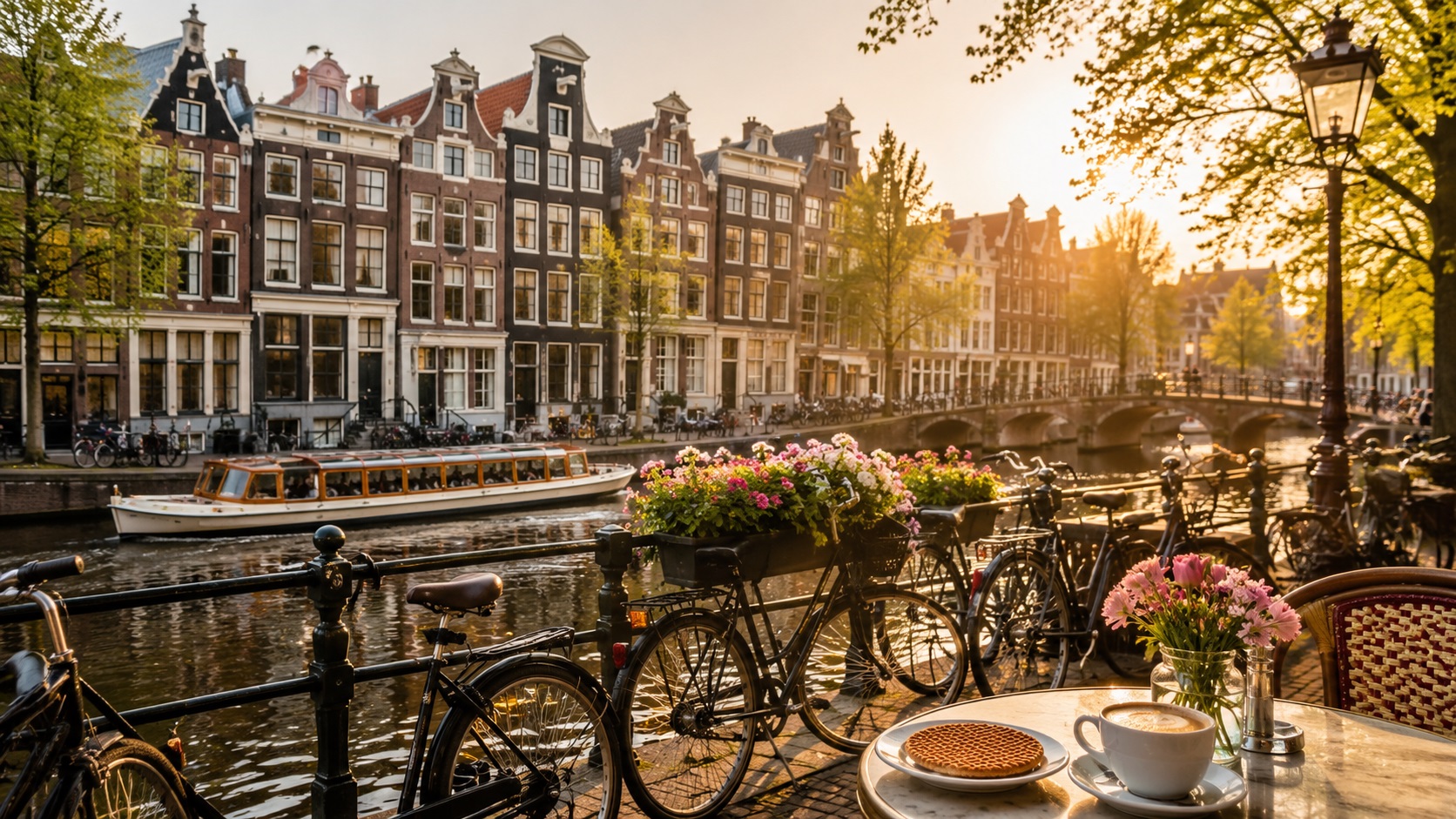
Amsterdam Schiphol is one of Europe's best-connected airports, served by direct flights from virtually every major city on the continent and well beyond. Budget carriers including easyJet and Transavia make it accessible at reasonable fares if booked ahead. The train from Schiphol to Amsterdam Centraal takes seventeen minutes and runs continuously — don't take a taxi unless you're in a group with significant luggage, because the train is faster and costs a fraction of the price. From Centraal you can walk to most of the central neighborhoods in twenty minutes or take a tram. The city is compact enough that you rarely need transport if you're staying anywhere central — most of the neighborhoods worth spending time in are within thirty minutes on foot of each other. Where to stay: The canal ring neighborhoods — Jordaan, De 9 Straatjes, Grachtengordel — put you within walking distance of almost everything and give you the canal views and historic streets that make Amsterdam feel like Amsterdam. They're more expensive than staying further out, but the proximity eliminates transport costs and saves time. If budget matters, the Oud-West and De Pijp neighborhoods are a short tram ride from the center and considerably cheaper without sacrificing much. Avoid the Damrak and Red Light District area for accommodation — the streets are loud until late and the hotels are priced for convenience rather than quality. [caption id="attachment_157" align="alignnone" width="1536"]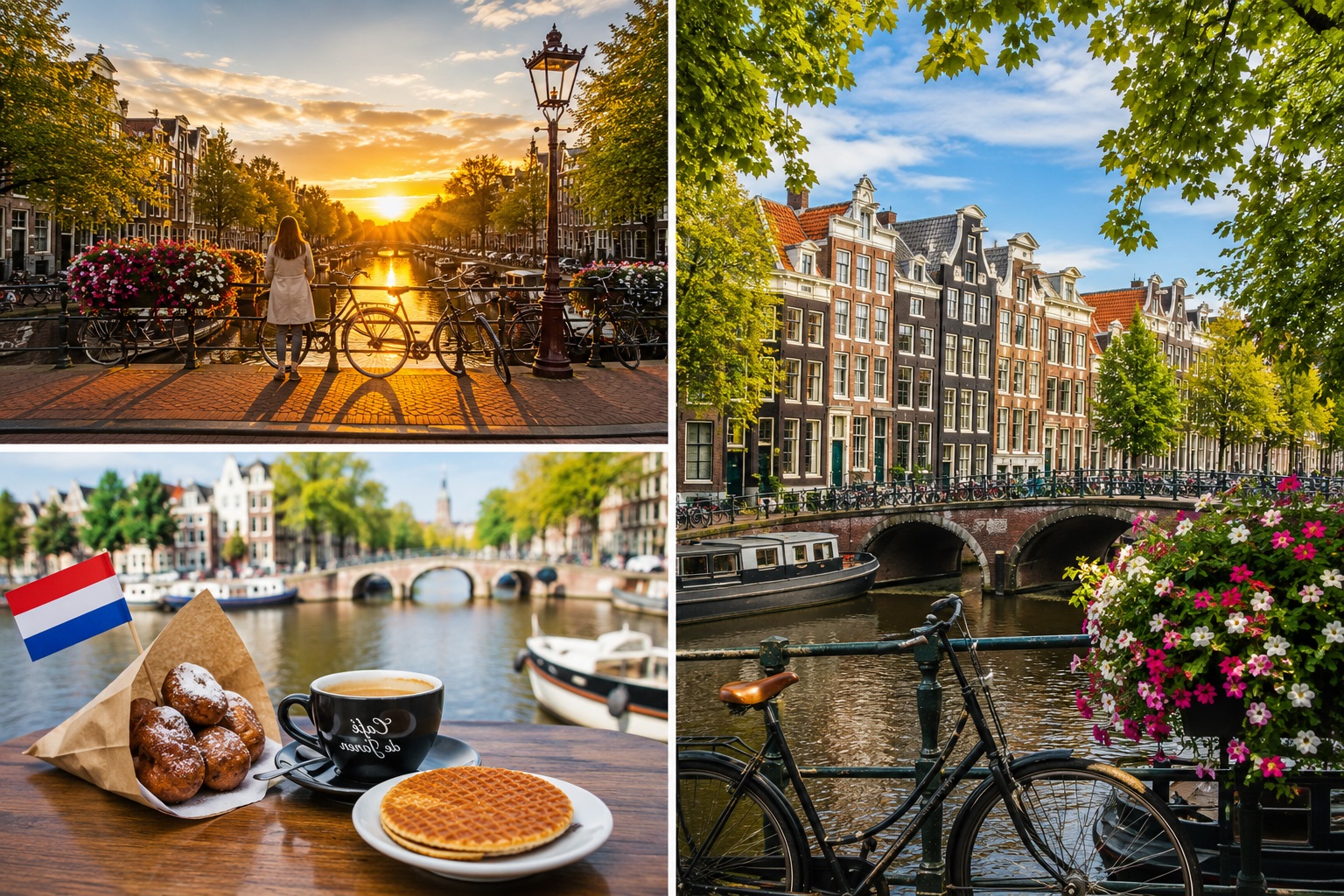 How to Spend a Perfect Long Weekend in Amsterdam[/caption]
Day One: Arrive, Orient, Walk
Don't plan too much for the day you arrive. Especially if you've flown in and are carrying luggage, the first afternoon is best spent getting your bearings rather than front-loading the itinerary with things you'll feel too tired to properly appreciate. Drop your bags and walk. Pick a direction from your accommodation and go. Amsterdam's canal ring — the UNESCO-listed network of concentric canals built in the 17th century — is best understood by walking along it without a particular destination, getting a feel for how the streets connect and how the neighborhoods shift in character as you move from one to the next. The Jordaan is the neighborhood most worth wandering in on a first visit. It was a working-class district for most of its history and was gentrified slowly enough that it kept its character — the narrow streets, the independent shops, the brown cafés (bruine kroegen) that have been serving beer to the same neighborhood for generations. Walk along the Prinsengracht, turn down the Bloemgracht, cross into the smaller streets around Lindengracht. There's nothing specific you need to see. The neighborhood is the thing. Brown cafés for the evening. The bruine kroeg — Amsterdam's traditional pub, named for the tobacco-stained walls that most of them now just replicate with dark wood and old furnishings — is where the city actually relaxes in the evening. Not the tourist bars on the Leidseplein or Rembrandtplein, which exist entirely for visitors and charge accordingly. A brown café in the Jordaan or De Pijp, full of local regulars, drinking Dutch beer or jenever (Dutch gin), is one of the most comfortable places you can spend a first evening in Amsterdam. Café 't Smalle on the Egelantiersgracht has been there since 1786 and is the kind of place that hasn't needed to change because it got everything right a long time ago. Café de Vergulde Gaper near the Spui is less famous and equally good. Go early enough to get a seat, order a Heineken or a glass of jenever, and let the day settle.Day Two: Museums and the Canal Ring
Amsterdam's museums are among the best in Europe and deserve a proper day rather than a rushed few hours. The Rijksmuseum is the place to start. The national museum of the Netherlands holds one of the world's great collections of Dutch Golden Age painting — Rembrandt, Vermeer, Frans Hals, Jan Steen — in a building that was extensively renovated and reopened in 2013. It's large enough that a full visit takes three to four hours, but the collection is excellent enough that this doesn't feel excessive. Buy tickets online in advance; the queues for walk-in tickets are long in peak season and booking online skips them entirely. After the Rijksmuseum, the Van Gogh Museum is immediately adjacent and holds the largest collection of Van Gogh's work in the world — more than 200 paintings and 500 drawings, arranged chronologically in a way that makes his development legible across his relatively short career. It's smaller than the Rijksmuseum and takes about ninety minutes. Again, book online. Between or after the museums, the Museumplein and the streets surrounding it are pleasant to walk through. The Vondelpark — Amsterdam's main park, a large and well-used green space five minutes from the museums — is worth an hour in good weather. In summer it's full of locals cycling, picnicking, and doing the things Amsterdam residents do in public spaces with complete unselfconsciousness. The Anne Frank House is a separate decision that deserves its own mention. The house where Anne Frank and her family hid for over two years before being discovered in 1944 is one of the most emotionally significant sites in Europe, and visiting it is not like visiting a standard museum. It is small, deliberately sparse, and genuinely affecting in a way that's hard to prepare for. Tickets must be booked weeks or months in advance — the waiting lists are long and walk-in entry essentially doesn't exist during peak periods. If this is on your list, book before anything else. If you haven't booked and it's too late, the experience of walking past and understanding what happened there is still something. Dinner in De Pijp. The neighborhood south of the canal ring, centered on the Albert Cuyp Market, is where Amsterdam's restaurant scene is most interesting per square meter. The market itself runs daily and sells everything from stroopwafels to raw herring to Surinamese roti to Dutch cheese — a walking lunch. In the evening the surrounding streets fill with restaurants covering almost every cuisine. Buffet van Odette on the Prinsengracht is excellent for Dutch-influenced modern cooking. Beulings in the Grachtengordel is small, consistently good, and the kind of place that fills with regulars rather than tourists.Day Three: Beyond the Canal Ring
The third day is when Amsterdam gives you the version of itself that most visitors miss. The Albert Cuyp Market in the morning. The longest street market in the Netherlands runs daily except Sunday along the Albert Cuypstraat in De Pijp. It's a working market — not a tourist market, not a weekend artisanal affair — where Amsterdam residents buy produce, fish, fabric, spices, and the particular Dutch fried snacks that are harder to find elsewhere. Get there before 11am when it's most active and least crowded. NDSM Wharf. Take the free ferry from behind Centraal Station to the NDSM Wharf in Amsterdam Noord — a fifteen-minute crossing that gives you the city skyline from the water and arrives at one of Amsterdam's most interesting places. The NDSM is a former shipyard that's been repurposed into a creative hub: street art, studios, pop-up restaurants, the occasional large event. It doesn't feel like the historic city at all, and that's the point. The Eye Film Museum, modern and architecturally striking, sits on the north bank near the ferry and is worth visiting if the current exhibition interests you. The Plantage and Artis. Back on the south bank, the Plantage neighborhood east of the canal ring is quieter and more residential than the Jordaan and has a specific character worth knowing. The Hortus Botanicus — a botanical garden established in 1638, one of the oldest in the world — is beautiful, under-visited, and genuinely peaceful on a weekday. Entry costs €10 and is worth it. The nearby Artis zoo is one of Europe's oldest and worth a half-day if you're traveling with children. Jenever tasting in the afternoon. Dutch jenever — the juniper-distilled spirit that gave birth to English gin — is different from what most visitors expect: warmer, maltier, more complex than London dry gin, served in small tulip glasses that you're expected to sip from the bar counter without lifting, nose-to-glass, on the first pour. This tradition, called a kopefirsdrink, happens at proeflokaals — traditional tasting houses. De Ooievaar in the old city and Wynand Fockink, a distillery tasting room that's been operating since 1679, are both worth going to specifically for this.Day Four: Slow Morning, Markets, Departure
The last day is for the things you didn't get to and the things you want to do again. The Sunday market at Noordermarkt runs every Sunday morning in the Jordaan, split between an organic farmers' market on one side and a flea market on the other. It's busy by Amsterdam standards but manageable, the produce is good, and the surrounding streets are at their most photogenic in the morning light. Grab something for breakfast from a market stall and eat it on the canal wall — this is a specifically Amsterdam thing to do and better than any café breakfast. Cycling, if you haven't yet. Amsterdam is a cycling city in a way that no amount of description quite captures until you're on a bike in it. The infrastructure is so complete, the cycling culture so embedded, and the streets so well-suited to bikes that cycling feels more natural than walking for covering distance. Rent a bike for a few hours — MacBike and StarBikes are the most reliable rental shops — and ride out to the Vondelpark, along the Amstel River, or east toward the Java Island and KNSM Island neighborhoods, which are modern urban planning done well and almost completely tourist-free. The Stedelijk Museum for contemporary and modern art, if you didn't fit it in earlier. It's adjacent to the Rijksmuseum and Van Gogh Museum but often skipped in favor of them. The collection is strong on 20th-century Dutch and international art and the building itself — a white bathtub extension attached to an older neoclassical building — is one of the more distinctive architectural decisions in the city. Before you leave: eat a stroopwafel that was made in front of you, not one from a supermarket wrapper. The difference is significant. The Stroopwafel stall at Albert Cuyp Market makes them fresh; so does a stall at the Noordermarkt on Sundays. A fresh stroopwafel — two thin waffles sandwiching a layer of warm caramel syrup — is the thing you tell people about afterward.Practical Notes
Getting around: Walking and cycling cover most of what you need. Trams 1, 2, 5, and 7 cover the main tourist corridors and are useful when you're tired or the distance is longer. Buy an OV-chipkaart or use contactless payment — single journey tickets bought on board are expensive and unnecessary. Canal boat tours: The tourist canal tours that run from the central area are fine and give you a different perspective on the city. They're not essential — you get much of the same effect from walking the canal ring — but a one-hour boat tour on a first afternoon is a reasonable way to orient yourself visually. The electric-powered tours are quieter and better for the waterways than the diesel ones. What to eat: Beyond the brown café staples (bitterballen, the fried meat ragout balls that appear at every bar), seek out Indonesian food — the Dutch colonial connection to Indonesia means Amsterdam has the best Indonesian food in Europe outside Indonesia. Bojo in Leidseplein is open late and reliable. Sampurna near the Spui is better. Rijsttafel — the Indonesian multi-dish rice table that the Dutch formalized into a tradition — is worth having at least once. Weather: Amsterdam's weather is famously unpredictable. Pack layers and a waterproof regardless of the season. The flip side is that the city in soft gray light, with the canals reflecting low cloud and the bridges glistening slightly, has a quality that doesn't exist in the postcard sunshine version. Crowds and timing: July and August are the busiest months. April and May — tulip season, better weather, longer days — are popular but manageable. September and October are the local's recommendation for good reason: the light is extraordinary, the crowds have thinned, and the city is in a good mood. December is cold and sometimes beautiful, with the canal lights and the Christmas market on the Museumplein.The Thing About Amsterdam
Amsterdam is a city that's easy to visit and easy to misread. The surface — the coffee shops, the Red Light District, the tourist bars — is very accessible and completely unrepresentative. The city underneath it, the one that's been trading ideas and people across the world since the 17th century, that's produced more art per square meter than almost anywhere, that's built a public life of remarkable ease and tolerance on some of the most complicated real estate on earth — that city takes a bit more effort to find. Four days is enough to find it, if you're looking.Heading to Amsterdam soon and have questions about specific neighborhoods, restaurants, or what to skip? Leave them in the comments.


