

First, Let's Talk About What $60 a Day Actually Means
Sixty dollars a day for 30 days is $1,800. That's your entire on-the-ground budget — accommodation, food, transport, activities, SIM card, toiletries, the occasional coffee you sit with for an hour because the café is beautiful. It does not include your flights to and from Europe. It doesn't include travel insurance (which you should have). And it doesn't include the things you buy to bring home. Once you accept those parameters, planning becomes much cleaner. The budget also depends heavily on where you are. Spain, Portugal, Hungary, Poland, and the Czech Republic are far more forgiving than Switzerland, Norway, or Denmark. If you're dead-set on Scandinavia, $60 a day is going to be a real struggle. If you're flexible — and flexibility is the most underrated budget travel skill — you have a lot to work with. [caption id="attachment_20" align="alignnone" width="1672"]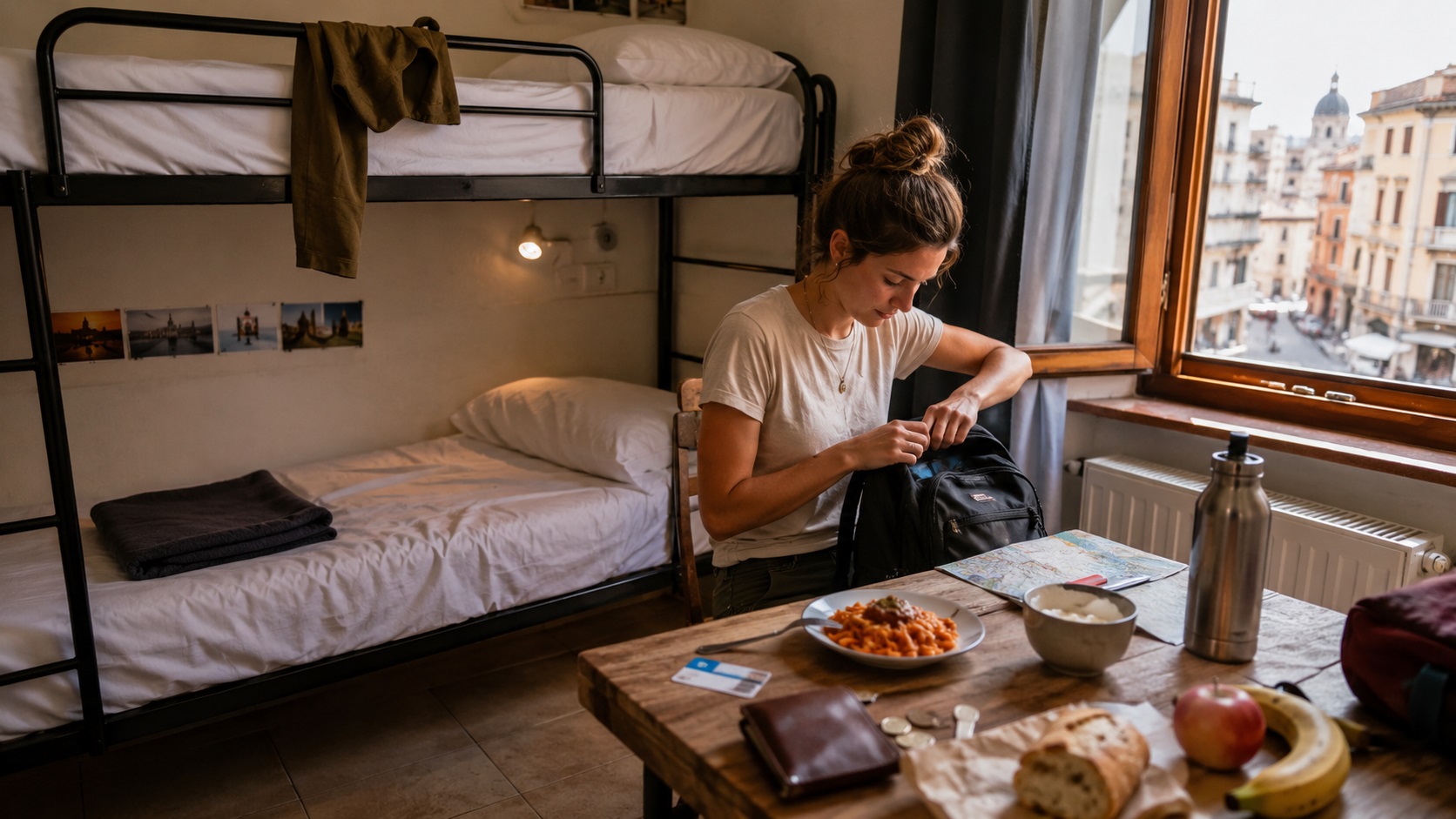 How to Travel Europe for Under $60 a Day-1[/caption]
Accommodation: Your Biggest Variable
This is where most of your money goes, and where most of the decisions happen. Hostels are still the backbone of budget travel, and they've gotten significantly better over the past decade. The old stereotype of six strangers in a damp room with one shower is increasingly outdated. Many hostels now have en-suite dorms, proper kitchens, fast Wi-Fi, social spaces, and organized events. A dorm bed in Lisbon, Budapest, or Kraków runs $15–25 per night. In Barcelona or Amsterdam, expect $25–35. A few things worth knowing about hostel booking: Mixed dorms are almost always cheaper than female-only dorms. The difference is usually $3–5 per night, which adds up fast. If safety isn't a concern for you, it's an easy save. Booking directly through the hostel's website sometimes beats Hostelworld or Booking.com — some places offer a small discount to avoid paying commission. It's worth checking both. Weekends are more expensive in cities that attract short-break tourists (Prague, Dubrovnik, Reykjavik). If you have flexibility, arriving Sunday or Monday can noticeably cut your accommodation cost. Couchsurfing has changed a lot since its golden era, but it still works. The community is smaller and more intentional than it used to be. If you take the time to write a genuine request — not a copy-paste — and your profile has some content to it, you'll find hosts in most major European cities. This brings your accommodation cost to zero, but the real value is often the local knowledge and company. Work exchanges through platforms like Workaway or HelpX let you trade a few hours of work per day for free accommodation and sometimes meals. Language schools, guesthouses, organic farms, hostels — the range of placements is wide. This isn't for everyone, but for longer trips, it's one of the most sustainable ways to stay under budget. Budget: Plan $20–28 per night on average, with some nights cheaper (couchsurfing, overnight trains) balancing out the occasional splurge.Food: Eat Like a Local, Not Like a Tourist
The worst financial decision you can make in Europe is eating near the main tourist attractions. The restaurant with photos on the menu outside the Sagrada Família, the pasta place two streets from the Trevi Fountain — these are tourist traps, full stop. Here's how people who travel long-term actually eat: Markets and supermarkets are your best friend. Every European city has them. In Spain, a Mercadona or Lidl will let you put together a proper breakfast and lunch for under $5. In France, a baguette, cheese, and fruit from a market costs almost nothing and tastes better than half the restaurants. Picnics aren't a consolation prize — they're often the best meals. Lunch menus. In Spain and Portugal especially, many restaurants offer a menú del día — a set lunch with two or three courses, bread, and a drink — for $10–14. This is what locals eat. The same dinner at the same restaurant might cost twice as much. Make lunch your main meal and you'll eat very well. Street food and markets. In Budapest, a portion of lángos (deep-fried flatbread with toppings) costs $2–3. In Poland, a bowl of żurek from a milk bar will fill you up for $3. In Istanbul — and yes, Istanbul counts as a European city depending on your route — a döner wrap costs almost nothing. Follow where locals are eating, not where signs are in English. Cook when you can. Most hostels have kitchens. A grocery run before a long evening in a common room costs $6 and feeds you twice. It's also one of the better ways to meet other travelers. Budget: $15–20 per day on food is realistic if you're cooking some meals, eating market lunches, and reserving restaurant dinners for two or three nights a week.Getting Around: Trains, Buses, and When to Walk
This is an area where the conventional wisdom has shifted. Trains in Europe are wonderful and often terrible value. A last-minute Eurostar from London to Paris can cost $200+. A high-speed train across Italy, booked the day before, can run $80 each way. These numbers break a $60/day budget fast. The solution is booking early and using the right tools. Book trains 2–3 months in advance where possible. Most European rail operators release tickets far in advance, and the cheapest fares go fast. Trainline aggregates options across countries and is worth using for comparison, though booking direct with the national operator (SNCF for France, Trenitalia for Italy, Renfe for Spain) is sometimes cheaper. Flixbus and Eurolines are significantly cheaper than trains for many routes. A Flixbus from Prague to Vienna can cost $10–15. Berlin to Amsterdam for $25. Yes, it takes longer. But if you're not in a hurry — and budget travelers rarely should be — buses are often the smarter call. Fly when it's genuinely cheaper. Ryanair, Wizz Air, and easyJet often run routes for $20–40 if you book ahead and travel light. The key is avoiding checked bag fees: master the art of fitting everything into a personal item or small cabin bag, and budget airlines become a legitimate tool rather than a headache. Walk more than you think you need to. Most European city centers are compact. The walk from the hostel to the old town, from one neighborhood to another — these are experiences in themselves, and they're free. Many travelers spend money on metro tickets for journeys that would take 18 minutes on foot. Budget: $8–12 per day averaged across a trip, with some days at zero (walking a city) and occasional larger spends on longer routes.Activities: A Lot of Europe's Best Things Are Free
This surprises people who haven't traveled Europe on a budget before. The major national museums in London are free. Many museums in Rome offer free entry on the first Sunday of the month. Amsterdam's Vondelpark, the hiking trails in Slovenia, the medieval streets of Tallinn's old town, the viewpoints above Lisbon — none of these cost anything. Free walking tours exist in almost every major European city. You pay what you feel at the end (tipping $5–10 per person is the norm and fair). The guides are usually local, enthusiastic, and genuinely knowledgeable. These tours are often the best introduction to a city you can get, paid or otherwise. City cards are occasionally worth it — but do the math. If you're planning to visit four or five museums and use public transport a lot over two or three days, a city card often pays for itself. If you're more of a wander-and-sit-in-plazas type, skip it. Churches, parks, viewpoints, markets, neighborhoods. The best thing about European cities is that their character lives outdoors. You don't need to pay to understand Seville or Porto or Ljubljana — you need to walk around them. Budget: $5–8 per day on average, with some days at zero and occasional paid entry for something genuinely worth it.The Daily Budget Breakdown
[caption id="attachment_19" align="alignnone" width="1672"]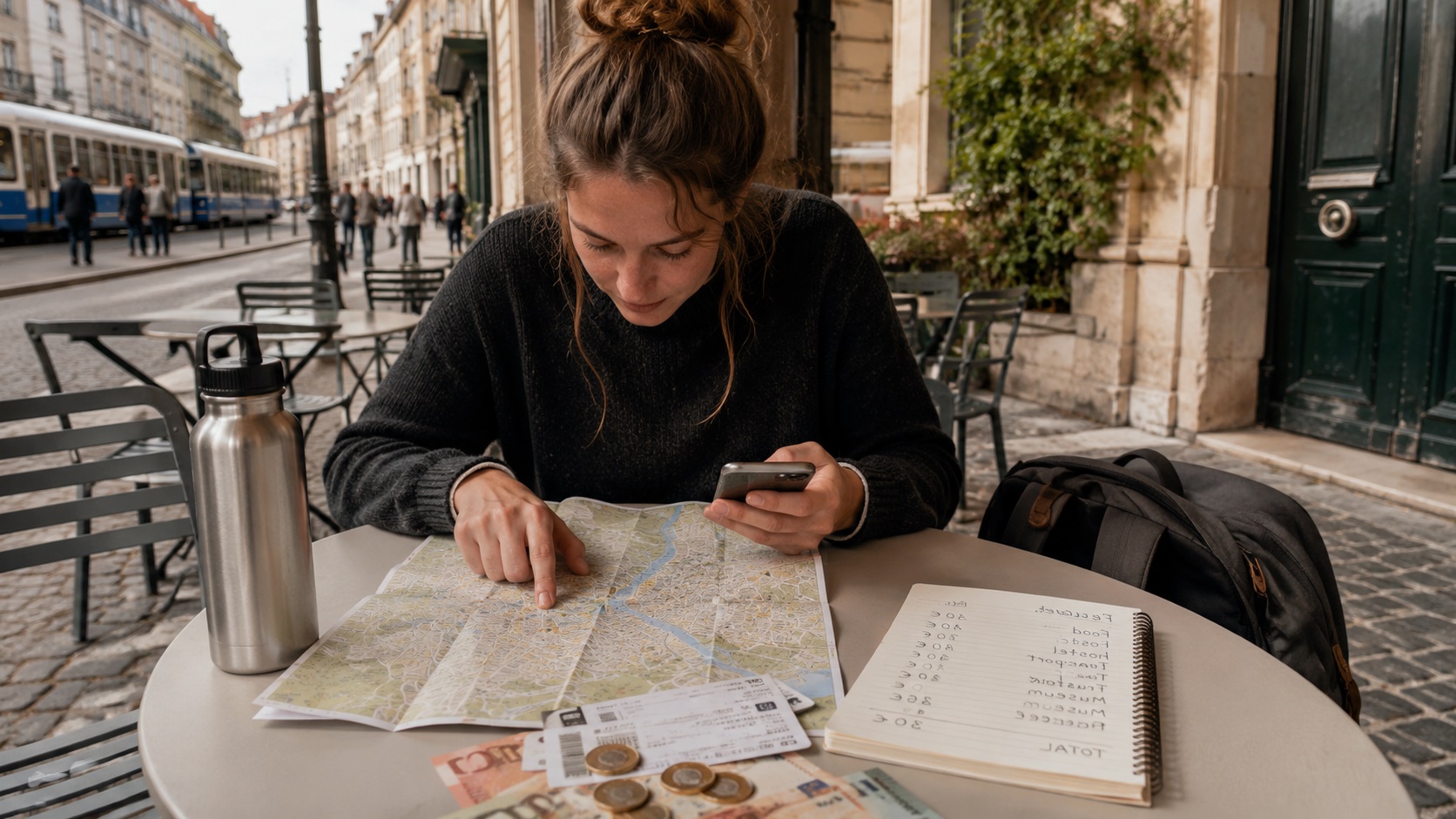 How to Travel Europe for Under $60 a Day-2[/caption]
Here's what $60 a day actually looks like in practice:
How to Travel Europe for Under $60 a Day-2[/caption]
Here's what $60 a day actually looks like in practice:
| Category | Budget |
|---|---|
| Accommodation | $22 |
| Food & drink | $18 |
| Local transport | $7 |
| Activities & entry fees | $6 |
| Buffer (SIM, toiletries, misc.) | $7 |
| Total | $60 |
Countries Where This Budget Works Easily
- Portugal — especially outside Lisbon and Porto
- Hungary — Budapest is one of Europe's best-value cities
- Poland — Kraków, Warsaw, Wrocław are all very affordable
- Czech Republic — Prague is more expensive than it used to be, but still manageable
- Slovenia — underrated and budget-friendly
- North Macedonia, Albania, Bosnia — incredibly cheap if you're willing to go off the main trail
- Romania — charming, cheap, and still relatively undiscovered
Where This Budget Gets Difficult
- Switzerland (plan on $120+ minimum)
- Norway and Sweden (major cities especially)
- Iceland
- Western Ireland
- Anywhere during peak summer season without booking very far ahead
The Honest Tradeoffs
Budget travel is real travel. But let's not pretend there are no tradeoffs. You will share rooms with strangers. Some of them will be interesting; a few will come in at 2am and turn on the light. You'll eat well but not extravagantly most nights. You'll sometimes take a 9-hour bus instead of a 2-hour train. You'll plan further ahead than you might like because the cheap fares go fast. What you get in return is more time on the road, more genuine encounters, more flexibility to stay somewhere an extra day because you like it, and — perhaps most importantly — the satisfaction of figuring it out as you go. Sixty dollars a day in Europe is not a hardship. It's a choice, and for a lot of people, it's the right one. How to Set a Realistic Travel Budget Before You Book AnythingHave a question about budgeting for a specific country or route? Drop it in the comments — happy to help.


