Hidden Gems in Lisbon That Most Tourists Never Find
Lisbon has a tourist circuit so well-worn that it’s possible to spend four days in the city, take hundreds of photographs, eat perfectly decent food, and come away having seen almost nothing of what makes the place genuinely interesting. Belém tower, the yellow trams on Rua da Bica, the viewpoint at Miradouro da Graça, pastéis de nata at Pastéis de Belém — these things are famous for real reasons and worth seeing. But they’re also surrounded by crowds, priced for tourists, and increasingly disconnected from the Lisbon that people who actually live here experience.
The city underneath the tourist circuit is still very much there. It’s in neighborhoods that don’t appear in most guidebooks, in restaurants with handwritten menus that haven’t been translated into English, in viewpoints that offer better views than the famous ones with half the people. Finding it doesn’t require insider knowledge or years of experience — it requires walking a bit further than most visitors do and being willing to turn down streets that don’t lead anywhere in particular.
This guide is about those streets.
LX Factory: More Than a Weekend Market
Most visitors to Lisbon have heard of LX Factory — the repurposed industrial complex under the 25 de Abril bridge in Alcântara — but tend to think of it exclusively as a weekend market destination. The Sunday market is good, but showing up only on Sunday means missing what the space is actually like the rest of the time.
On weekday evenings, LX Factory is a different place entirely. The restaurants and bars fill with locals rather than tourists, the bookshop — Ler Devagar, one of the most beautiful independent bookshops in Europe, with its wall-to-wall shelves and suspended bicycles — is quiet enough to actually browse, and the industrial architecture feels more like what it is: a genuinely creative space rather than a curated market experience.
The complex houses design studios, a vinyl record shop, independent clothing brands, a gin bar, a photography gallery that changes exhibitions regularly, and several restaurants that are worth eating at regardless of whether a market is happening.
Come on a Thursday evening for the best balance of atmosphere and accessibility. Sunday is fine if you want the market, but don’t mistake the Sunday crowds for what LX Factory actually is.
Mouraria: The Neighborhood That Predates Tourism
Mouraria sits on the northern slope of the hill below São Jorge Castle, immediately adjacent to Alfama, and receives a fraction of Alfama’s tourist traffic despite being older, more historically layered, and more genuinely alive as a neighborhood.
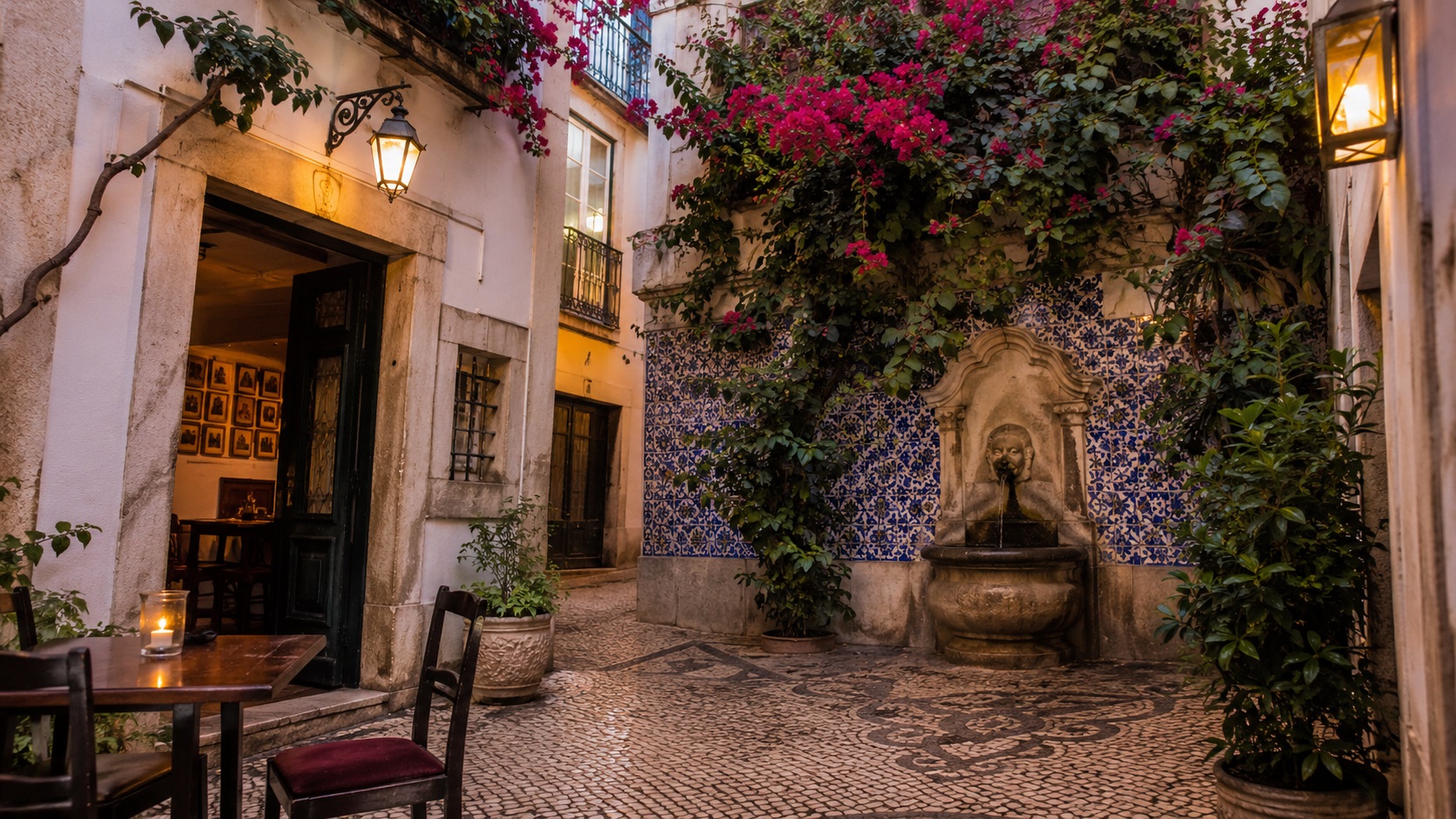
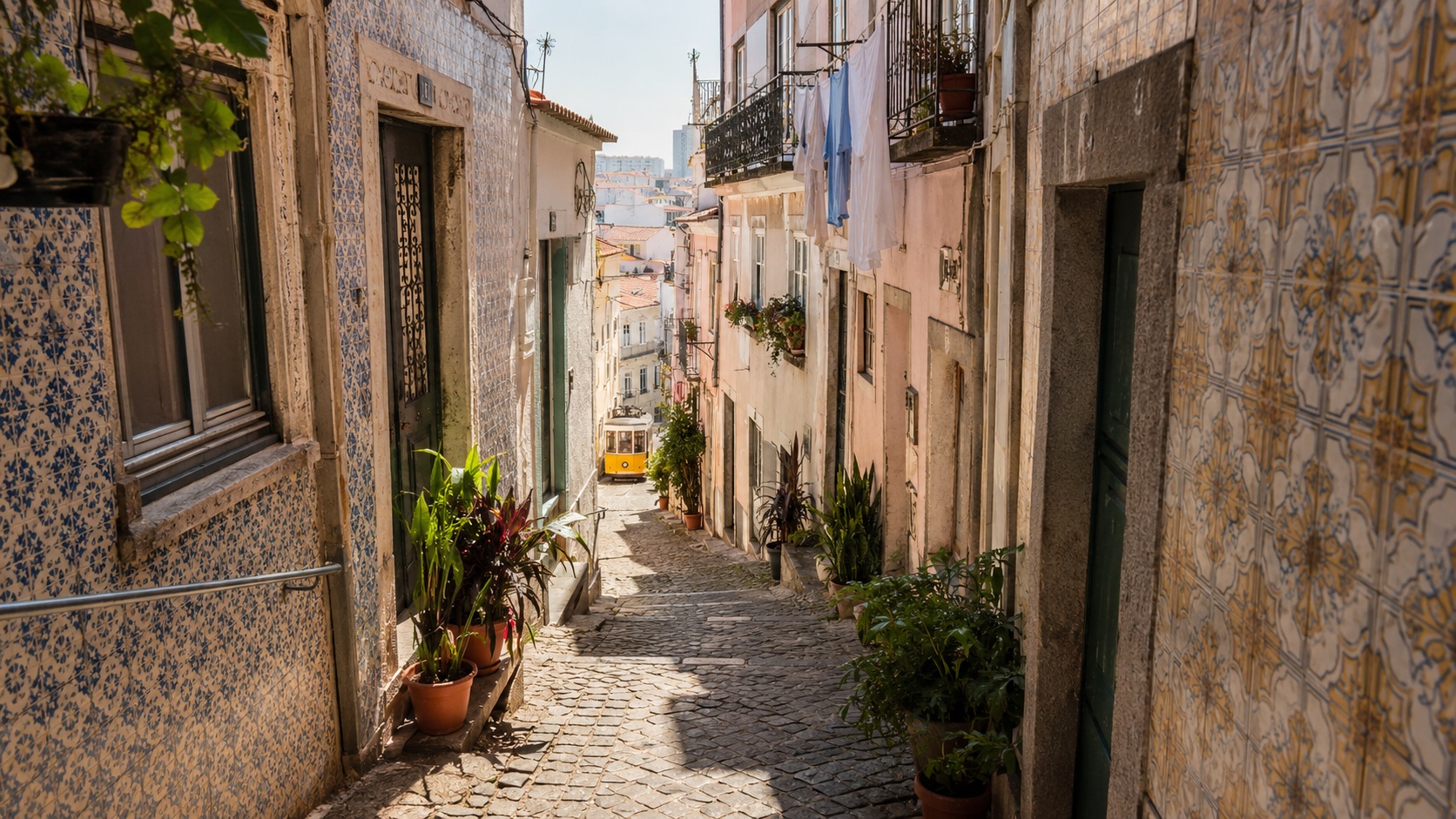
This is the area where Lisbon’s Moorish population was concentrated after the Christian reconquest in 1147 — the name derives from mouro, the Portuguese word for Moor. It remained one of the city’s poorest and most marginalized neighborhoods for centuries, which paradoxically preserved its character when wealthier areas were redeveloped. The narrow lanes, the small praças where old men play cards in the afternoon, the tiled facades, the smell of grilled sardines from windows — these things survived because nobody was investing in Mouraria.
The neighborhood has changed in recent years — there are now some good restaurants and a small arts scene — but it hasn’t been gentrified in the way that parts of Alfama and Intendente have. Walking through Mouraria on a weekday afternoon, particularly in the area around Rua do Capelão and the Intendente square, feels like an honest encounter with a working neighborhood rather than a performance of one.
The Museu do Fado is technically in Alfama but sits at the edge of Mouraria and is worth an hour. Fado — the melancholic Portuguese musical tradition associated with saudade — is much better understood with the context this museum provides than it is encountered cold at a tourist fado show.
Miradouro da Graça: The Viewpoint the Guidebooks Overlook
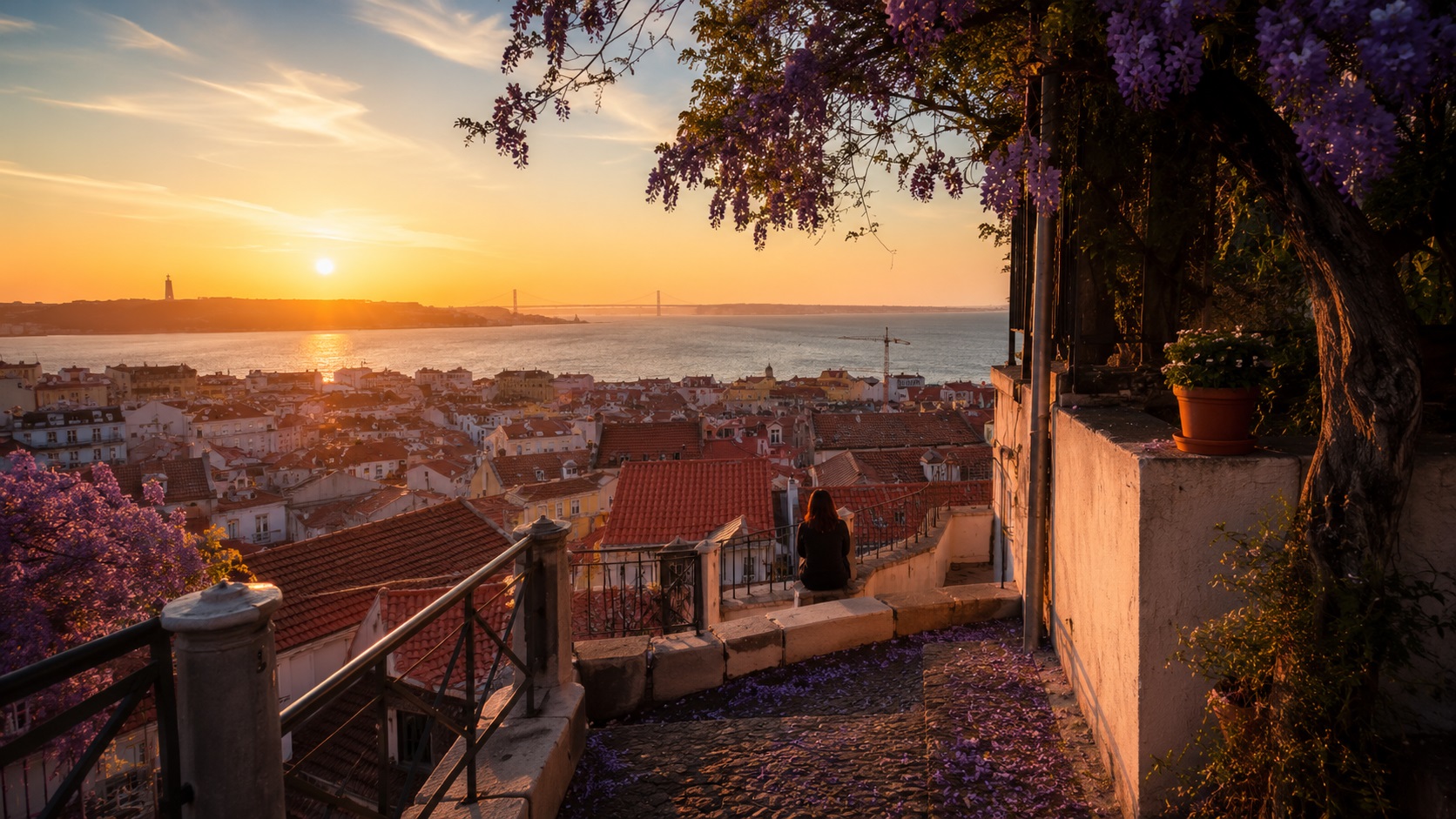
Lisbon’s famous viewpoints — miradouros — are well documented. Miradouro da Graça is not among the most famous, which is precisely why it’s worth going to.
It sits on one of Lisbon’s seven hills in the Graça neighborhood, slightly higher and further east than the more visited Miradouro da Senhora do Monte and Miradouro das Portas do Sol. The view from Graça takes in the castle, the river, the 25 de Abril bridge, the rooftops of Alfama and Mouraria, and on clear days the hills of the Alentejo on the far bank of the Tagus. It’s as good a panorama as any viewpoint in the city.
What makes it different from the famous viewpoints is the kiosk. The small drinks kiosk at Graça is a genuine neighborhood institution — locals come here in the evenings to drink beer and ginjinha (the local cherry liqueur) and watch the light change over the city. The crowd is almost entirely Portuguese. A beer costs €1.50. The atmosphere is relaxed in a way that the heavily touristed viewpoints at Portas do Sol and Santa Luzia rarely are.
Walk up through Mouraria to reach it — the route through the Intendente neighborhood and up the Calçada do Monte is one of the better walks in the city — and arrive in the late afternoon when the light is good.
Campo de Santa Clara and the Feira da Ladra
The Feira da Ladra — literally “thieves’ market” — is Lisbon’s main flea market, held every Tuesday and Saturday morning in Campo de Santa Clara, a sloping square in the Alfama district behind the church of São Vicente de Fora.
Most of the stalls sell genuine secondhand goods: old books in Portuguese, vinyl records, vintage ceramics, Soviet-era cameras, military surplus, mid-century furniture, handmade lace, antique silverware. The quality varies enormously and so does the pricing. Some vendors know exactly what they have and price accordingly; others are selling household clearances with no particular knowledge of value, which is where genuinely interesting finds appear.
The market is not curated or Instagram-ready in the way that some European flea markets have become. It’s muddy when it rains, the layout is chaotic, and you’ll walk past a lot of things that are simply junk before finding anything worth looking at. This is what makes it good.
The surrounding neighborhood is worth exploring after the market. The church of São Vicente de Fora is one of Lisbon’s most impressive and least visited — the azulejo tile panels in the cloister, depicting La Fontaine’s fables in 18th-century blue and white tile, are extraordinary and the church is rarely crowded. The Panteão Nacional next door houses the tombs of Portuguese presidents and national figures and has a rooftop terrace with excellent views.
Prazeres Cemetery: Unexpected Beauty
This requires an open mind, but Prazeres Cemetery in the Estrela neighborhood is genuinely one of the most beautiful places in Lisbon and one that almost no tourists visit.
Opened in 1833, it covers several hectares on a hilltop in western Lisbon and contains the mausoleums and grave monuments of much of the Portuguese establishment over the past two centuries. The architecture ranges from neoclassical to Art Deco to modernist, with elaborate carved stone, wrought iron gates, azulejo portraits, and the occasional jarring contemporary monument alongside the historic ones.
Walking through Prazeres on a quiet weekday morning is a genuinely contemplative experience. The cypress trees, the white marble, the city visible through the gates — it has the quality of a garden more than a cemetery. Several well-known Portuguese writers, politicians, and artists are buried here, and the inscriptions and monuments tell a sideways history of the country.
The Estrela neighborhood around the cemetery is itself worth the journey. The Jardim da Estrela — the large public garden opposite the Basílica da Estrela — is where Lisbon families come on weekend afternoons, and the cafés around the garden are good for a long afternoon sitting with coffee.
Museu do Azulejo: The Museum Most Visitors Skip
The National Tile Museum sits in a converted convent in Xabregas, a neighborhood east of Alfama that almost no tourists reach. The journey — a tram or bus from the city center — takes about 15 minutes and feels like leaving the tourist city behind entirely.
The museum itself covers five centuries of Portuguese azulejo tile making, from the earliest geometric Moorish-influenced patterns to the elaborate Baroque narrative panels of the 18th century to contemporary tile art. The collection is extraordinary and the setting — the former Convento da Madre de Deus, with its ornate church, gilded chapel, and cloister — is one of the finest architectural spaces in Lisbon.
The highlight is a 23-meter-long panoramic tile panel depicting Lisbon’s waterfront as it looked before the 1755 earthquake that destroyed much of the city. It’s the most complete visual record of pre-earthquake Lisbon in existence, and standing in front of it knowing what came after is one of those museum experiences that stays with you.
Entry costs €5, the café in the cloister is good, and the museum is rarely crowded even in peak season. It belongs on any Lisbon itinerary but appears on almost none.
Cais do Sodré Beyond the Pink Street
The Cais do Sodré neighborhood has been thoroughly discovered by tourists, primarily because of Rua Nova do Carvalho — the “Pink Street,” named for its painted surface — which is lined with bars and attracts large crowds on weekends. But the neighborhood around it, and the Time Out Market directly adjacent, is only part of what the area offers.
The Mercado da Ribeira — the actual covered market hall adjacent to Time Out Market — is where Lisbon’s restaurant industry shops in the early morning. The fish hall in particular, open from around 7am, is a working market selling the day’s catch to chefs, fishmongers, and home cooks. It bears no resemblance to the tourist food market next door and offers a completely different picture of what the city eats and how it shops.
Walking west from Cais do Sodré along the riverfront to Santos and Alcântara takes about 20 minutes and passes through a stretch of the city that is genuinely transitional — old warehouses, new restaurants, design studios, the occasional art gallery — in a way that feels alive rather than finished.
Intendente: The Square That Came Back
Praça do Intendente Pina Manique was, for decades, one of Lisbon’s most notorious public spaces — associated with drug use, prostitution, and general urban dysfunction. The square and the surrounding neighborhood went through a significant revival starting around 2013, and what emerged is one of the most interesting parts of the city.
The square itself is beautiful — an 18th-century design with a central fountain, surrounded by tiled buildings and the Viúva Lamego tile shop, which has been selling hand-painted azulejos from the same location since 1849. The café at the corner of the square, Casa Independente, occupies a former palace and is one of the better places in Lisbon to spend an evening — good cocktails, occasional live music, a terrace in the courtyard.
The streets around Intendente — Rua do Benformoso in particular — are home to a community of Bangladeshi, Chinese, and Cape Verdean immigrants and small businesses that give the neighborhood a genuinely multicultural character unusual in Lisbon. There are grocery shops selling ingredients you won’t find elsewhere in the city, small restaurants with no tourist trade, and a texture that feels like an actual urban neighborhood rather than a preserved postcard.
Eating Off the Tourist Trail
A few specific places worth knowing about:
Taberna da Rua das Flores in Chiado is the opposite of a tourist trap — a small, intimate restaurant serving traditional Portuguese dishes made with serious attention. The menu changes daily and is written on a chalkboard. Reserve in advance; it fills quickly with locals.
O Corvo in Intendente is a tiny restaurant that serves what its owners describe as “honest Portuguese food” — simply prepared fish and meat dishes, decent wine, reasonable prices. The kind of place that has a regular neighborhood clientele and doesn’t need tourists to survive.
A Cevicheria in the Príncipe Real neighborhood is slightly more well-known but worth mentioning as an example of contemporary Lisbon cooking done well — a modern take on Portuguese seafood with some Latin American influences. The giant octopus sculpture suspended from the ceiling is the first thing you notice.
For a cheap, genuine lunch: any restaurant in the Mouraria or Intendente area displaying a prato do dia (daily special) sign is offering a two-course set lunch for €8–12 that will be better and cheaper than anything near the main tourist sights.
Getting There and Moving Around
Lisbon is a walkable city for the most part, but it’s also extremely hilly, and the hills are steeper than they look on a map. The historic trams (particularly Tram 28, which goes through Alfama) are useful but extremely crowded with tourists and slow. For covering ground efficiently, the metro is fast and cheap, and Uber operates throughout the city at reasonable prices.
For the neighborhoods in this guide: Mouraria and Graça are walkable from the city center with some uphill effort. LX Factory and Alcântara require a bus or tram. The tile museum in Xabregas is most easily reached by taxi or Uber for a first visit. Prazeres is a tram ride from the city center.
Lisbon is changing fast. The city has been one of Europe’s most popular tourist destinations since around 2015, and the pressure of that popularity is visible in rising prices, neighborhood displacement, and the gradual replacement of local businesses with tourist-facing ones in the most visited areas.
The places in this guide exist in the space between what Lisbon is marketing to visitors and what it actually is. Some of them will inevitably change — become more known, more crowded, more expensive. Others will remain as they are for years because the tourists who are coming for the famous viewpoints and the yellow trams never walk quite far enough to find them.
Go soon, and go on foot.
Know a Lisbon hidden gem that didn’t make this list? Drop it in the comments — I’d genuinely like to hear about it.