
Is Dubrovnik Worth the Hype? An Honest Review
I went to Dubrovnik expecting to be disappointed. That’s not how I usually travel — I try to arrive somewhere open rather than braced — but I’d read enough “Dubrovnik is ruined by tourists” pieces and enough “Dubrovnik is overrated and overpriced” posts that I’d talked myself into a skeptical posture before I’d even landed.
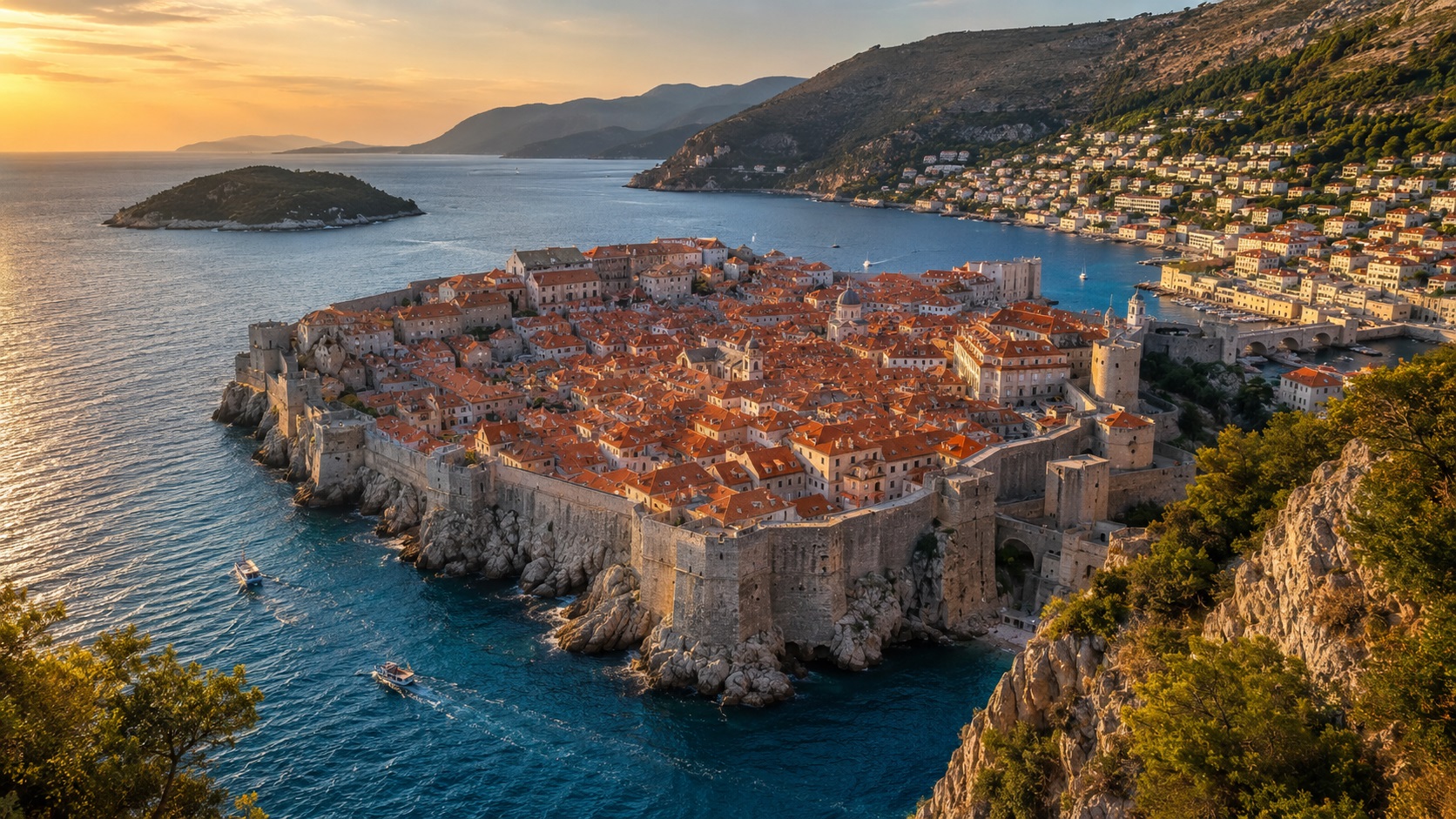
The old city from the top of the city walls on the first evening changed that immediately. Whatever I’d prepared myself to feel, I wasn’t prepared for how genuinely beautiful the place is — the terracotta rooftops inside the walls, the sea on three sides going from dark blue to turquoise in the shallows, the Adriatic afternoon light doing the thing that Adriatic afternoon light does that makes every photographer look competent. It’s one of the most visually complete places I’ve ever been, and I say that having been skeptical going in.
But here’s the complication: almost everything the critics say about Dubrovnik is also true. It is extremely crowded in peak season. It is very expensive by Croatian standards. The cruise ship situation is as bad as you’ve heard. The mass tourism has created a version of the city that, at certain hours on certain days, makes it hard to experience the thing you came for.
So: is it worth the hype? The honest answer requires more than a yes or no, and this is that answer.
What Dubrovnik Actually Is
Dubrovnik is a medieval walled city on the southern tip of Croatia’s Dalmatian coast. The old city — Stari Grad — sits on a small peninsula surrounded on three sides by the Adriatic and connected to the mainland by the Pile Gate, a drawbridge that’s been there since the 15th century. The walls that encircle the old city are among the best-preserved medieval fortifications in Europe, two kilometers in circumference, up to six meters thick in places, and walkable in their entirety.
Inside the walls is a city of limestone streets, baroque churches, Renaissance fountains, monasteries, and palaces built over four centuries when Dubrovnik was the Republic of Ragusa — an independent maritime city-state that at its peak rivaled Venice in wealth and traded across the known world. The republic abolished slavery in 1416, more than three centuries before most of Europe. It maintained independence through a combination of diplomacy, strategic payment of tribute, and careful navigation between the Ottoman Empire to the east and the various Western European powers who would have happily absorbed it.
The historical depth of the place is real and genuinely adds something to the experience of being there. The walls are not just picturesque — they’re the material evidence of a specific history. Understanding that history, even a little, changes what you’re looking at.

The Crowd Problem: What It Actually Looks Like
Let me be specific about the crowd situation because vague descriptions of it are unhelpful.
In July and August, Dubrovnik receives an extraordinary number of visitors for the size of the old city. On a busy day in peak season, multiple cruise ships dock simultaneously in the nearby port at Gruž, discharging several thousand passengers who walk the half-hour into the old city or take the bus, spend four to six hours, and return to the ship. On top of that, there are the land-based tourists staying in the hotels and apartments around the city.
The result, at peak hours on peak days — roughly 10am to 4pm in July and August — is a Stradun (the main limestone street running through the old city) so packed that walking at a comfortable pace is impossible. The walls, where the walk normally takes about 90 minutes, can take three hours because of the queues at the narrow sections. The restaurants inside the walls have tables that turn over quickly and queues at the door. The popular viewpoints above the city — Mount Srđ, the cable car — have waits.
This is the version of Dubrovnik that produces the “it’s ruined” verdict, and in the specific context of peak hours in peak season, it’s accurate.
The version of Dubrovnik at 7am, when the cruise ship passengers haven’t arrived yet, when the Stradun has a handful of locals and early-rising tourists, when the light is low and the limestone glows and the cats are doing whatever the cats of Dubrovnik do in the morning — that’s a completely different place. The same physical space, profoundly different experience.
The crowd problem in Dubrovnik is not that the city is always overwhelmed. It’s that it’s overwhelmed in a predictable window that requires planning to avoid.
The Walls: Worth Every Kuna
The city walls are the non-negotiable experience in Dubrovnik and are as good as their reputation suggests. A walk of the full circuit — roughly two kilometers, with towers, bastions, and constantly changing views over both the city interior and the Adriatic — is one of the best walks in Europe. Entry costs around €35 for adults (prices adjust periodically, check current rates before visiting), which sounds steep for a walk until you’re actually on them and understand what you’re getting.
The timing matters more for the walls than for almost anything else in the city. Start at opening time — 8am in summer — and you’ll have long sections of the walls to yourself, the light will be at its best for the views over the rooftops, and the temperature will be manageable. Start at 11am and you’ll be sharing narrow sections with hundreds of people and doing it in the full heat of the Dalmatian summer.
The walls walk is one direction — clockwise — and takes between 90 minutes and three hours depending on how much time you spend at the viewpoints. Wear shoes with grip; the limestone gets slippery when wet. Bring water; there’s one café on the circuit but it’s crowded and expensive. Hats and sunscreen are not optional in summer.
The Fort of St. Lawrence (Lovrijenac), which sits on a rock just outside the western walls and connects to them via a short walk, is worth the separate entry fee. The views back toward the walls from the fort are among the best angles in the city, and the fort itself — a triangular fortification on a sheer cliff — is a remarkable piece of military architecture.
The Game of Thrones Question
Dubrovnik served as the primary filming location for King’s Landing in Game of Thrones, and the tourism that followed has been substantial. Tours specifically visiting filming locations operate constantly. Signs at specific locations tell you which scene was filmed where. The association has genuinely affected both the volume of visitors and the type of visitor the city attracts.
If you’re a fan of the show, visiting the filming locations is a legitimate part of the Dubrovnik experience and the city has leaned into it comprehensively. The old city’s architecture maps onto King’s Landing convincingly enough that standing in the right spot produces a genuine recognition.
If you’re not a fan, the Game of Thrones tourism is a background element rather than an intrusion. The filming locations are distributed through the old city and don’t require any engagement if you’re not interested. The historical and architectural reality of Dubrovnik is so strong that it doesn’t need the fictional association to justify a visit.
The Beaches: Better Than Expected
Dubrovnik’s beaches are not the Albanian Riviera or the Hvar islands. The old city sits on limestone rock with very limited sand, and the beaches immediately around it are mostly concrete bathing platforms or small shingle coves.
But the waters of the southern Dalmatian coast are extraordinary — some of the clearest and most consistently blue in the Mediterranean — and getting in them from Dubrovnik is easier than the beach reputation suggests.
Banje Beach, just outside the Ploče Gate on the eastern side of the old city, is the closest beach to the walls and has loungers, umbrellas, and a beach club infrastructure aimed at tourists. It’s fine for what it is.
Lokrum Island, a fifteen-minute ferry from the old harbor, is a nature reserve with rocky swimming spots around the coastline, a salt lake that’s warmer than the sea, and almost no development beyond a monastery and a café. Day entry is included in the ferry ticket. It’s the best swimming option near Dubrovnik and consistently underused relative to the obvious beaches.
Šunj Beach on Lopud Island, reached by ferry from Gruž, is the closest thing to a proper sand beach in the area — a wide, shallow, sandy bay on the far side of a small island. The ferry takes about 50 minutes and runs several times daily. Getting there involves a 20-minute walk across the island from the ferry dock. Worth it.
Eating and Drinking in Dubrovnik: The Real Picture
Dubrovnik is expensive for Croatia. That’s the starting point. A sit-down dinner inside the old city walls at a restaurant with any pretension will cost €25–40 per person for food alone. Drinks at the rooftop bars that look over the walls — Buža bar, carved into the cliff outside the walls with steps down to the sea, is the famous one and genuinely atmospheric — cost tourist prices without apology.
This is manageable if you calibrate expectations and know the following:
Eat outside the walls. The restaurants in the neighborhood of Lapad, a 20-minute bus ride from the old city, serve straightforward Dalmatian food — grilled fish, black risotto, peka (meat slow-cooked under a dome of embers) — at prices 30–40% below what the same food costs inside the walls. These are restaurants serving locals and longer-stay visitors, not cruise ship day-trippers.
Grocery shopping is reasonable. The Konzum supermarket near the Pile Gate and the larger one in Lapad are useful for breakfast and snacks. Croatian olive oil, local wine, and the smoked ham from the Dalmatian interior are all worth buying.
Konoba Kolona in the village of Trsteno, north of Dubrovnik, is the specific restaurant recommendation I give everyone: a small, family-run konoba (tavern) near the Renaissance gardens, serving food that tastes like what Croatian food is actually supposed to taste like, at prices that don’t require financial preparation. The octopus salad, the lamb peka cooked under the peka lid for hours — these are the things.
The Buža bars — there are two, Buža I and Buža II, both accessed through holes in the southern wall — are worth going to for one drink at sunset. They’re tourist bars and priced as such, but the experience of sitting on a platform of rock outside the city walls with the sea directly below and the sun going down over the Adriatic is one that costs what it costs and is worth it.
Day Trips From Dubrovnik
The Elafiti Islands — Koločep, Lopud, and Šipan — are accessible by ferry and offer what Dubrovnik once was: small, car-free, relatively quiet islands with clear water, overgrown ruins of summer villas built by Ragusan nobles, and almost no tourist infrastructure. Šipan especially, the largest and least visited of the three, has a specific melancholy beauty — a medieval town at one end, a Renaissance port at the other, olive groves and fig trees between them, and a summer population that hasn’t yet discovered it’s somewhere people want to come.
Montenegro is 45 minutes to the border by car and contains, within an hour of the crossing, some of the most dramatic coastal scenery in Europe — the Bay of Kotor, a fjord-like inlet surrounded by limestone mountains, with the medieval walled town of Kotor at its head. A day trip from Dubrovnik to Kotor, with a stop at the village of Perast and the church on the island of Our Lady of the Rocks, is one of the best day trips in the region and combines two UNESCO-listed old towns.
Mostar in Bosnia and Herzegovina is two and a half hours by car and contains the famous 16th-century Stari Most bridge over the Neretva River, a UNESCO World Heritage Site rebuilt after its destruction in the 1990s war. The surrounding old town — Ottoman architecture, bazaars, the particular layered history of a place that’s been Muslim, Christian, and everything in between — is genuinely moving and genuinely different from anything else within reach of Dubrovnik.
The Verdict: Worth It, With Conditions
Here is the honest assessment after actually going rather than reading about it:
Dubrovnik is one of the most beautiful cities in Europe. The old city, the walls, the water, the specific quality of the light on the limestone — these things are real and they earn the reputation. I’ve been to many places described as unmissable that turned out to be missable. Dubrovnik is not one of them.
It is also, in July and August at midday, an unpleasant experience of crowds that makes it hard to access the thing you came for. The cruise ship tourism model has created a specific problem — thousands of people with four hours on the ground all trying to walk the same walls and eat at the same restaurants — that the city has not fully solved and may not be able to.
The conditions under which Dubrovnik is worth the hype:
Go in May, June, September, or October. The weather is excellent in all four months, the water is warm enough to swim from June onward, and the crowds are a fraction of peak season. September is the best month I’ve experienced — the summer visitors have gone, the sea is still warm, and the city has a quality of ease and space that July simply doesn’t.
Stay at least three nights. Dubrovnik as a cruise ship day trip is the version that produces the disappointed reviews. Staying several nights means you’re there at 7am when it’s empty, you can return to places at different times of day, and you have the time to find the less obvious parts of the city.
Go outside the walls. The old city is the reason you’re there but it’s not the whole picture. The neighborhood of Lapad, the Elafiti Islands, the coastal paths that run along the cliffs north and south of the old city — these are what you’ll remember alongside the walls themselves.
Arrive with accurate expectations. Dubrovnik is crowded, expensive, and heavily touristed. It’s also genuinely extraordinary. Both things are true and neither cancels the other. The people who leave disappointed are generally those who arrived expecting empty streets and restaurant prices they’d find reasonable. The people who leave satisfied are those who understood what they were walking into and arranged their visit accordingly.
I went back the following year. That probably tells you what you need to know.
Trying to decide on timing or whether to add Dubrovnik to a Croatia itinerary? Leave your questions in the comments and I’ll give you the honest version.