

1. Myanmar — Exceptional Value, Significant Caveats
Myanmar sits at the top of this list on pure price terms, but it comes with a caveat that has to be stated clearly: the country has been under military rule since the 2021 coup, and the political and safety situation remains unstable. Many governments, including the US, UK, and most EU countries, advise against non-essential travel to Myanmar. Tourism dollars in Myanmar currently flow disproportionately to military-controlled enterprises. This guide mentions Myanmar for completeness and accuracy — it is genuinely the cheapest country in the region — but the decision to travel there is not a straightforward one, and it should be made with full awareness of the context.2. Cambodia — The Sweet Spot of Affordability and Accessibility
Cambodia is consistently one of the best-value countries in Southeast Asia and arguably the best combination of affordability, ease of travel, and genuinely extraordinary sights. What things cost: A decent guesthouse in Phnom Penh or Siem Reap runs $15–30 per night. Street food and local restaurants cost $2–5 per meal. A tuk-tuk across a city costs $2–4. A beer at a bar costs $1–1.50. An all-day tuk-tuk hire to visit the Angkor temples — the primary reason most visitors come — costs $15–20. The honest daily budget: A comfortable traveler spending money on decent accommodation, eating out for every meal, drinking a few beers, and doing one or two paid activities can expect to spend $40–60 per day. Budget travelers in dorms and eating mostly street food can get this under $25. There's almost no way to spend more than $80 a day unless you're staying in luxury hotels. Why it's worth it beyond the price: Angkor Wat is one of the genuine wonders of the world — a 12th-century temple complex so large and so detailed that multiple visits over multiple days still leave things unseen. The temple pass costs $37 for one day, $62 for three days, and $72 for a week. Three days is the minimum to do the main complex justice; a week allows you to reach the outer temples that most visitors never see. Beyond Angkor, Cambodia has a complicated and important modern history centered on the Khmer Rouge period of 1975–1979. The Tuol Sleng Genocide Museum in Phnom Penh and the Killing Fields memorial at Choeung Ek are sobering and essential experiences for anyone trying to understand the country they're traveling through. Practical note: Cambodia uses US dollars alongside the Cambodian riel for everyday transactions. ATMs dispense dollars. This makes budgeting unusually straightforward for Western visitors.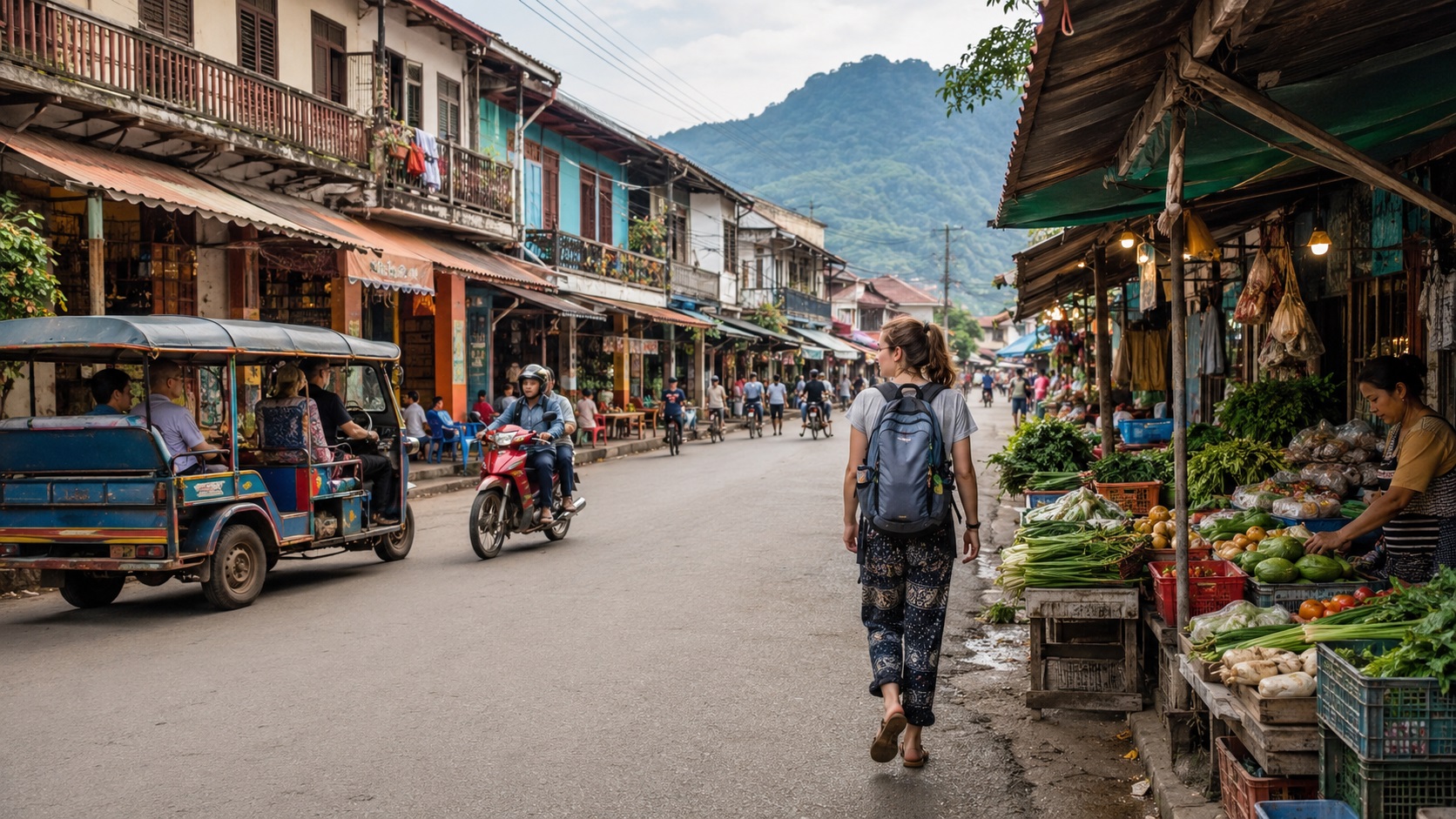
3. Vietnam — Long, Varied, and Remarkably Affordable
Vietnam stretches over 1,600 kilometers from north to south and contains enough variety — mountains, beaches, ancient towns, major cities, river deltas — to sustain weeks of travel without repetition. It's also one of the most consistently affordable countries in the region, with food costs in particular that remain very low by any standard. What things cost: A guesthouse or budget hotel room costs $15–35 per night depending on location and quality. A bowl of pho from a street stall costs $1.50–2.50. A banh mi sandwich costs $1–1.50. A sit-down meal at a local restaurant runs $4–8. An overnight train between major cities costs $20–40 depending on class. A domestic flight — useful given the distances involved — costs $30–80 booked in advance on VietJet or Bamboo Airways. The honest daily budget: $45–65 per day covers comfortable accommodation, all meals, local transport, and a daily activity or entrance fee. Budget travelers can comfortably do $25–35. Vietnam is one of the few countries in Southeast Asia where eating well is genuinely cheap — the street food culture is rich and ubiquitous, and eating from street stalls rather than tourist restaurants saves significant money without any sacrifice in quality. The north-to-south question: Most visitors enter through Hanoi in the north or Ho Chi Minh City in the south and travel in one direction. The north offers Halong Bay, the mountain town of Sapa, and Hanoi's Old Quarter. The central section has Hoi An — one of Southeast Asia's most atmospheric ancient towns — and the imperial city of Hue. The south has the Mekong Delta, the beaches of Phu Quoc island, and the energy of Ho Chi Minh City. A three-week trip can reasonably cover the whole country; two weeks requires choosing a section. The tourist trail caveat: Vietnam's main tourist route — Hanoi to Ho Chi Minh City via the major stops — is extremely well-traveled, and in places like Hoi An's Ancient Town and the beaches of Da Nang, prices have risen considerably. Stepping slightly off the main route consistently rewards travelers with lower prices and fewer crowds.4. Laos — Slow Travel at Low Prices
Laos is the least developed tourism infrastructure of any country on this list, and that cuts both ways. Prices are low, the pace is genuinely relaxed, and the country has a quiet beauty — the Mekong, the mountains, the Buddhist temple culture — that rewards patient travelers. It also has limited transport options, fewer accommodation choices than neighboring countries, and a cuisine that most visitors find less varied than Vietnamese or Thai food. What things cost: Budget guesthouses run $10–20 per night. A local meal costs $2–4. A Beer Lao — the national beer, genuinely excellent — costs $1–1.50 at a restaurant and less from a shop. A slow boat down the Mekong from the Thai border to Luang Prabang, taking two days and stopping overnight in the small town of Pak Beng, costs $25–35 per person and is one of the great budget travel experiences in Southeast Asia. The honest daily budget: $30–50 per day covers comfortable travel in Laos. Budget travelers can manage $20–25. The country is cheaper than Vietnam or Thailand at almost every level. Luang Prabang is the highlight for most visitors — a UNESCO-listed town where French colonial architecture overlaps with Buddhist monasteries, where monks walk in procession at dawn to collect alms from residents, and where the Mekong and Nam Khan rivers meet. It's one of the most genuinely beautiful small towns in Asia and, despite significant tourist development, retains a quality of stillness that is increasingly rare. The practical limitation: Getting around Laos takes time. Distances are shorter than Vietnam but roads are slower, public transport is less frequent, and the geography — mountainous, landlocked — means that covering the country requires either accepting slow journeys or paying for flights. Factor this into your planning.5. Indonesia — Cheap if You Know Where to Go
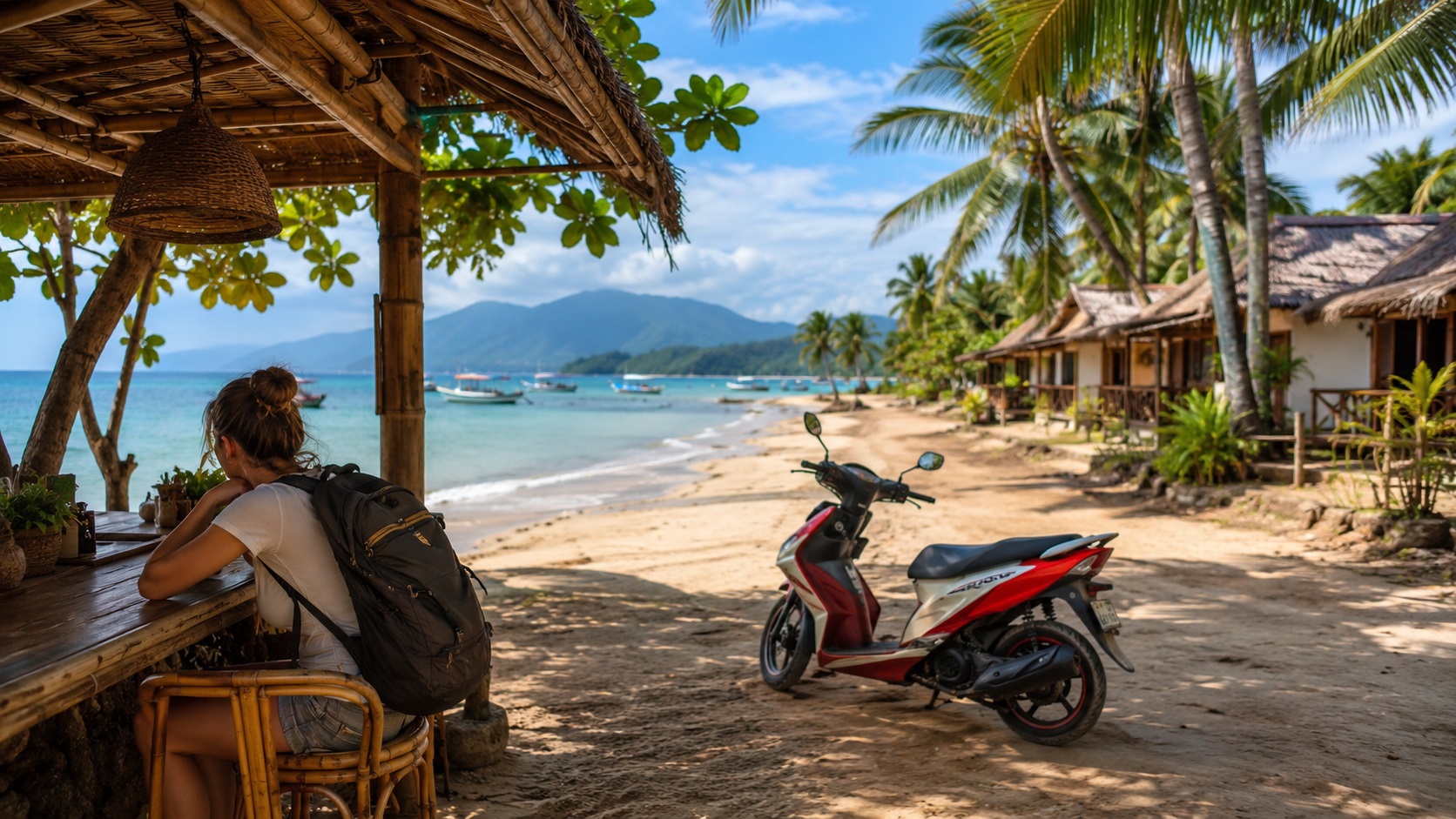 Indonesia is not uniformly cheap. Bali, the island most visitors know, has become expensive relative to the rest of the country — particularly in the southern tourist centers of Seminyak and Kuta, where restaurant prices, villa rentals, and tourist activities have risen steadily with the volume of visitors. A comfortable guesthouse in Seminyak costs $60–100 per night. A beach club day pass costs $30–50. Airport taxis are expensive without negotiation.
But Indonesia is also 17,000 islands, and the parts of it that most visitors never reach are significantly more affordable.
Yogyakarta on the island of Java is the cultural heart of Indonesia — home to Borobudur (the world's largest Buddhist temple) and Prambanan (a 9th-century Hindu temple complex) — and costs roughly half what Bali costs at every price point. A guesthouse room runs $15–25. A local meal costs $2–3. Entry to Borobudur at sunrise costs $25 for international visitors, which is the one genuinely expensive item, and is worth every cent.
Lombok is Bali's less-developed neighbor, accessible by fast boat in two hours, with better beaches, fewer tourists, and prices 30–40% lower than the Bali tourist areas.
The Gili Islands — three small islands off the northwest coast of Lombok — have no motorized vehicles, excellent snorkeling, and a relaxed atmosphere that used to define the whole region before mass tourism arrived.
The honest daily budget for non-Bali Indonesia: $35–55 per day for comfortable travel. Bali's southern tourist corridor runs $70–100 for a similar level of comfort.
Indonesia is not uniformly cheap. Bali, the island most visitors know, has become expensive relative to the rest of the country — particularly in the southern tourist centers of Seminyak and Kuta, where restaurant prices, villa rentals, and tourist activities have risen steadily with the volume of visitors. A comfortable guesthouse in Seminyak costs $60–100 per night. A beach club day pass costs $30–50. Airport taxis are expensive without negotiation.
But Indonesia is also 17,000 islands, and the parts of it that most visitors never reach are significantly more affordable.
Yogyakarta on the island of Java is the cultural heart of Indonesia — home to Borobudur (the world's largest Buddhist temple) and Prambanan (a 9th-century Hindu temple complex) — and costs roughly half what Bali costs at every price point. A guesthouse room runs $15–25. A local meal costs $2–3. Entry to Borobudur at sunrise costs $25 for international visitors, which is the one genuinely expensive item, and is worth every cent.
Lombok is Bali's less-developed neighbor, accessible by fast boat in two hours, with better beaches, fewer tourists, and prices 30–40% lower than the Bali tourist areas.
The Gili Islands — three small islands off the northwest coast of Lombok — have no motorized vehicles, excellent snorkeling, and a relaxed atmosphere that used to define the whole region before mass tourism arrived.
The honest daily budget for non-Bali Indonesia: $35–55 per day for comfortable travel. Bali's southern tourist corridor runs $70–100 for a similar level of comfort.
6. Thailand — Still Good Value Despite the Price Rises
Thailand belongs on this list because it remains genuinely affordable by global standards, but it needs the caveat that it's the most expensive country on this list and has changed significantly over the past decade. Bangkok, Chiang Mai, and the main islands (Koh Samui, Koh Phangan, Koh Tao) are now mid-range destinations rather than budget ones for most Western travelers. A decent hotel room in Bangkok runs $40–70. A beach bungalow on Koh Samui costs $50–100. The tourist-facing restaurant prices in popular areas are not dramatically different from Southern European prices. Where Thailand stays cheap: Street food remains excellent and inexpensive — a plate of pad thai from a street stall costs $1.50–2.50, a bowl of boat noodles costs $1–2, and eating exclusively from markets and street stalls in any Thai city is both cheap and often the best food available. Local transport — songthaews (shared pickup trucks), tuk-tuks negotiated firmly, overnight trains — is inexpensive. The temples, markets, and public spaces are free. And outside the main tourist circuit — in the north around Chiang Rai and Pai, in the northeastern Isaan region, on the lesser-known Gulf of Thailand islands — prices remain lower. The honest daily budget: $55–80 per day for comfortable travel in tourist areas. $35–50 if you stay outside the main tourist centers, eat street food consistently, and use local transport. Budget travelers in dorms can get under $30, but it requires conscious effort in a way it doesn't in Cambodia or Vietnam. Why Thailand is still worth it despite higher prices: The infrastructure is excellent, English is widely spoken in tourist areas, the food culture is one of the richest in the world, and the country has enough variety — cities, mountains, beaches, temples, national parks — to sustain weeks of genuinely varied travel.The Countries Not on This List
Malaysia is comfortably affordable but not cheap in the way Cambodia and Vietnam are. Kuala Lumpur is a mid-range city by Southeast Asian standards. Penang, however — with its extraordinary street food culture and UNESCO-listed Georgetown — offers exceptional value and belongs on any Southeast Asia itinerary. The Philippines is affordable but the geography — over 7,000 islands — means that inter-island transport costs (domestic flights, ferries) add up quickly and push the daily budget higher than raw accommodation and food costs suggest. Singapore is by any measure an expensive city, comparable to Western European capitals. Worth a stop on a longer Southeast Asia trip for its food culture and architecture, but not a budget destination.A Practical Comparison
To make this concrete, here is what a comfortable but not extravagant daily budget looks like in each country covered:| Country | Budget per day (comfortable) | Budget per day (tight) |
|---|---|---|
| Cambodia | $40–60 | $20–30 |
| Vietnam | $45–65 | $25–35 |
| Laos | $30–50 | $20–25 |
| Indonesia (non-Bali) | $35–55 | $20–30 |
| Indonesia (Bali tourist areas) | $70–100 | $40–55 |
| Thailand (tourist areas) | $55–80 | $30–45 |
How to Get the Most Out of a Southeast Asia Budget Trip
A few principles that apply across the region: Slow down. Moving between destinations costs money — transport tickets, transition accommodation, the disorientation tax of arriving somewhere new and making expensive decisions before you know the lay of the land. Staying somewhere for a week instead of three days almost always reduces daily costs while improving the experience. Eat where locals eat. In every country on this list, the best food is not in the tourist restaurants. It's in the markets, the street stalls, the small family restaurants with plastic chairs and handwritten menus. The price difference is significant; the quality difference favors the local option. Book transport in advance for the big legs. Overnight trains, domestic flights on budget carriers, and popular boat routes sell out or rise in price when left to the last minute. Book major transport legs 1–2 weeks ahead. Negotiate where it's expected, don't where it isn't. Tuk-tuks, market goods, and some guesthouses expect negotiation. Restaurant prices, transport tickets with printed fares, and entrance fees do not. Knowing the difference saves awkwardness and money. Southeast Asia in 2026 is not the place it was in 2005 or even 2015. It's more developed, more connected, more visited, and more expensive in the ways that most affect travelers. But it remains — Cambodia and Vietnam especially — among the best-value travel destinations in the world for what you get. The infrastructure exists, the food is extraordinary, the historical and natural sights are world-class, and the daily cost of being there comfortably is a fraction of what comparable travel costs in Europe or North America. That equation hasn't changed as much as the nostalgia for "old Southeast Asia" suggests. You just need to know where the value still lives.Planning a Southeast Asia trip and trying to work out a route or budget? Drop your questions in the comments and I'll do my best to help.


