

Adjust Your Expectations to the Actual Risk Level
Before anything practical, this framing matters: the risk profile of solo female travel in Western Europe is not the same as in other parts of the world, and treating it as though it is leads to either unnecessary anxiety or overcorrection that makes the trip worse. Western Europe — the UK, France, Spain, Portugal, Italy, Germany, the Netherlands, Scandinavia — has low violent crime rates by global standards, good emergency infrastructure, widespread English comprehension, and a tourist industry well-accustomed to solo female travelers. You are not in constant danger. You don't need to check in with someone every hour. You don't need to stay in your hotel after dark. Eastern Europe — Poland, Czech Republic, Hungary, Croatia, the Baltic states — is similarly safe. Crime rates are generally low, the tourist infrastructure has improved dramatically in the past decade, and solo female travelers move through these countries without significant incident every day. The risks that are real in Europe are primarily petty theft, scams targeting tourists regardless of gender, occasional harassment in specific contexts, and the ordinary personal safety considerations that apply to anyone traveling alone anywhere. These are real and worth thinking about. They are not reasons to stay home or to travel only in groups.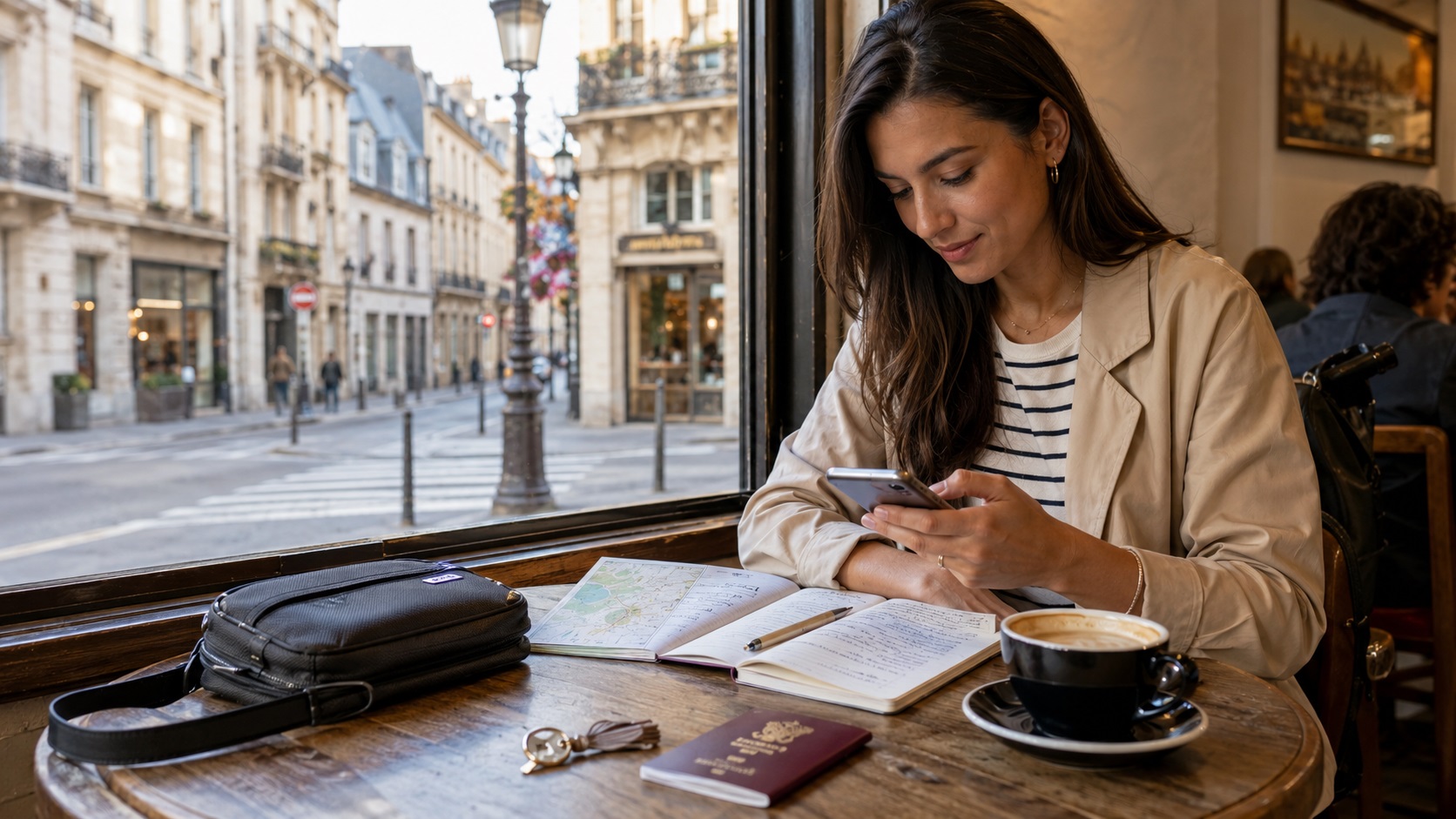
Accommodation: The Decisions That Shape Everything Else
Where you sleep has an outsized effect on how safe and comfortable your solo trip feels, for reasons that go beyond the obvious. Research the neighborhood before booking, not just the property. A highly-rated guesthouse in a poorly-lit, inconvenient, or genuinely unsafe neighborhood creates problems that no amount of good reviews can solve. Look up the property on Google Maps, switch to street view, and look at what's around it. Is it on a main road with transport links and other open businesses? Or is it at the end of a quiet residential street that would require a twenty-minute walk through an unfamiliar area at midnight? Hostels have a specific advantage for solo female travelers that hotels don't: built-in community. A good hostel with a social common area means you're never really alone unless you want to be. You have people to eat dinner with, explore with, or simply be around when returning late. This matters more on your first solo trip than it will on your fifth, but it's worth knowing. Female-only dorms exist in most hostels and are worth considering on your first solo hostel experience. They're not universally quieter or better-run than mixed dorms, but they remove one layer of uncertainty when you're still figuring out how you feel about shared accommodation. Trust the feeling when something is off. If you arrive at an accommodation and something about it doesn't feel right — the neighborhood is darker than you expected, the property doesn't match the photos, the person checking you in makes you uncomfortable — you're allowed to leave. You don't owe anyone an explanation. Book somewhere else and deal with the refund question later if necessary.The Practical Safety Habits That Actually Matter
These are the things worth building into your routine, not because Europe is dangerous but because they make a tangible difference. Know where you're going before you start walking. Looking lost while staring at your phone with your bag open is the single best way to attract the attention of anyone with bad intentions. Before leaving your accommodation, hotel, or a café, check your route, note the street names and landmarks, and put your phone away. A few minutes of preparation means you're moving with purpose rather than confusion. Keep your valuables in a sensible place. A crossbody bag worn across your body, in front of you in busy areas, is harder to snatch than a bag on your shoulder. A money belt or neck wallet under your clothes for your passport and most of your cash means that even if your bag is snatched, you haven't lost everything. Keep only what you need for the day in an accessible pocket. Be alert in specific high-theft environments. Tourist-heavy areas — busy metro stations, popular viewpoints, crowded markets, transport hubs — are where pickpocketing concentrates. Not because they're dangerous in any serious sense, but because the combination of distraction and density makes them attractive to people who do this professionally. Be more aware of your belongings in these environments than you would be on an empty street. The bag-grab on scooters happens in some southern European cities, particularly Naples, Rome, and parts of Barcelona. Walk on the side of the pavement furthest from traffic and carry your bag on the side away from the road. This is a specific and uncommon risk, but it's worth knowing about. Photograph your accommodation address when you check in and keep it somewhere accessible — your camera roll, a screenshot, a note. If you're out late, have had a few drinks, or are in an unfamiliar part of the city, having the address immediately available means you can show it to a taxi driver or use it to navigate without having to dig through emails or remember something you only saw once.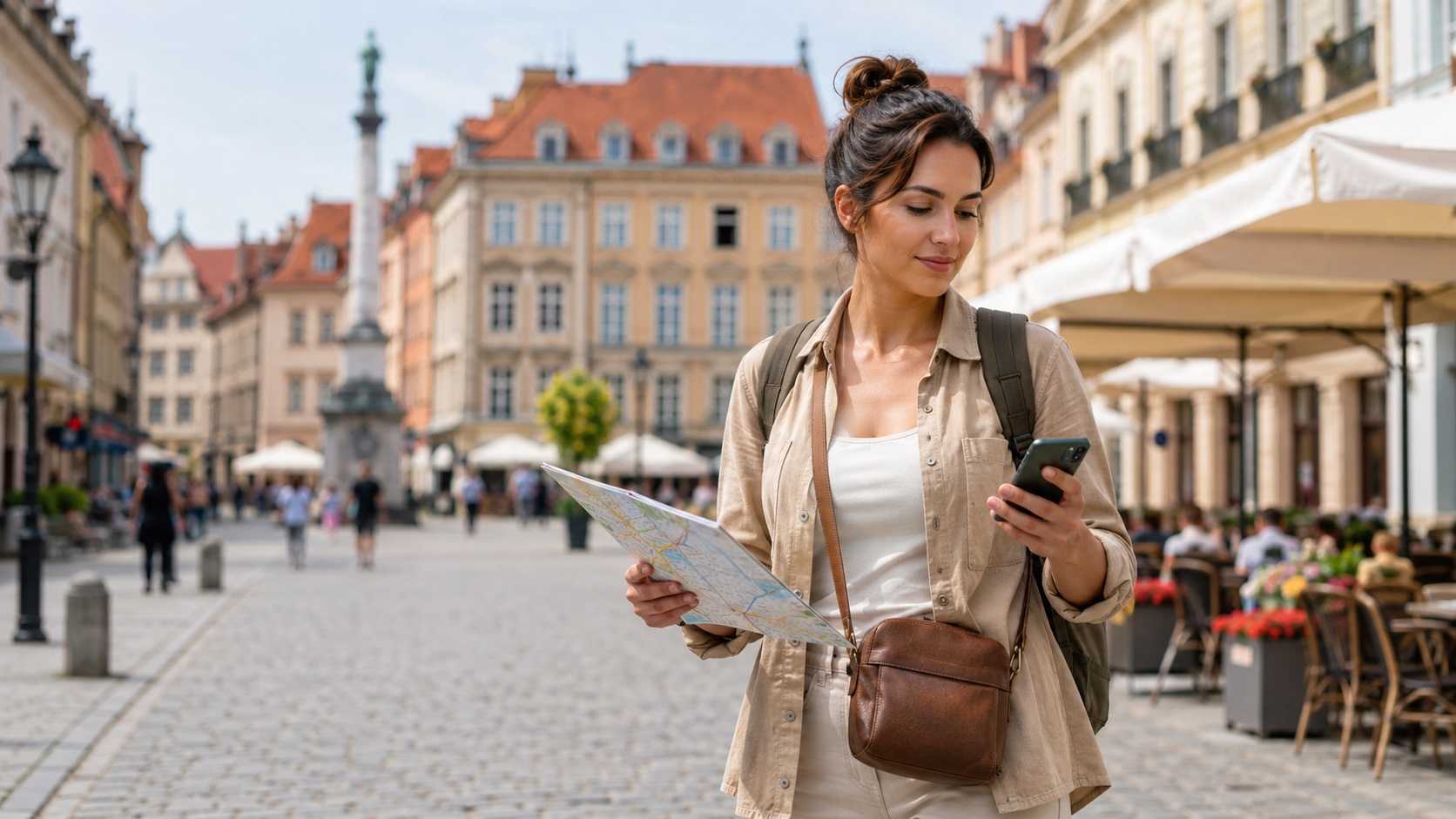
Getting Around Alone: What's Fine and What to Think About
Public transport is almost always the right choice. The metro, trams, and buses in European cities are generally safe, well-lit, and used by local women at all hours. The image of public transport as dangerous comes from specific contexts — very late nights, empty carriages, specific parts of cities — not from the standard experience of using it to get around during normal hours. Late at night, use your judgment. A busy metro at midnight in central London, Paris, or Madrid is fine. An empty suburban train at 2am is a different calculation. In the latter situation, a taxi or rideshare is the right answer. Taxis and rideshares: Use Uber, Bolt, or the local equivalent where they operate, because the digital paper trail — your name, the driver's name, the registered route — adds a layer of accountability that hailed taxis don't have. Screenshot the trip details when you get in. Share your location with someone you trust for late-night journeys if it makes you more comfortable. This is not paranoia; it's the same thing anyone traveling alone does. Walking at night is not categorically unsafe in most European city centers, but use the same judgment you'd apply anywhere. Busy, well-lit streets are fine. A shortcut through a quiet park at 1am is not the right call regardless of your gender. The simple rule: stick to streets where other people are.Dealing With Harassment: The Reality and the Response
Street harassment happens in Europe. The frequency and nature varies significantly by country and city — it's more common in southern Italy and parts of Spain than in Scandinavia or the UK — and the vast majority of it is verbal and unpleasant rather than physical and threatening. The approaches that work: Ignoring completely is usually the most effective response. No eye contact, no response, continue walking. Most street harassment is opportunistic and directed at someone who appears to engage. Nothing you say or don't say is responsible for harassment happening; the point is simply that engagement often prolongs it. Assertive, brief, and loud works in situations where someone is following or persisting. A firm "no" or "leave me alone" delivered clearly — not angrily, not apologetically — and then no further engagement. Making a scene is not embarrassing; it's effective. Harassers rely on their targets being reluctant to attract attention. Cafés, shops, and other businesses are your allies. If someone is following you or you feel threatened on the street, walk into the nearest open business. Ask the staff for help if needed. This is accepted practice across Europe and staff will almost always assist. Trust your discomfort. If a situation feels wrong — a conversation that's escalating in a direction you don't want, a person who's closer than they should be, a feeling that you're being followed — you don't need to wait for certainty before acting. Cross the street. Change direction. Go into a shop. You don't owe anyone a reason.Drinking and Nightlife
Nightlife is part of travel for many people, and there's no reason solo female travelers should experience it differently from anyone else. A few things worth knowing: The keep-your-drink-with-you rule exists for a reason. Don't leave your drink unattended and don't accept drinks from strangers you haven't watched poured in front of you. This applies everywhere, not only Europe, and it applies to men as well as women — but it matters more in contexts where you're alone without friends who would notice something was wrong. Know where you're going before you go out. Have the name of the bar or club saved, the neighborhood noted, and a rough idea of how you'll get home. Making those decisions at 2am after several drinks is less reliable than making them at 7pm when you're sober. Meeting people in hostels before going out is one of the genuine advantages of solo travel — you almost always have the option of company if you want it. Most hostel common areas fill up in the early evening with people making exactly this kind of spontaneous plan. You don't have to go out alone unless you want to. Know the local emergency number. In most of Europe it's 112, which connects to emergency services in all EU countries. Having it in your phone takes five seconds.The Confidence Variable
This is the part of the solo female travel conversation that gets skipped most often, probably because it sounds like something on a motivational poster. But it's genuinely true and genuinely practical. Confidence — or the appearance of it — is a meaningful safety variable. Moving through a city as though you know where you're going, making eye contact comfortably and looking away without anxiety, responding to approaches with calm directness rather than nervous accommodation — these things affect how you're perceived and therefore how you're treated. This is not the same as saying that harassment or crime is the victim's fault for not projecting sufficient confidence. It isn't, and that framing is wrong. It's saying that the practical skill of moving through public space with ease is learnable, improves with experience, and makes solo travel both safer and more enjoyable. The first solo trip is the hardest. The second is easier. By the third, the navigation, the accommodation check-in, the late dinner alone with a book, the late-night taxi home — these things that felt exposing on the first trip have become ordinary. The confidence that comes from having done it before is the most reliable safety tool there is, and it compounds with every trip you take.Country-Specific Notes Worth Having
Italy has the most variable experience for solo female travelers in Western Europe. Northern cities — Milan, Bologna, Florence — are generally relaxed. Naples and parts of Rome have higher rates of street harassment. Sicily is fine but more conservative in smaller towns. None of this should put you off visiting; it means being a bit more alert in specific environments. Spain is generally excellent for solo female travel. Barcelona has pickpocketing issues in Las Ramblas and the Gothic Quarter — everywhere else is relaxed. Madrid is very safe. The south — Seville, Granada, Málaga — is warm and easy. France: Paris requires the standard big-city awareness, particularly around the Eiffel Tower and Sacré-Cœur, which are high-pickpocketing areas. The rest of the country is relaxed and straightforward. Eastern Europe: Poland, Czech Republic, Hungary, and the Baltic states are safe and easy. Romania and Bulgaria are safe in the cities though require slightly more attention in rural areas. Serbia and North Macedonia have more conservative social norms in some contexts but are not unsafe. Scandinavia: The easiest region in Europe for solo female travel by most measures. Low crime, high social trust, good infrastructure, and no significant harassment culture.What Nobody Tells You
The safety conversation around solo female travel in Europe focuses so much on the risks — real and imagined — that it rarely gets around to saying this: most of the time, nothing bad happens. You walk through cities, eat alone at restaurants, take night trains, go to bars, come home, and nothing bad happens. The moments of discomfort — the occasional unwanted comment, the person who sits too close on a train, the scam that you recognize in time — are real but minor. They're not the shape of the trip. They're interruptions in a trip that is mostly made up of the things you planned: the things you saw, the food you ate, the conversations with strangers that went well, the decisions that turned out to be right, and the particular freedom of moving through the world entirely on your own terms. That freedom is the point. Everything else, including the safety planning, is in service of it.Planning your first solo trip in Europe and have questions about a specific destination or situation? Leave it in the comments and I'll give you the honest answer.


