
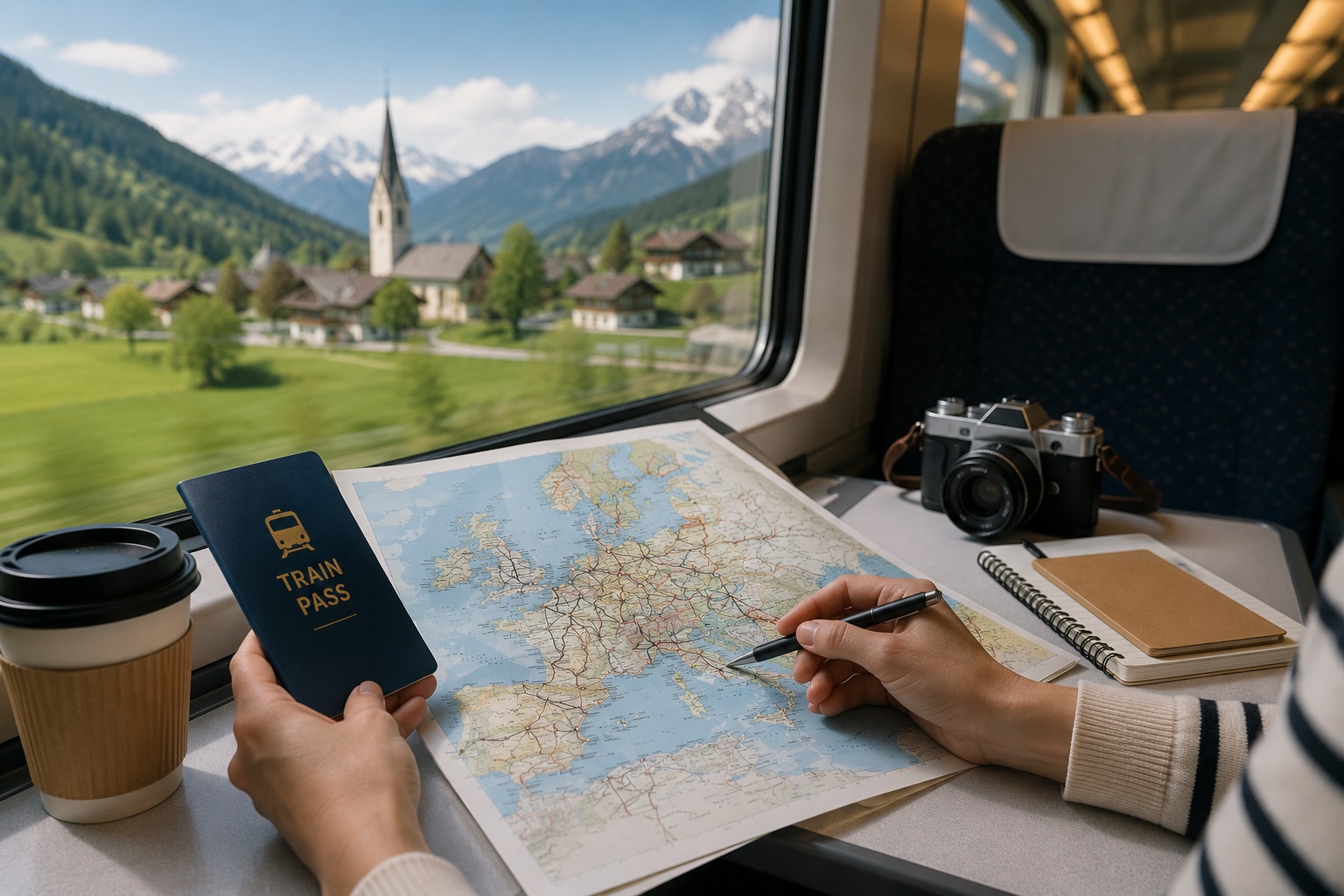
What the Passes Actually Are
Two main passes dominate the market: Eurail, sold to non-European residents, covers 33 countries and dozens of rail operators. It comes in several formats — Global Pass covering all countries, or Single/Two-Country passes for more focused travel — and within those formats, either a continuous pass (covering every day for a set number of days) or a flexi pass (covering a set number of travel days within a two-month window). Interrail, the European equivalent for European residents, covers the same network with the same format options. If you hold a passport from a European country, you buy Interrail, not Eurail. Both passes are tiered by age — youth (under 28), adult, and senior rates — and by class. First class costs roughly 50% more than second class and is worth the premium on longer journeys with more comfortable seating, less crowding, and often better amenities. On short journeys, the difference matters less. The price range is wide. A Eurail Global Pass for an adult in second class, covering 15 days of travel within two months, costs approximately €400–500 depending on when you buy and whether there's a sale on. A continuous 15-day pass runs around €350–420. Individual country or two-country passes are cheaper still.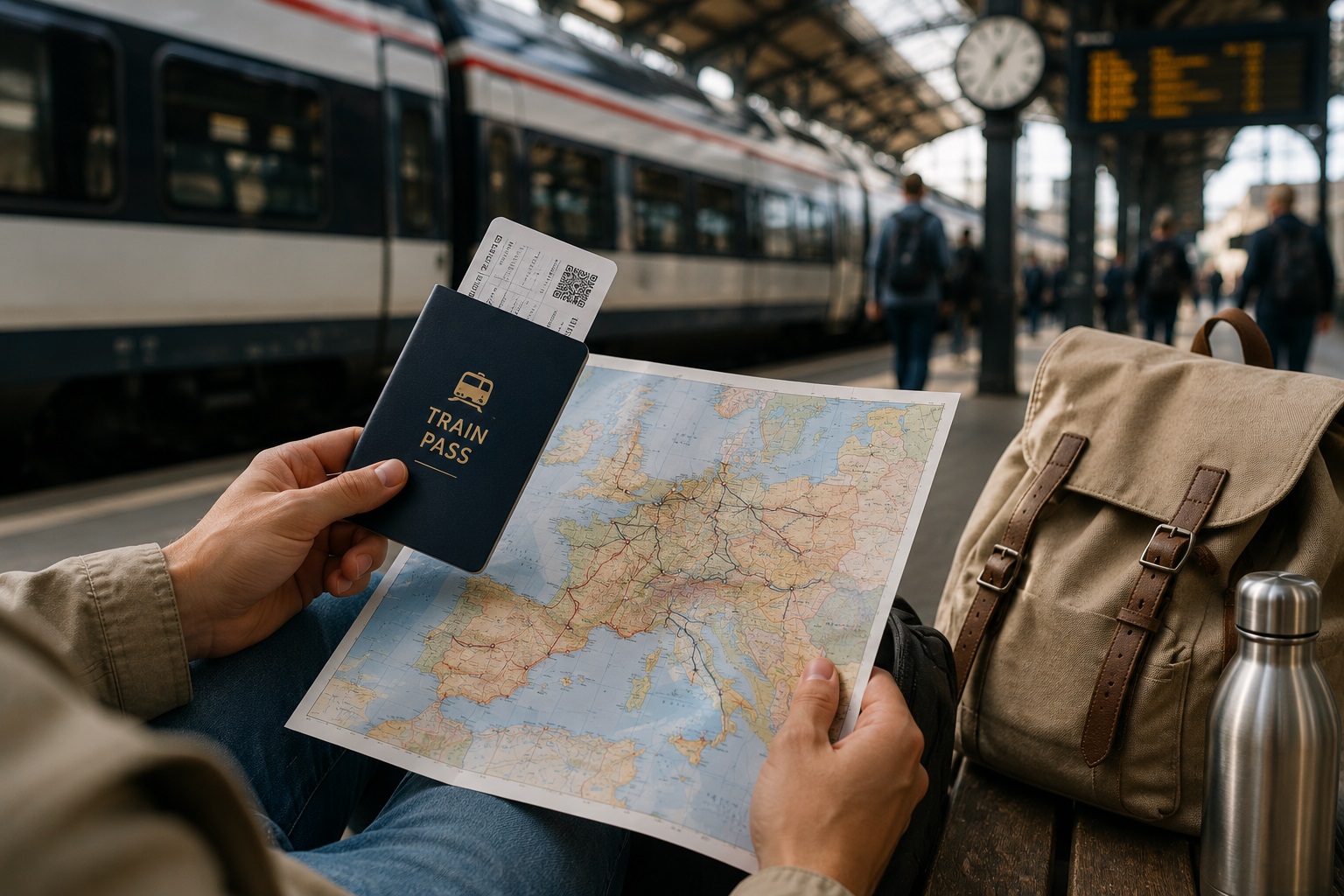
The Reservation Fee Problem Nobody Mentions Up Front
Here's the thing that catches most pass holders off guard and fundamentally changes the value calculation: on many of Europe's most popular and most used train services, a rail pass does not give you a seat. It gives you the right to buy a seat. High-speed trains across Europe — the TGV in France, the AVE in Spain, the Frecciarossa in Italy, the ICE in Germany, the Thalys/Eurostar between countries — require mandatory seat reservations on top of the pass. These reservations cost money. Not a trivial amount. Specific examples: France (TGV/Inoui): Seat reservations for pass holders on TGV trains cost €10–20 per journey for domestic routes and €25–35+ for international routes like Paris to Barcelona or Paris to Brussels. Italy (Trenitalia Frecciarossa): Pass holder reservations cost €10–13 per journey on high-speed services. Spain (Renfe AVE): Reservation fees for pass holders on AVE high-speed trains run €8–15 per journey. Eurostar (London to Paris/Brussels): Pass holder fares on Eurostar are €30–35 per journey on top of the pass cost — still cheaper than a full Eurostar ticket but a meaningful additional cost. Night trains: Couchette and sleeper reservations on European night trains cost €15–45 on top of the pass, depending on the service and accommodation type. On slower regional trains — the ones that stop at every small station and take twice as long — reservations are usually not required and the pass works as freely as the marketing suggests. But these are also the trains most travelers use least, precisely because they're slower. The practical implication: if your European itinerary relies primarily on high-speed trains between major cities — Paris to Marseille, Barcelona to Madrid, Rome to Florence, Amsterdam to Berlin — your actual cost of using the pass is the pass price plus a reservation fee for every single journey. This needs to be factored into the calculation.When the Pass Wins: The Math That Works
Despite the reservation fee complication, there are real scenarios where a pass saves money. High-frequency travel across multiple countries. If you're moving between countries every two or three days — a classic multi-country European itinerary — the pass often beats booking individual tickets. Booking ten separate cross-country journeys individually, particularly with flexible cancellation terms, costs more than a pass plus the reservation fees for those journeys. The flexibility premium. Individual advance train tickets in Europe are almost always non-refundable or subject to change fees. The pass lets you change your plans without financial penalty beyond the reservation fee, which is usually refundable or transferable. For travelers whose itineraries are genuinely flexible — who don't know until the day before where they're going next — this flexibility is worth real money. Spontaneous regional travel. Unplanned day trips, detours to smaller cities, regional trains between destinations you didn't book in advance — these are where the pass genuinely delivers as advertised. If you're based in a city for a few days and want to take day trips to surrounding towns, the pass covers those regional trains without reservation requirements and without individual ticket costs. Youth travelers doing long trips. The youth (under 28) Eurail/Interrail rates are significantly cheaper than adult rates and the value equation shifts meaningfully. A student doing six weeks across Europe with a flexible itinerary, using the pass for both long-haul journeys and day trips, is the person the pass was designed for and the person it serves best. First class on longer journeys. The price premium for first class on a pass is proportionally smaller than buying first class individual tickets, and on a long journey — an overnight train, a three-hour high-speed route — first class comfort is worth more. Pass holders who upgrade to first class often find better value than those who don't.When Individual Tickets Win: The Math That Doesn't
Short trips with a fixed itinerary. If you're doing a two-week trip to three specific countries with a fixed route — say, London, Paris, Barcelona, Lisbon — booking each leg individually in advance is almost always cheaper than a pass. The London-Paris Eurostar, the Paris-Barcelona TGV, and the Barcelona-Lisbon train or flight booked 4–6 weeks in advance total far less than the pass cost plus reservation fees for each leg. Travel within a single country. Country-specific passes exist but are rarely good value. France, Italy, Spain, and Germany all have their own advance booking systems that produce cheap individual tickets for travelers who book ahead. The Trenitalia Italia Pass, for example, is almost never cheaper than advance Trenitalia tickets bought directly. Travel in Eastern Europe. Poland, Czech Republic, Hungary, Romania — train tickets in these countries are genuinely cheap without any pass. A train across Poland costs €15–25 as an individual ticket; including it in a Eurail pass that cost hundreds of euros to cover one leg is poor value. Budget airline competition. On many European routes, budget airlines — Ryanair, Wizz Air, easyJet — beat the train on price, especially when factoring in reservation fees. The Paris-Berlin journey is roughly 8 hours by train with a pass plus a €20–25 reservation fee. The same journey by air is 90 minutes and often costs €30–50 including a carry-on. For travelers who value time and aren't opposed to flying, the pass's value is further eroded on longer cross-country routes.How to Actually Calculate Whether a Pass Saves You Money
The calculation most people don't do before buying a pass: Step 1: List every train journey in your planned itinerary. Step 2: Look up the current advance purchase price for each journey on the relevant rail operator's website — not the walk-up price, but the cheapest flexible fare available. Step 3: Add up the individual ticket total. Step 4: Price the pass that covers your itinerary, then add estimated reservation fees for each journey (typically €10–20 per high-speed leg). Step 5: Compare. If the individual tickets total is less than the pass plus reservations, book individually. If the pass total is less, buy the pass. This calculation takes twenty to thirty minutes and will tell you definitively which option is cheaper for your specific itinerary. Most travelers don't do it, buy the pass based on brand recognition and marketing, and either do well or poorly depending on luck. One important variable: flexibility. If there's a meaningful chance you'll change your plans significantly, add the cancellation cost of individual tickets to the individual booking total. Non-refundable tickets that get wasted because you changed direction have a real cost.The Booking Process for Pass Holders
If you decide a pass makes sense, using it correctly matters. Buy the pass before you leave home. Eurail passes are sold to non-European residents and technically must be purchased from outside Europe. In practice this is verifiable at activation, and attempting to buy one after arrival creates complications. Interrail is available to European residents everywhere. Activate the pass correctly. Digital passes (the standard now) are activated through the Rail Planner app, which is also how you add journey reservations. Before your first journey, activate the pass for the date range you want. The activation date cannot be changed after the fact. Use the Rail Planner app for reservations. The app shows which trains require reservations, lets you book them directly for many operators, and serves as your pass documentation. Download it and familiarize yourself with it before your first travel day, not on the platform while your train is boarding. Know which trains are reservation-free. Regional trains, local trains, and many slower intercity services don't require reservations and can be boarded freely with a pass. These are the journeys where the pass works exactly as the freedom-to-travel marketing suggests. Check reservation availability before you assume you can get a seat. Popular high-speed trains — particularly the Eurostar, TGV trains on busy weekend routes, the Frecciarossa from Rome to Milan on a Friday afternoon — have limited pass holder seat allocations. These allocations sell out before walk-up seats do. Book reservations as soon as your plans are fixed, not the day before travel.The Countries Where Passes Add Most Value
France and Spain together. Cross-border high-speed rail between Paris and Barcelona or Madrid is expensive at full price. A pass that covers both countries plus reservation fees comes out ahead of booking individually for most multi-city itineraries. Scandinavia. Norway, Sweden, and Denmark train tickets are expensive at full price, and the Eurail pass with a Scandinavian country or multi-country configuration often saves meaningful money on the longer journeys between cities. The Balkans and Eastern Europe for slower travel. Night trains between Budapest, Belgrade, Bucharest, and Sofia, plus regional connections throughout the region, are where pass holders find some of the few remaining genuinely reservation-free travel experiences in Europe. The trains are slower, the journey times longer, but the pass works as freely as advertised. Switzerland. Swiss trains are beautiful, efficient, and eye-wateringly expensive at full price. A Eurail pass that includes Switzerland — or a Swiss Travel Pass for Switzerland-specific coverage — consistently saves money for anyone spending more than a few days there.The Honest Verdict
A Eurail or Interrail pass is worth buying for: youth travelers on long, flexible, multi-country trips; travelers who genuinely don't know their itinerary in advance and value the option to change plans without penalty; people doing a significant amount of regional day-trip travel in addition to main-line journeys; and anyone spending meaningful time in expensive rail countries like Switzerland or Scandinavia. It is not worth buying for: travelers with a fixed itinerary who book far enough in advance; trips concentrated in a single country; itineraries where budget airlines provide a cheaper and faster alternative on the main routes; and short trips where the pass cost exceeds the individual ticket total before you've made three journeys. The pass worked better in a previous era of European rail when advance booking was harder and walk-up fares were standard. The expansion of advance booking systems, the growth of budget airlines, and the introduction of mandatory reservation fees have eroded the value case for many common itineraries. Do the calculation for your specific trip. The answer will be unambiguous.Planning a European rail trip and not sure whether a pass makes sense for your specific itinerary? Drop the countries, cities, and rough dates in the comments and I'll run through the math with you.


